

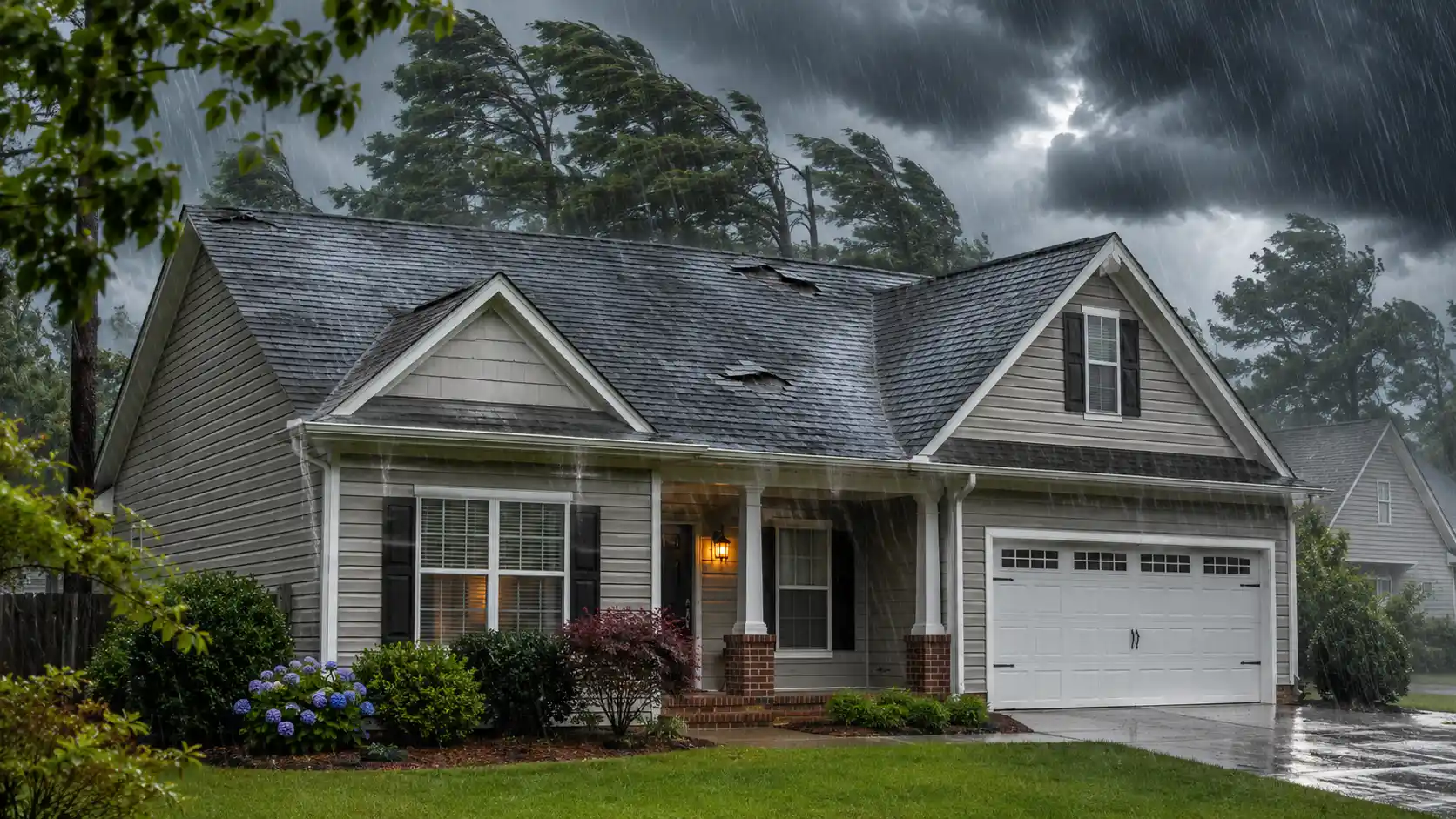
Weather roof damage is a concern for North Carolina homeowners because residential roofing systems face a combination of severe thunderstorms, strong winds, hail, heavy rainfall, summer heat, and occasional winter storms. These conditions can damage shingles, weaken roof components, expose vulnerable areas, and allow moisture to enter a home.
A roof does not have to lose shingles or develop a visible leak to experience weather damage. Sometimes the first problems are small: a lifted shingle edge, a damaged flashing seal, or a few areas where protective granules have been displaced.
Over time, these weaknesses may become more serious, particularly when another storm arrives before the original damage is repaired.
North Carolina’s climate also creates different roofing challenges depending on location. Homes near the coast face tropical storm exposure, while properties across the Piedmont and Triangle experience severe thunderstorms, changing temperatures, and periods of intense rainfall.
According to the North Carolina State Climate Office, tropical systems can produce damaging winds, heavy rain, and tornadoes well inland. This means storm preparedness is relevant even for homeowners far from the coastline.
Understanding how weather affects roofing materials makes it easier to recognize early warning signs, prevent avoidable damage, and decide when to schedule a professional inspection.
1. Why North Carolina Weather Creates Unique Roofing Challenges
North Carolina roofs experience several different forms of weather exposure throughout the year. Unlike regions where one weather condition dominates, homes here may face high summer temperatures followed by heavy thunderstorms, strong wind gusts, and periods of prolonged moisture.
Each condition affects roofing materials differently.
Wind can loosen shingles and damage their seals. Hail can fracture or bruise materials. Rain may enter through vulnerable roof details. Heat gradually contributes to material aging, while freeze and thaw conditions can worsen existing openings.
The combined effects matter because roof deterioration is often cumulative.
A small weakness created during one weather event can become the entry point for water during a later storm.
Different Regions Experience Different Roofing Risks
Coastal communities are particularly exposed to tropical storms, hurricanes, wind driven rain, and salt air.
The Piedmont, including Raleigh, Durham, Cary, Smithfield, and surrounding communities, experiences thunderstorms capable of producing strong winds, hail, and intense rainfall.
Western North Carolina also experiences severe rainfall events and winter weather, with local elevation influencing snow and ice exposure.
Although the weather patterns differ, one principle remains consistent: the condition of the roofing system before a storm can significantly influence the amount of damage it experiences.
Roof Design and Materials Also Influence Weather Resistance
Two neighboring homes can experience the same storm but have different levels of damage.
Factors include roof age, shingle condition, installation quality, roof slope, flashing details, existing repairs, and the presence of nearby trees.
For example, a roof with properly sealed shingles may resist wind differently from one with deteriorated adhesive strips or loose materials.
Understanding these differences is useful when evaluating professional roofing services or planning maintenance before severe weather.
2. How Strong Winds Damage Asphalt Shingles and Roof Components
Wind damage is one of the most recognizable forms of storm related roof damage, but the effects are not always obvious from the ground.
When strong winds travel across a roof, they create pressure differences that can lift roofing materials.
The Insurance Institute for Business & Home Safety explains that wind creates uplift forces that roofing materials and their fastening systems must resist.
Lifted Shingles and Broken Adhesive Seals
Asphalt shingles generally rely on a combination of nails, overlapping placement, and adhesive sealing strips.
When strong gusts lift a shingle, the seal may weaken or separate.
The shingle may settle back into place after the storm, making the damage difficult to recognize without a closer inspection.
An unsealed shingle can be more vulnerable during future storms because wind may lift it again.
Missing Shingles and Exposed Roof Materials
More severe wind events can tear shingles completely away.
Missing shingles expose roofing underlayment and may leave vulnerable areas around fasteners, seams, or roof decking.
Although underlayment provides additional protection, it is not intended to replace the roof covering permanently.
If water reaches vulnerable openings, moisture can move into the roof assembly.
Damaged Flashing and Roof Edges
Wind damage is not limited to shingles.
Metal flashing around chimneys, skylights, roof transitions, and vents may loosen during storms. Roof edges and ridge caps can also become vulnerable.
When these components shift, water may enter through locations that previously remained watertight.
Homeowners who notice missing shingles, raised roofing materials, or damaged roof edges should consider professional roof repair before additional weather exposure causes further problems.
3. What Hail Does to Residential Roofing Materials
Hail damage depends on several factors, including hailstone size, impact speed, wind conditions, roof material, and the condition of the roofing surface.
Not every hailstorm causes meaningful roof damage.
However, sufficiently strong impacts can compromise materials even when the roof looks relatively normal from the street.
Bruising and Fracturing Asphalt Shingles
Asphalt shingles contain protective surface granules over an asphalt based layer.
When hail strikes a shingle, it may displace granules, create dents, or damage the underlying material.
A severe impact can produce cracks or tears that affect the shingle’s ability to shed water.
The Insurance Institute for Business & Home Safety identifies denting, tearing, and granule displacement among the ways hail can affect asphalt shingles.
Granule Loss Is Not Always Hail Damage
Granules naturally loosen as asphalt shingles age.
Finding granules in a gutter does not automatically mean the roof was damaged during a recent storm.
Age, normal wear, foot traffic, manufacturing characteristics, and previous weather exposure can also contribute.
The pattern and extent of damage matter.
For example, scattered granule loss on an older roof may have a different cause from concentrated areas of impact damage following a significant hailstorm.
A qualified inspector can examine the shingles and other roof surfaces to help distinguish weather damage from ordinary deterioration.
Hail Can Damage More Than Shingles
Hail may also affect metal flashing, gutters, roof vents, siding, window components, and other exterior surfaces.
For that reason, homeowners should inspect accessible areas around the entire property rather than focusing only on the roof.
If a storm has affected multiple exterior components, a professional storm damage roofing assessment can help identify which areas require attention.
4. Heavy Rain Can Expose Problems That Were Already Developing
Heavy rain does not necessarily damage a properly functioning roof. Residential roofing systems are designed to direct water away from the home.
However, prolonged rainfall can expose weaknesses in shingles, flashing, drainage systems, and other roof components.
The important distinction is between the weather event itself and the condition that allows water to enter.
Water Entering Through Damaged Flashing
Flashing protects transitions where roof surfaces meet walls, chimneys, vents, and other penetrations.
These locations require careful installation because water naturally flows toward seams and changes in surface direction.
If flashing is loose, corroded, poorly installed, or inadequately sealed, rainwater may enter the roof assembly.
The problem may remain unnoticed until a heavy storm produces enough water to expose the weakness.
Blocked Gutters and Roof Drainage
Leaves, pine needles, and debris can prevent gutters from carrying rainwater away efficiently.
When gutters overflow, water may repeatedly contact fascia boards, soffits, siding, and other exterior materials.
At some roof edges, poor drainage conditions can contribute to moisture problems.
Gutter maintenance does not replace roof repairs, but proper drainage helps protect the surrounding exterior.
Wind Driven Rain Creates Additional Pressure
Rain falling vertically behaves differently from rain pushed sideways by strong winds.
During severe thunderstorms, wind can force water toward joints, openings, and vulnerable flashing details.
This is particularly concerning when shingles have already lifted or protective roof components have become loose.
A ceiling stain appearing after a wind driven rain event may indicate a problem with roof coverings, flashing, or another part of the building envelope.
A professional roof inspection can help determine where the moisture is entering.
5. Summer Heat and Sun Exposure Gradually Age Roofing Materials
Weather roof damage does not always begin with a major storm.
Regular exposure to heat and sunlight contributes to the long term aging of residential roofing materials.
North Carolina’s hot, humid summers create conditions in which roofing systems experience prolonged solar exposure and repeated temperature changes.
Ultraviolet Exposure and Shingle Aging
Sunlight contains ultraviolet radiation that contributes to the aging of many exterior materials.
Asphalt shingles are manufactured to withstand outdoor exposure, but their protective components still deteriorate over time.
As shingles age, they may become less flexible, lose granules, or show surface cracking.
The rate of deterioration depends on product quality, installation, ventilation, exposure, and maintenance history.
Thermal Expansion and Contraction
Roofing materials expand and contract as temperatures change.
Different materials respond at different rates.
For example, metal flashing may move differently from adjacent shingles or sealants. Properly designed roofing systems account for this movement.
When materials are already deteriorated or improperly installed, repeated temperature changes can contribute to separation at vulnerable joints.
Attic Conditions Can Affect Roof Performance
Attic ventilation and insulation play important roles in managing heat and moisture within the home.
Poor attic conditions may contribute to excessive heat buildup, condensation problems, or other moisture related concerns.
However, ventilation is not a universal fix for every roofing problem.
A professional should evaluate the roof assembly, insulation, ventilation configuration, and moisture sources before recommending changes.
6. How Hurricanes and Tropical Storms Affect Inland North Carolina Roofs
Hurricanes are often associated with coastal communities, but their effects can extend far inland.
By the time a tropical system reaches central North Carolina, it may have weakened significantly. Even so, its rain bands can produce damaging wind gusts, substantial rainfall, and isolated tornadoes.
The North Carolina State Climate Office documents tropical weather impacts across the state’s coastal, Piedmont, and mountain regions.
Prolonged Wind Exposure
A brief thunderstorm may create a few minutes of intense wind.
A tropical system can expose a roof to changing wind directions and repeated gusts over a longer period.
This creates additional opportunities for loose or weakened materials to shift.
Roof edges, ridge areas, and flashing details deserve particular attention after these events.
Falling Branches and Debris
Tree limbs and airborne debris can cause direct impact damage.
A branch may puncture shingles, break roof decking, damage gutters, or compromise flashing.
Even when the impact does not penetrate the roof, it can loosen materials or create damage that becomes apparent during later rainfall.
Large branches resting on a roof should be handled by qualified professionals rather than removed by homeowners without appropriate equipment.
Prolonged Rainfall and Interior Moisture
Tropical systems can deliver substantial amounts of rainfall.
Existing roof openings may allow repeated water entry, potentially affecting insulation, ceilings, wall cavities, and structural materials.
When water is actively entering a home, the priority is occupant safety and limiting additional damage where it can be done safely.
Homeowners facing serious leaks, missing roofing materials, or storm debris can contact a contractor for emergency roof repair services.
7. Winter Weather Can Turn Small Roof Problems Into Larger Repairs
North Carolina winters are generally milder than those in many northern states, but freezing temperatures, snow, sleet, and freezing rain still occur.
Winter conditions may be especially challenging for roofs with preexisting defects.
Ice and Water Around Roof Edges
Ice dams can form when snow melts on warmer portions of a roof and refreezes near colder edges.
This may allow water to accumulate behind the ice rather than drain normally.
Under certain conditions, water can move beneath roof coverings and enter the building.
Ice dam formation depends on several factors, including snow accumulation, roof temperatures, insulation, ventilation, and local weather conditions.
It is not equally common on every North Carolina roof.
Existing Cracks and Vulnerable Seals
Freezing conditions can make existing moisture problems more noticeable.
Water trapped in certain openings may freeze and expand, potentially worsening damaged materials or joints.
This does not mean a single cold night will damage a healthy roof.
It means existing defects are worth addressing before winter weather arrives.
Snow and Ice Loads
Accumulated snow and ice add weight to roofing structures.
Most properly designed residential roofs can accommodate the loads expected under applicable building requirements, but unusually heavy accumulation or preexisting structural weaknesses may create concerns.
Visible sagging, unusual structural movement, or cracking noises should be treated seriously.
Homeowners should avoid climbing onto icy roofing surfaces or attempting hazardous snow removal.
8. Early Warning Signs of Weather Roof Damage
Many roofing problems are easier to address when discovered before water has spread through the home.
Homeowners can perform a basic visual assessment from the ground and from safe interior locations.
The goal is not to diagnose every roofing defect independently, but to identify changes that deserve professional attention.
Exterior Warning Signs
Watch for:
-
Missing, curled, torn, or visibly lifted shingles.
-
Shingle fragments or roofing debris in the yard.
-
Damaged ridge caps or loose roof edge materials.
-
Bent or displaced flashing.
-
Significant new granule accumulation around downspouts.
-
Impact damage to roof vents or gutters.
-
Tree branches resting on roofing surfaces.
-
Visible sagging or unusual changes in roof shape.
Some of these signs may indicate storm damage, while others can result from aging or installation issues.
The cause should be evaluated before determining the correct repair.
Interior Warning Signs
Roof damage may also reveal itself inside the home.
Common signs include water stains on ceilings, damp attic insulation, peeling paint, unexplained moisture around roof penetrations, and recurring leaks during rainfall.
A ceiling stain does not always identify the actual roof opening.
Water can travel along rafters, sheathing, framing, or other materials before becoming visible indoors.
This is one reason locating the source of a roof leak may require more than examining the area directly above the stain.
For homeowners dealing with repeated roofing concerns, the guide on how to know when your North Carolina home needs a roof replacement provides additional information about recognizing broader roof deterioration.
9. What Homeowners Should Do Immediately After Severe Weather
The safest first step after a storm is to assess conditions from a secure location.
Roof damage can be expensive, but attempting to inspect unstable or wet roofing materials personally can create a much greater risk.
Start With a Ground Level Inspection
After the weather has cleared and the property is safe, examine the roof from the ground.
Look for missing materials, fallen branches, damaged gutters, and debris around the house.
A pair of binoculars may help identify visible concerns without climbing onto the roof.
Avoid standing beneath damaged trees, hanging branches, or unstable structures.
Check Interior Spaces for Water
Look for new ceiling stains, damp attic areas, and moisture around upper floor walls.
Do not enter an attic where electrical hazards, structural damage, or unsafe access conditions may exist.
If water is approaching electrical fixtures or equipment, avoid contact and seek appropriate professional assistance.
Document Visible Damage
Photographs taken from safe locations can help establish the property’s condition after the storm.
Record visible damage, affected areas, and any water entry.
Retain relevant inspection reports, repair estimates, and receipts.
This documentation may be helpful when discussing repairs with a contractor or communicating with an insurance company.
Avoid Unnecessary Temporary Repairs
Homeowners may be tempted to apply roofing cement or attempt to reposition shingles themselves.
However, temporary work performed incorrectly can make the problem harder to evaluate and may create additional damage.
For significant leaks, punctures, missing shingles, or unstable materials, contact a qualified roofing professional.
The guide to storm damage roof repair and what homeowners need to know provides further information about evaluating damage after severe weather.
10. When Roof Repair Is Enough and When Replacement Makes More Sense
Not every damaged roof needs replacement.
A targeted repair may restore proper protection when the damage is limited and the remaining roofing materials are in serviceable condition.
In other situations, replacement may be more practical.
The decision should be based on actual condition rather than the weather event alone.
Situations Where Roof Repair May Be Appropriate
Roof repair may be reasonable when damage is confined to a small area.
For example, a few damaged shingles may be replaceable if the surrounding shingles remain flexible, properly attached, and in good condition.
Localized flashing problems may also be repairable when the underlying materials are sound.
The repair must address the actual source of the problem, not simply cover a visible symptom.
When Replacement Deserves Serious Consideration
A broader replacement assessment may be appropriate when damage affects a substantial portion of the roof.
Other factors include advanced material aging, widespread loss of shingle integrity, repeated leaks, damaged roof decking, and previous repairs that have not resolved ongoing problems.
Material compatibility also matters.
If an older roofing product is no longer available, matching existing materials may be difficult.
A contractor should explain whether a repair can provide reliable protection or whether replacement would better address the roof’s condition.
Homeowners comparing these options can review roof replacement services to understand the considerations involved.
Why Roof Age Is Only Part of the Decision
An older roof is not automatically defective, and a newer roof is not automatically free from damage.
Age helps establish context, but a proper assessment must also consider installation quality, materials, maintenance, weather exposure, and current performance.
A newer roof that suffers significant impact damage may require extensive work.
An older roof with a localized flashing defect may need only a targeted repair.
This is why an inspection should come before deciding on major roofing work.
11. Practical Ways to Reduce Future Weather Roof Damage
No maintenance routine can make a roof completely resistant to severe weather.
However, regular attention to the roofing system can help identify weaknesses before they become larger problems.
Schedule Inspections After Significant Storms
A professional inspection is particularly useful after hail, damaging winds, falling debris, or storms that produce new signs of leakage.
It may also be appropriate when an aging roof begins showing visible deterioration.
A roof inspection typically considers shingles, roof edges, flashing, vents, penetrations, and accessible drainage components.
The purpose is to identify existing damage and determine whether maintenance, repair, or replacement is justified.
Maintain Gutters and Drainage
Keep gutters and downspouts clear enough to direct water away from the home.
Check for loose attachments, damaged gutter sections, and overflowing areas.
Drainage problems can also affect fascia, soffits, siding, and foundations, so they should not be ignored.
Manage Nearby Trees
Tree branches that overhang or contact the roof can create problems during storms.
Falling limbs may damage shingles, gutters, and roof structures.
Regular tree maintenance by qualified professionals can reduce certain hazards.
Avoid removing large limbs without the proper equipment and experience.
Consider Weather Resistance When Replacing a Roof
When roof replacement becomes necessary, homeowners can discuss materials appropriate for their local conditions.
Useful considerations include manufacturer wind ratings, impact resistance, installation requirements, warranty terms, and compatibility with the existing roof structure.
Wind and impact ratings should be evaluated in context.
A product with a strong laboratory rating is not guaranteed to avoid damage during every storm.
Proper installation and the complete roofing system remain important.
Do Not Overlook Siding and Windows
Severe weather can affect several parts of a home’s exterior at the same time.
Damaged siding may expose wall components to moisture, while compromised window seals or installation details can allow water intrusion.
Homeowners with storm related exterior damage may also benefit from reviewing siding repair services and window replacement options when those components have been affected.
12. Protecting Your North Carolina Home Starts With Understanding Your Roof
North Carolina weather can damage residential roofs through several different mechanisms.
Wind may lift shingles. Hail can affect protective roofing surfaces. Heavy rain can expose existing openings. Heat contributes to material aging, and winter weather can worsen certain moisture problems.
These effects are not always immediately visible.
A roof may appear intact from the street while damaged flashing, weakened seals, or compromised materials create vulnerabilities for future storms.
The most practical approach is to pay attention to changes in roof condition, investigate new water stains, maintain drainage, and arrange an inspection when damage is suspected.
Homeowners should also be cautious about assuming every weather event requires a new roof.
In many cases, localized damage can be repaired. When deterioration is widespread, replacement may be the more appropriate long term decision.
The correct choice depends on a professional evaluation of the roof’s actual condition.
Request a Free Roofing Estimate From Lanes Contracting
If your home has experienced strong winds, hail, heavy rain, or other severe weather, Lanes Contracting can help evaluate the condition of your residential roofing system.
Our roofing services cover inspections, repairs, storm damage concerns, and replacement options for homeowners across Smithfield, the Triangle, and surrounding North Carolina communities.
We focus on identifying the problem and explaining practical next steps based on the roof’s condition.
Request a Free Estimate to discuss your roofing concerns and schedule an assessment.