

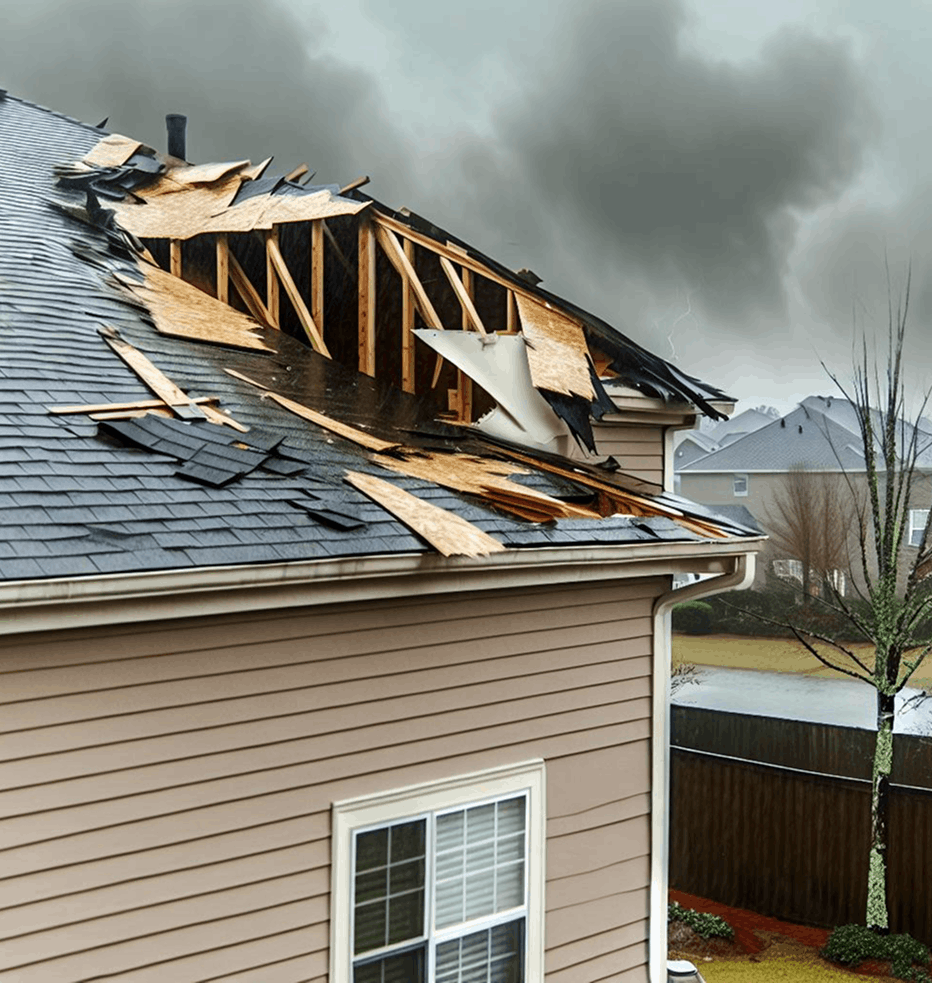
Severe weather can happen without warning, leaving behind missing shingles, damaged flashing, roof leaks, and other problems that may not always be visible from the ground. Strong winds, hail, heavy rain, and falling branches can weaken a roofing system and create openings where water can enter.
After a major storm, homeowners often wonder whether they need a simple repair, emergency service, or a complete roof replacement. Understanding the warning signs and taking the right steps can help prevent small problems from becoming expensive property damage.
What Can Cause Storm-Related Roof Damage?
A roof can be affected by several types of severe weather. Wind may lift or tear away shingles, while hail can create impact damage that weakens the protective surface. Heavy rainfall can expose existing weaknesses, and falling branches may puncture roofing materials.
Storm-related problems can affect more than shingles. Flashing, vents, valleys, roof edges, underlayment, and decking can also be compromised. According to the storm damage service information from the company, its inspections evaluate these areas to identify both visible and less obvious problems.
The longer these issues remain untreated, the greater the possibility of moisture entering the attic, insulation, ceilings, walls, or structural components.
Signs Your Roof May Have Storm Damage
Not every problem is easy to spot. Some damage becomes apparent immediately, while other issues develop over the following days or weeks.
1. Missing or Lifted Shingles
High winds can loosen shingles or remove them entirely. Missing sections can expose the underlying roofing layers to rain and sunlight.
Look around your property for shingles that may have fallen into the yard, driveway, or landscaping. From the ground, also check whether any sections appear uneven, lifted, cracked, or curled.
2. Hail Impact
Hail can leave bruises, cracks, granule loss, or other impact marks on roofing materials. Damage may appear minor initially but can reduce the material’s ability to resist future weather.
If your area experiences significant hail, arranging a professional evaluation is a sensible precaution.
3. Water Leaks or Ceiling Stains
A ceiling stain following a storm can indicate that water has entered through damaged roofing materials. However, the visible stain may not be directly below the actual entry point.
Leaks should be investigated promptly because continued moisture can affect insulation, drywall, wood, and other parts of the property.
4. Damaged Flashing
Flashing protects vulnerable areas around chimneys, walls, valleys, vents, and other roof penetrations. Wind or debris can loosen, bend, crack, or displace these components.
Even a relatively small opening around flashing can allow water to enter during subsequent rainfall.
5. Fallen Branches or Debris
Trees and airborne debris can puncture shingles or damage the underlying structure. Heavy branches can create more significant impact damage that requires immediate attention.
Never climb onto a damaged roof after severe weather. Walking on compromised materials can increase the damage and create a serious safety risk.
Why You Should Schedule an Inspection After a Severe Storm
A professional inspection can identify problems that are difficult to see from ground level. Damaged shingles, weakened seals, flashing issues, and moisture entry points may remain hidden until the next heavy rainfall.
An inspection can help determine whether the appropriate solution is localized repair, emergency work, maintenance, or more extensive replacement. The condition, age, and extent of the affected roofing system all influence the recommendation.
Early attention can also help reduce the risk of secondary damage. Addressing an opening before additional rain enters the structure is generally preferable to waiting until interior damage becomes obvious.
What to Do Immediately After a Storm
If you suspect your roof has been affected, take practical steps before attempting any repairs yourself.
Inspect From a Safe Location
Look from the ground for missing materials, visible debris, sagging areas, or obvious damage. Avoid climbing onto the roof.
Check the Interior
Look at ceilings, walls, and attic areas for water stains, damp insulation, dripping water, or other signs of moisture.
Document Visible Damage
Take photographs or videos from safe locations. These records can help when discussing the condition with roofing professionals and your insurance provider.
Protect Belongings
If water is entering the home, move furniture, electronics, and other valuables away from the affected area when it is safe to do so.
Arrange a Professional Assessment
A qualified roofing professional can evaluate accessible components and identify repairs that may be necessary.
Does Storm Damage Always Mean You Need a New Roof?
No. A storm does not automatically mean that the entire roofing system must be replaced.
Localized damage may be suitable for repair when surrounding materials remain in good condition. Replacement may become more appropriate when damage is widespread, the roof is significantly deteriorated, or the existing system has recurring problems.
The best decision should be based on an inspection rather than assumptions. A professional can assess the roof’s age, material condition, affected areas, and underlying components before recommending the next step.
How Professional Storm Damage Repair Helps
Prompt, professional service offers several important benefits.
Prevents Further Water Intrusion
Repairing openings can reduce the opportunity for rainwater to enter the building.
Protects the Roof Structure
Moisture can eventually affect decking, framing, insulation, and interior finishes. Addressing the source early can help protect these components.
Restores Weather Protection
Properly completed repairs help restore the roof’s ability to withstand rain, wind, and other environmental conditions.
Reduces Future Repair Costs
A relatively small issue can become more expensive when ignored. Early attention may help prevent widespread moisture-related problems.
Helps You Make an Informed Decision
A professional assessment provides a clearer understanding of whether repair, maintenance, or replacement makes the most sense.
Understanding the Insurance Process
Storm-related roofing work may involve an insurance claim, depending on your policy and the circumstances of the damage. Coverage varies, so homeowners should review their policy and communicate directly with their insurance provider.
Before making assumptions about coverage, document the damage carefully and keep records of inspections, estimates, photographs, and communications.
A roofing professional may also help homeowners understand the scope of visible damage and provide documentation related to the required work. However, the insurer ultimately determines coverage according to the applicable policy.
Choosing the Right Roofing Contractor
Selecting the right contractor is important after severe weather because storm-related projects can involve urgent repairs and significant property decisions.
Look for a company with relevant roofing experience, proper credentials, clear communication, and a reputation for quality workmanship.
Experience also matters when evaluating hidden problems. A contractor should understand how shingles, flashing, vents, underlayment, drainage, and decking work together as a complete system.
Lane’s Contracting has been serving North Carolina homeowners since 2005 and states that it is a GAF Master Elite contractor and BBB accredited. Its storm damage service covers wind, hail, heavy rain, falling branches, leaks, flashing issues, and other weather-related concerns.
Selling Service Title
Get Professional Storm Damage Roof Repair & Protect Your Home
When severe weather damages your roof, waiting can turn a manageable problem into a costly repair. A professional inspection can identify damaged shingles, leaks, flashing problems, hail impacts, and other concerns before they spread.
Homeowners in Smithfield and surrounding North Carolina communities can request a free estimate for storm-related roofing services. Professional evaluation helps determine the right solution while providing a clearer understanding of the roof’s current condition.
Frequently Asked Questions
1. What are the most common signs of storm damage?
Common signs include missing or lifted shingles, hail impact marks, damaged flashing, roof leaks, ceiling stains, fallen branches, cracked materials, and visible debris.
2. Should I inspect my roof myself after a storm?
You can look for visible problems from the ground, but avoid climbing onto the roof. A professional inspection is safer and can identify damage that is difficult to see.
3. Does hail always cause a roof leak?
No. Hail can weaken roofing materials without creating an immediate leak. However, damaged materials may become more vulnerable to water intrusion over time.
4. How soon should storm-related roof problems be repaired?
It is best to have suspected damage evaluated as soon as reasonably possible, particularly when there is an active leak or exposed roofing material. Prompt attention can help limit additional moisture damage.
5. Can a damaged roof be repaired instead of replaced?
Yes. If the damage is localized and the rest of the roofing system remains in good condition, targeted repairs may be appropriate. A professional assessment can determine the most suitable option.
Protect Your Home Before the Next Storm
Storm damage can range from a few missing shingles to serious structural concerns. The key is recognizing potential problems early, documenting what you see, and arranging a professional evaluation rather than waiting for a leak to appear.
Whether your property has experienced wind, hail, heavy rain, or falling debris, timely attention can help restore protection and prevent further complications. For homeowners who need dependable storm-related roofing assistance, a professional inspection is the first step toward understanding the condition of the roof and choosing the right solution.