

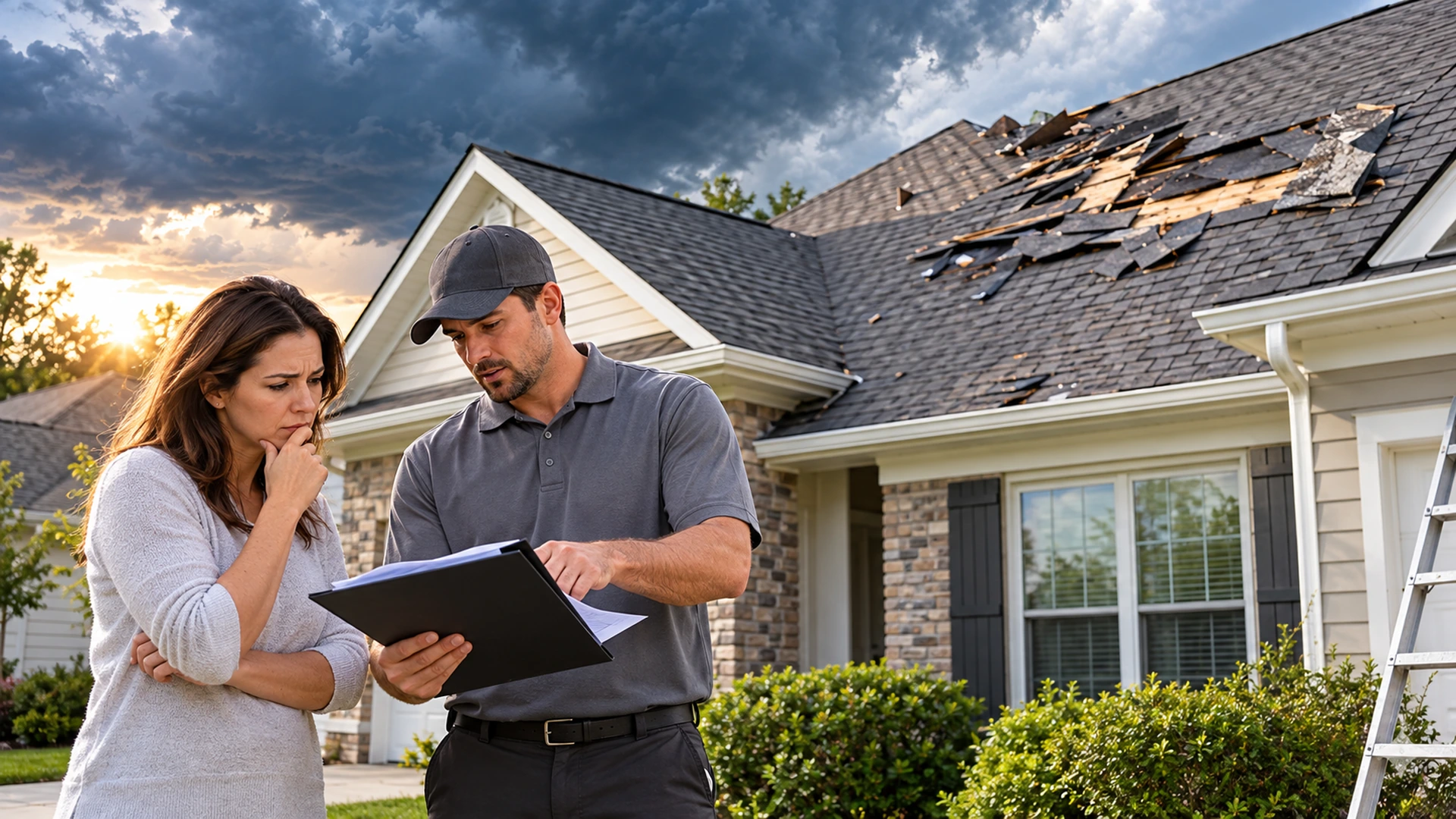
Roof damage can leave homeowners facing two problems at once: figuring out what needs to be repaired and determining whether insurance will help pay for it.
Homeowners insurance may cover roof damage when the loss results from a covered event such as wind, hail, fire, or falling debris. That does not mean every damaged roof qualifies for payment. Coverage depends on what caused the damage, the terms of the policy, applicable exclusions, deductibles, the condition of the roof, and how the insurer calculates the value of the loss.
For North Carolina homeowners, those details deserve particular attention because windstorm and hail coverage can vary between policies. Some policies may contain different deductibles or exclusions for weather-related losses.
The safest approach is to separate two questions from the beginning:
- What actually happened to the roof?
- How does the insurance policy respond to that type of damage?
A professional roof inspection can help document the physical condition of the roof. Your insurance company determines whether that damage is covered under your policy.
Understanding that distinction can make the entire roof insurance claim process easier to navigate.
When Does Home Insurance Cover Roof Damage?
The cause of the damage is usually the starting point for an insurance claim.
Homeowners insurance is designed primarily to protect against covered losses, not to pay for ordinary maintenance or gradual deterioration. Damage that occurs suddenly during a covered event may therefore be treated differently from roofing problems that developed slowly over several years.
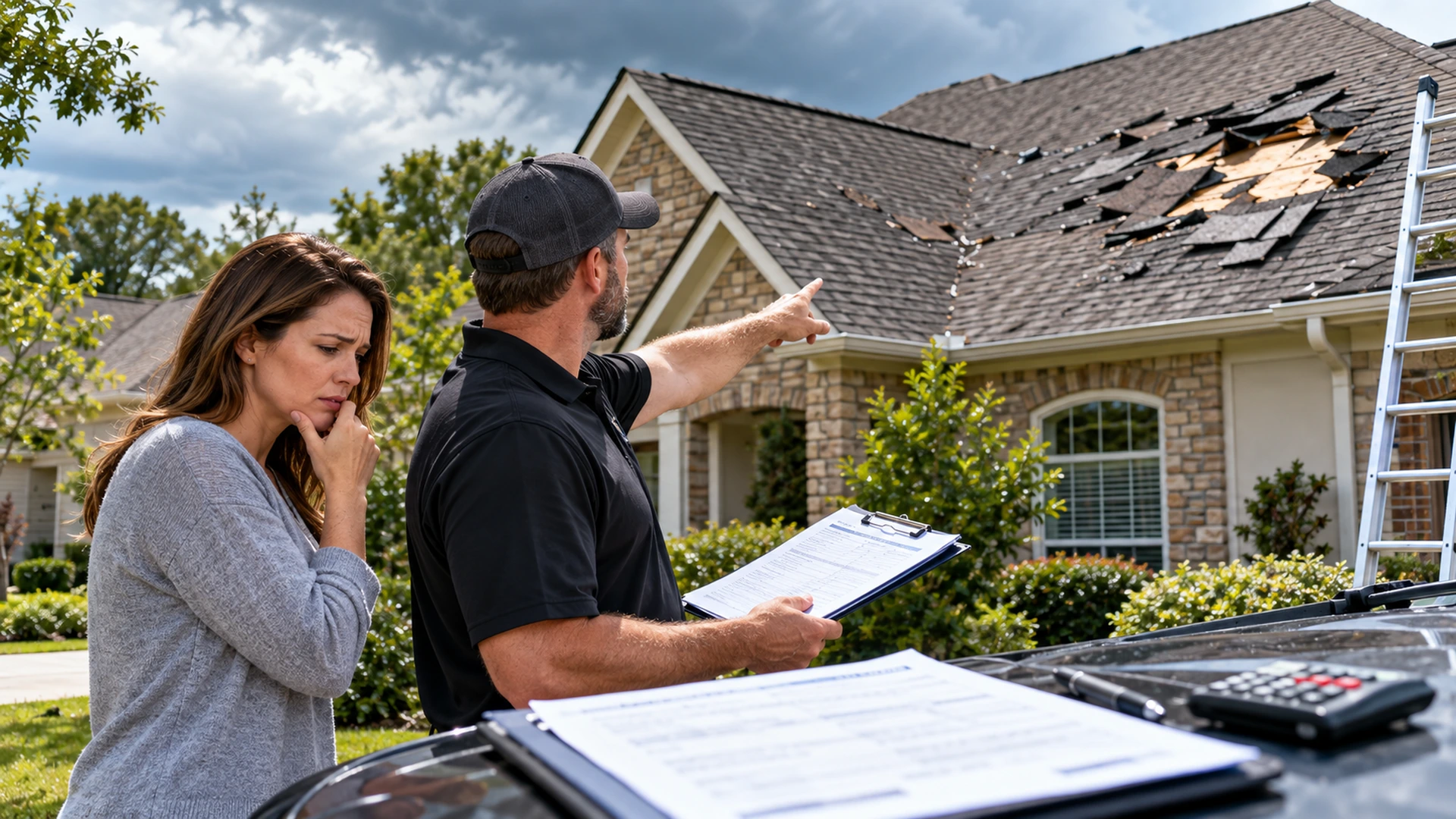
Examples of events that may result in covered roof damage include:
- Windstorms
- Hailstorms
- Fire
- Lightning
- Falling trees or branches
- Certain types of falling debris
- Other sudden events listed in the policy
The exact answer depends on the contract.
A homeowner might see several shingles missing after a severe windstorm and assume the repair will automatically be covered. If wind damage is covered under that policy and the insurer determines the shingles were damaged by that event, coverage may apply.
Now consider a different situation. A roof has deteriorated gradually, shingles have become brittle, flashing has failed, and water has been entering around a penetration for months. Even if the homeowner finally discovers the problem after a rainy day, the underlying cause may be long-term deterioration rather than a sudden covered loss.
That difference matters.
The North Carolina Department of Insurance recommends that homeowners understand exactly which causes of loss their policy covers, as well as any exclusions or special deductibles that apply.
If weather has recently affected your property, Lanes Contracting’s storm damage roofing services can help determine whether there is visible damage that should be documented.
What Types of Roof Damage May Not Be Covered?
A roof insurance policy is not the same as a roof maintenance plan.
Insurance generally focuses on covered events. Problems associated primarily with aging, neglect, routine wear, or inadequate maintenance may be treated differently.
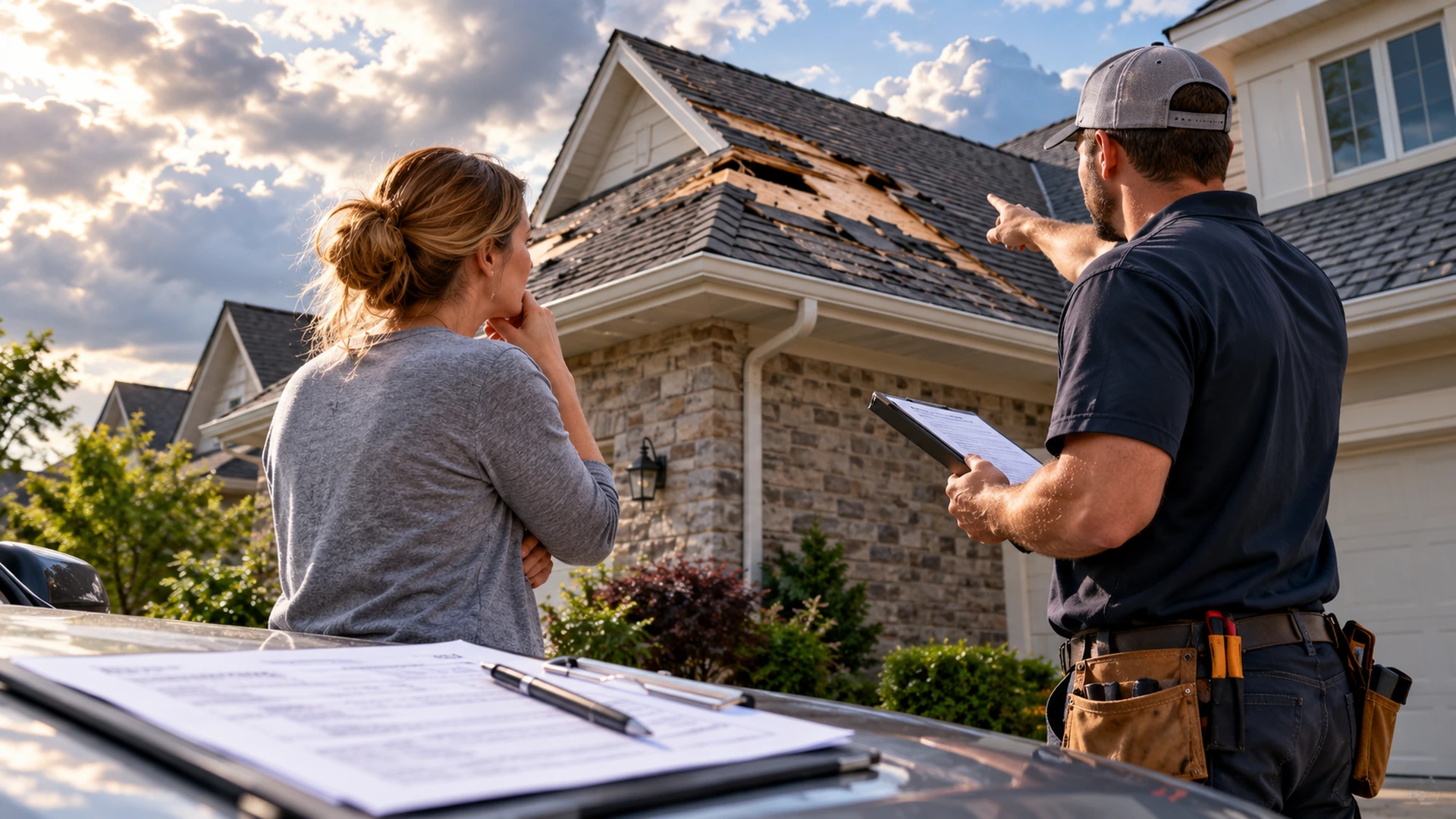
Common situations that can create coverage questions include:
- Worn or deteriorated shingles
- Long-term leaks
- Existing flashing problems
- Rot that developed gradually
- Damage caused by deferred maintenance
- Problems that existed before the reported loss
- Certain installation or workmanship defects
- Damage caused by an excluded peril
This does not mean every claim involving an older roof will be denied.
Imagine a roof that has been in service for many years but is still functioning properly. A severe windstorm then removes shingles from one slope and damages flashing around a vent. The age of the roof may influence depreciation or the repair options available, but the insurer still needs to evaluate the reported storm damage under the policy.
Now imagine another roof of the same age that was already leaking, had missing shingles before the storm, and showed widespread deterioration. Determining which damage was caused by the recent event could be more complicated.
This is one reason documentation matters.
A professional roof inspection can provide a clearer picture of the roof’s current condition and help separate visible storm-related problems from general wear.
Wind and Hail Claims Require Special Attention
Wind and hail are among the most common concerns homeowners have after severe weather.
Strong winds can loosen, crease, lift, or remove shingles. Wind can also damage flashing, ridge materials, gutters, vents, or other roof components. Hail may leave impact damage that is difficult to identify from the ground.
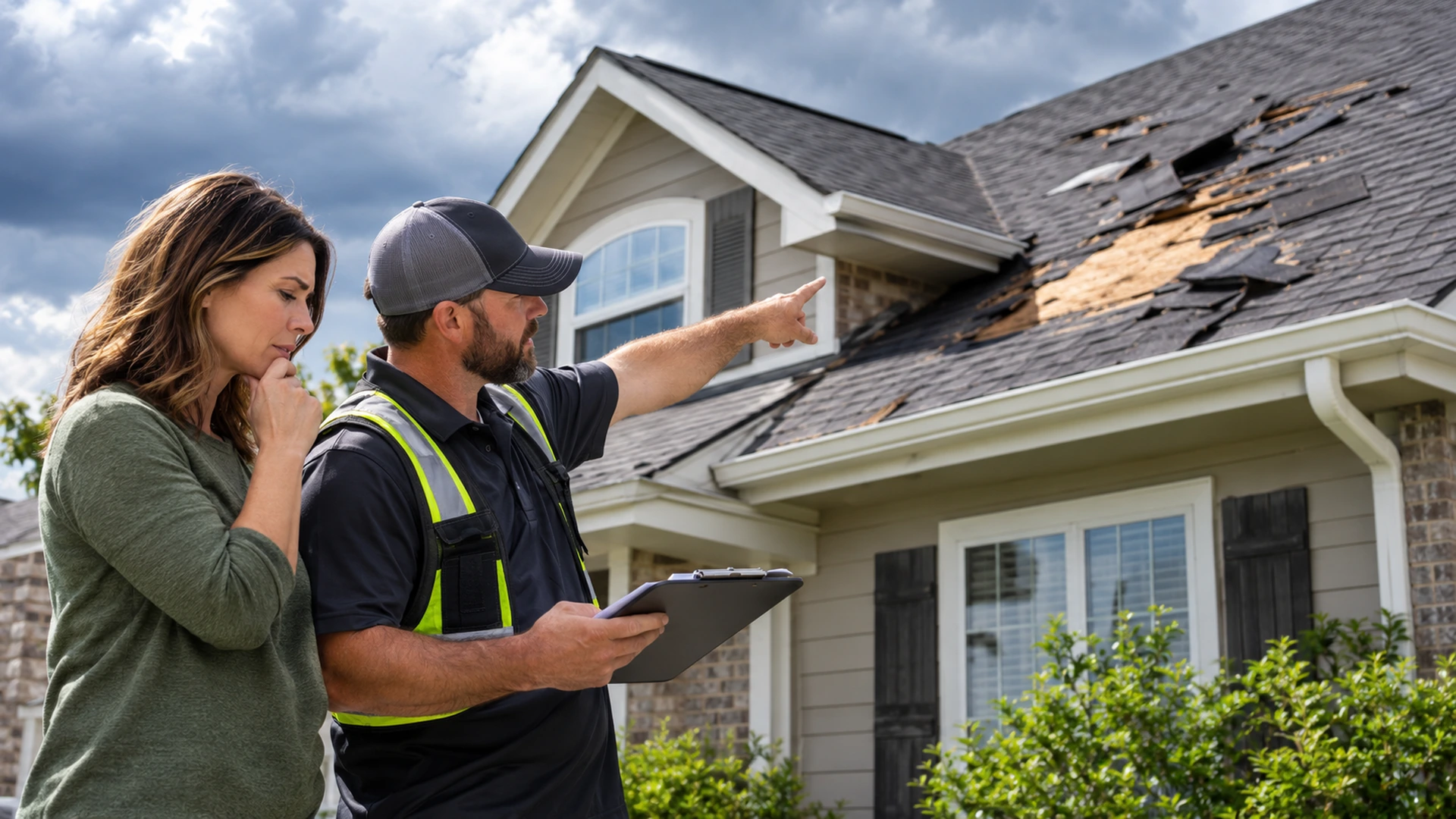
The important insurance question is not simply whether a storm occurred nearby. The insurer will consider whether the property sustained damage from a covered event.
North Carolina homeowners should also review whether their policy contains special provisions for wind or hail.
The North Carolina Department of Insurance explains that windstorm and hail coverage may be excluded from certain residential property policies depending on the location and insurer. Separate deductibles may also apply.
That makes reviewing the policy essential.
A homeowner should ideally know:
- Whether wind damage is covered
- Whether hail damage is covered
- Whether a separate wind or hail deductible applies
- Whether the deductible is a fixed dollar amount or percentage
- Whether the roof has special loss-settlement provisions
- Whether any endorsements change the standard coverage
If your roof was affected by severe weather, storm damage roof repair may become part of the recovery process after the damage has been inspected and documented.
Will Insurance Pay for a Complete Roof Replacement?
This is one of the most common questions after storm damage.
The answer is not automatically yes, even when a claim is covered.
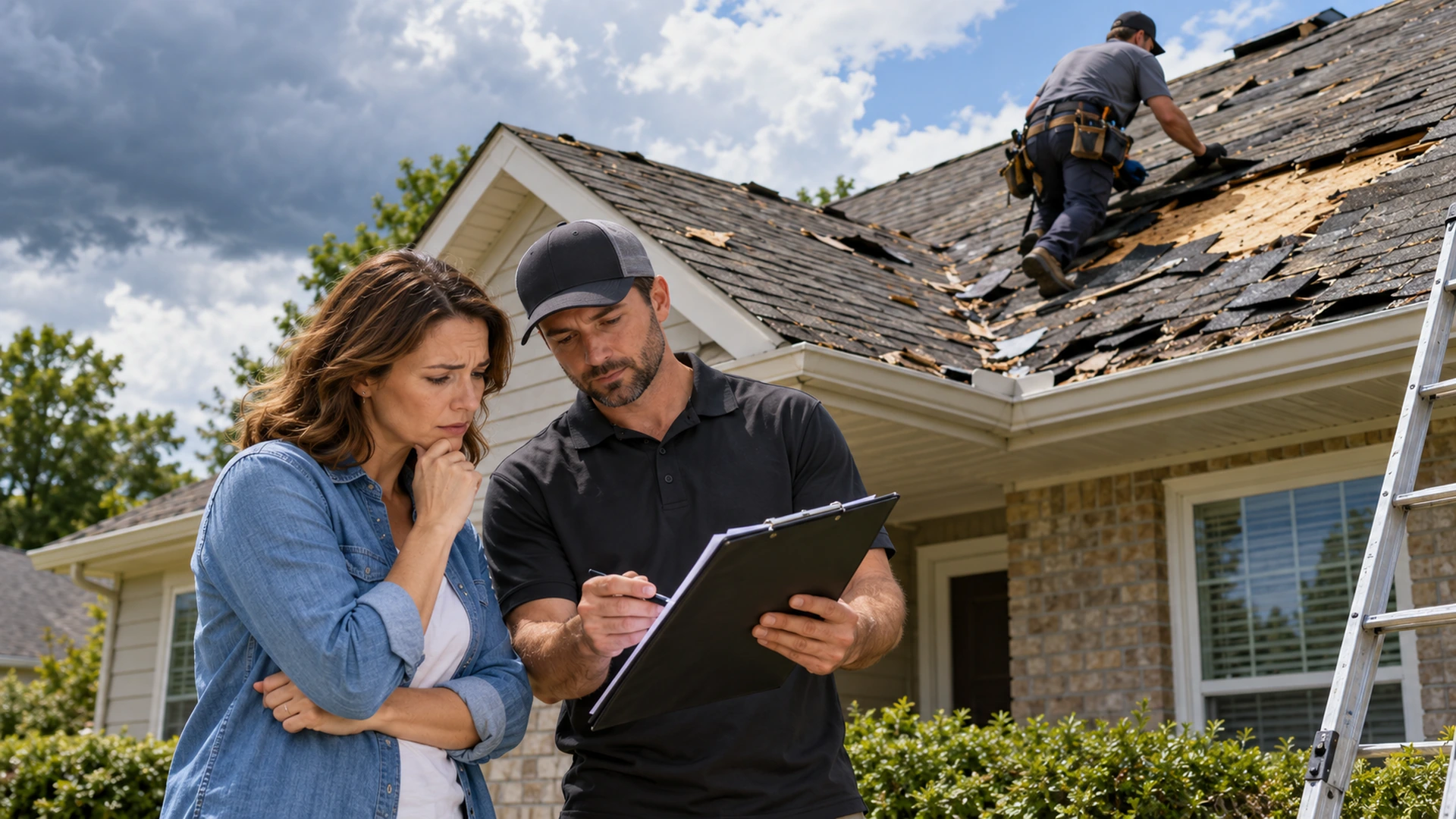
Insurance generally responds to the covered damage established during the claim. If a storm damages only a limited portion of the roof, the insurer may determine that repairs are appropriate. If the damage is extensive enough, the approved scope may involve replacing a larger section or potentially the entire roofing system.
Several factors may affect that decision:
- Extent of direct physical damage
- Location of the damage
- Repairability of the roofing material
- Policy language
- Applicable building requirements
- Roof condition
- Material availability
- Loss-settlement provisions
A contractor’s recommendation and an insurer’s coverage determination are also separate issues.
For example, a contractor may inspect an older roof and conclude that replacing the entire roofing system would make more practical sense than completing repeated repairs. That does not automatically require an insurance carrier to pay for full replacement.
The insurance company evaluates what the policy covers.
The homeowner then decides how to complete the roofing project based on the approved claim, contractor recommendations, roof condition, budget, and long-term plans for the property.
If replacement becomes necessary, reviewing the roof replacement process can help you understand what the construction side of the project may involve.
Actual Cash Value vs. Replacement Cost Can Change Your Claim Payment
Two homeowners can have similar roof damage and receive very different insurance payments.
One reason is the way their policies value damaged property.
Two terms homeowners frequently encounter are actual cash value and replacement cost value.
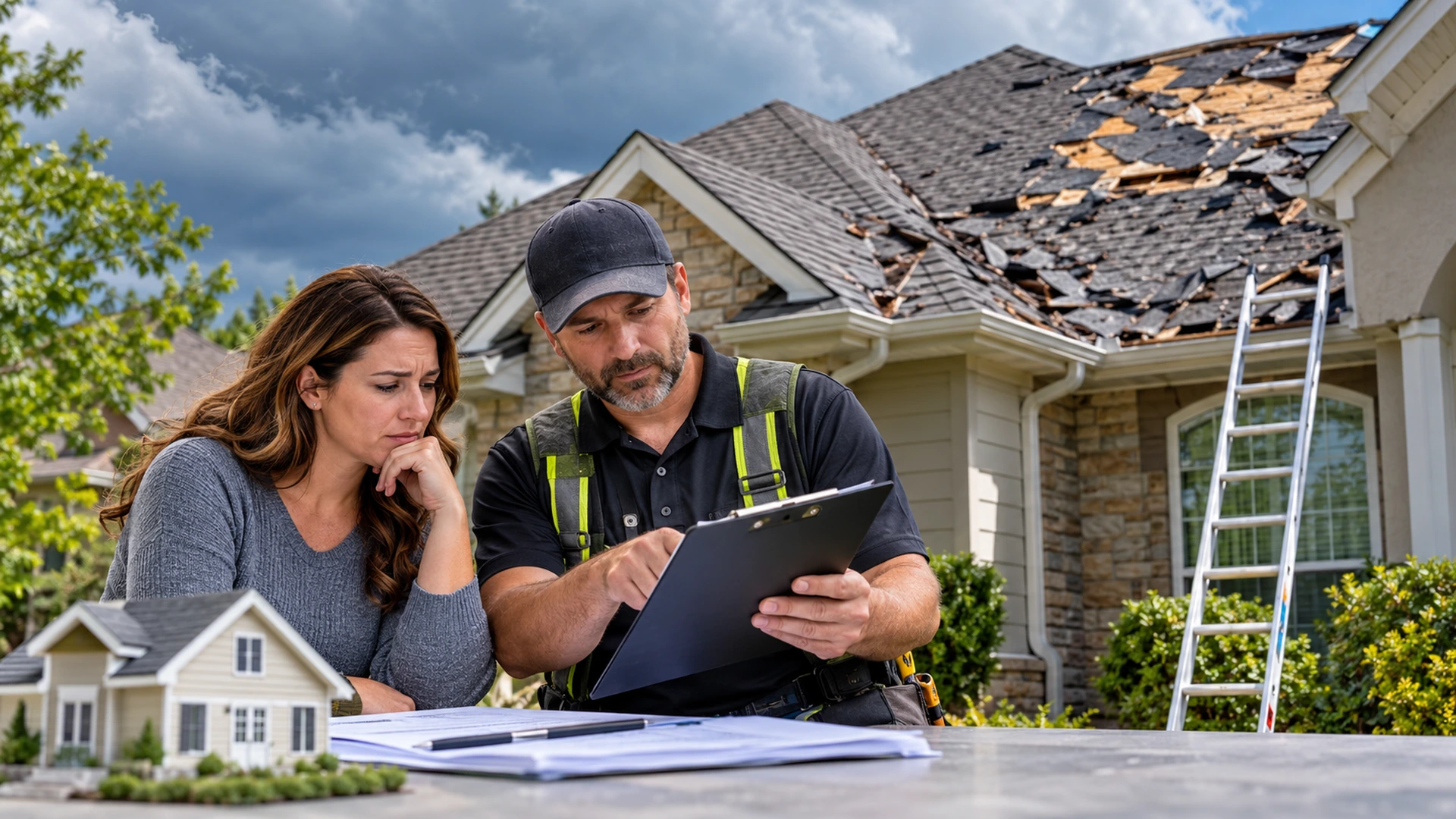
Actual Cash Value
Actual cash value, often shortened to ACV, generally takes depreciation into account.
Depreciation reflects factors such as:
- Age
- Wear
- Remaining useful life
- Condition of the damaged material
If an older roof is insured using an ACV loss-settlement method, depreciation may reduce the payment associated with the damaged roofing.
Replacement Cost Value
Replacement cost coverage generally focuses on the cost of replacing damaged property with materials of similar kind and quality without deducting depreciation in the same way ACV coverage does.
The exact payment process still depends on the policy.
Some replacement-cost claims may involve an initial payment followed by additional recoverable depreciation after qualifying repairs or replacement are completed and documented.
Homeowners should never assume how their policy works.
Look through the declarations, endorsements, and loss-settlement provisions for terms such as:
- Actual cash value
- Replacement cost
- Depreciation
- Recoverable depreciation
- Roof surface coverage
- Loss settlement
If something is unclear, ask the insurer or agent to explain how those provisions apply to the roof claim.
Understanding them before signing a roofing contract can reduce financial surprises later.
How Does the Insurance Deductible Affect Roof Repairs?
Even when roof damage is covered, the homeowner usually remains responsible for the applicable deductible.
A deductible is the amount of an insured loss that the policyholder is responsible for before the insurer’s payment is calculated according to the policy.
Suppose a covered roofing loss is approved. The insurer’s payment would generally reflect the applicable deductible along with any other policy provisions, limits, depreciation, or adjustments that apply.
The important point is that not every deductible works the same way.
A policy may have:
- A standard property deductible
- A wind deductible
- A hail deductible
- A hurricane or named-storm deductible
- A percentage-based deductible
Percentage deductibles deserve special attention because they may be calculated using the insured value of the home rather than simply the estimated roof repair cost.
Homeowners should therefore check the declarations page instead of relying on what they remember paying during an earlier claim.
Before filing or proceeding with major repairs, it helps to understand three numbers:
- The contractor’s estimated repair cost
- The applicable insurance deductible
- The insurer’s approved scope and valuation
These numbers help clarify what insurance may contribute and what costs could remain the homeowner’s responsibility.
What Should You Do Immediately After Roof Damage?
What happens during the first few days after a storm can affect both the condition of the property and the insurance process.
Safety comes first.
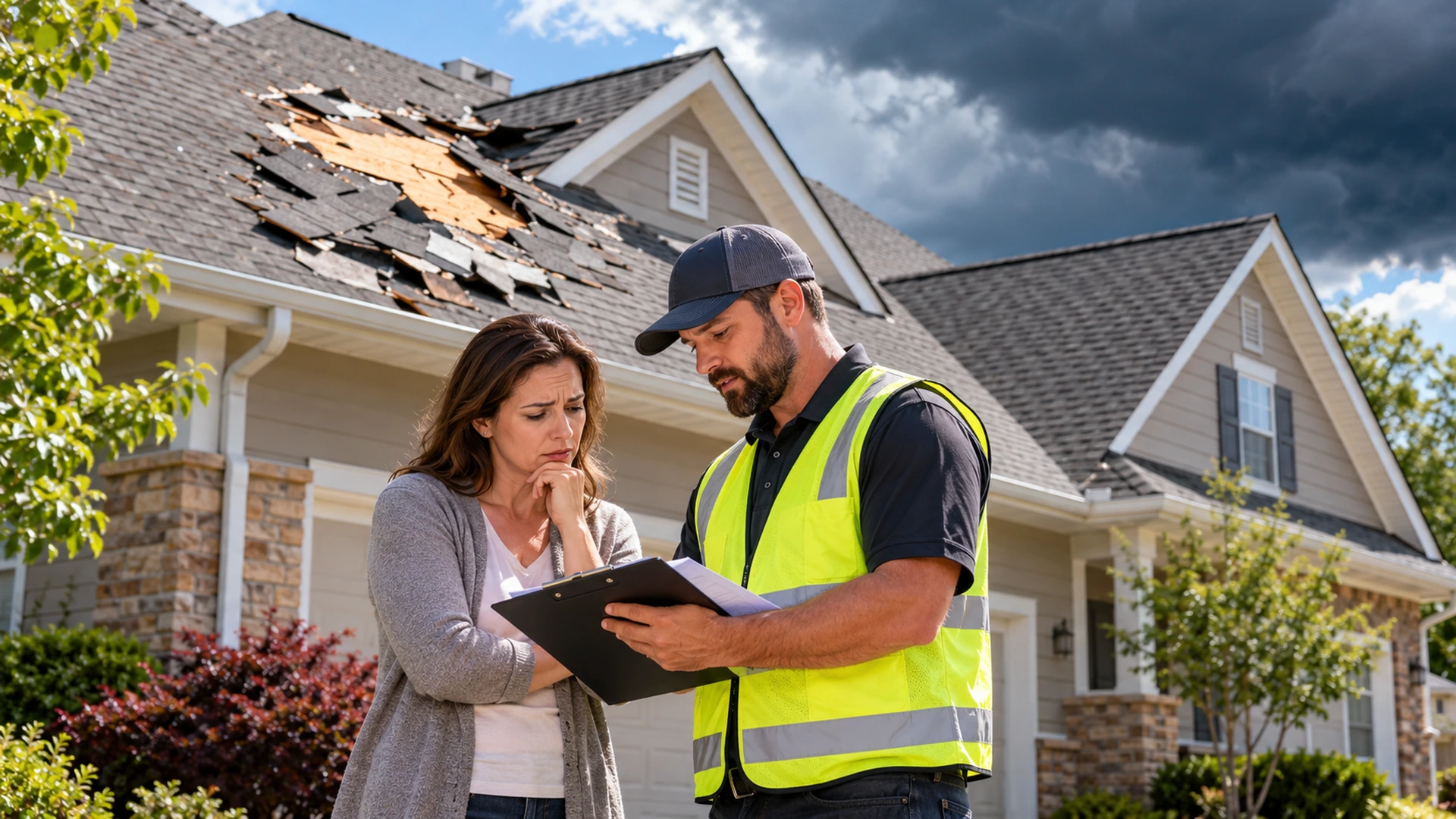
Do not climb onto a steep, wet, unstable, or visibly damaged roof simply to take photographs. Many roofing problems can be documented initially from the ground, inside the attic, or by a qualified roofing professional.
A practical response usually follows this sequence:
- Look for obvious signs of damage safely. Check for missing shingles, visible debris, damaged gutters, ceiling stains, active leaks, or fallen branches.
- Photograph what you can see. Take clear photographs of exterior and interior damage without placing yourself at risk.
- Protect the home from additional damage. Reasonable temporary measures may be needed when water is actively entering the property.
- Notify your insurer. Ask what information the company needs and what steps should occur before permanent repairs begin.
- Arrange a professional roofing inspection. Documentation from the inspection can help you understand the condition of the roofing system.
- Keep records. Save photographs, receipts, contractor estimates, claim numbers, adjuster information, emails, and notes from phone conversations.
- Avoid unnecessary permanent repairs before inspection. Give the insurance company an opportunity to inspect the loss unless emergency conditions require immediate action.
If the roof is allowing significant water intrusion, emergency roof repair may be necessary to reduce further property damage.
Temporary protection and permanent reconstruction are not always the same thing. Ask both the roofing contractor and insurance company how emergency work should be documented.
What Happens During a Roof Insurance Claim?
Understanding the roles involved can make the claim process less confusing.
The exact procedure varies between insurers, but a typical claim may involve several stages.
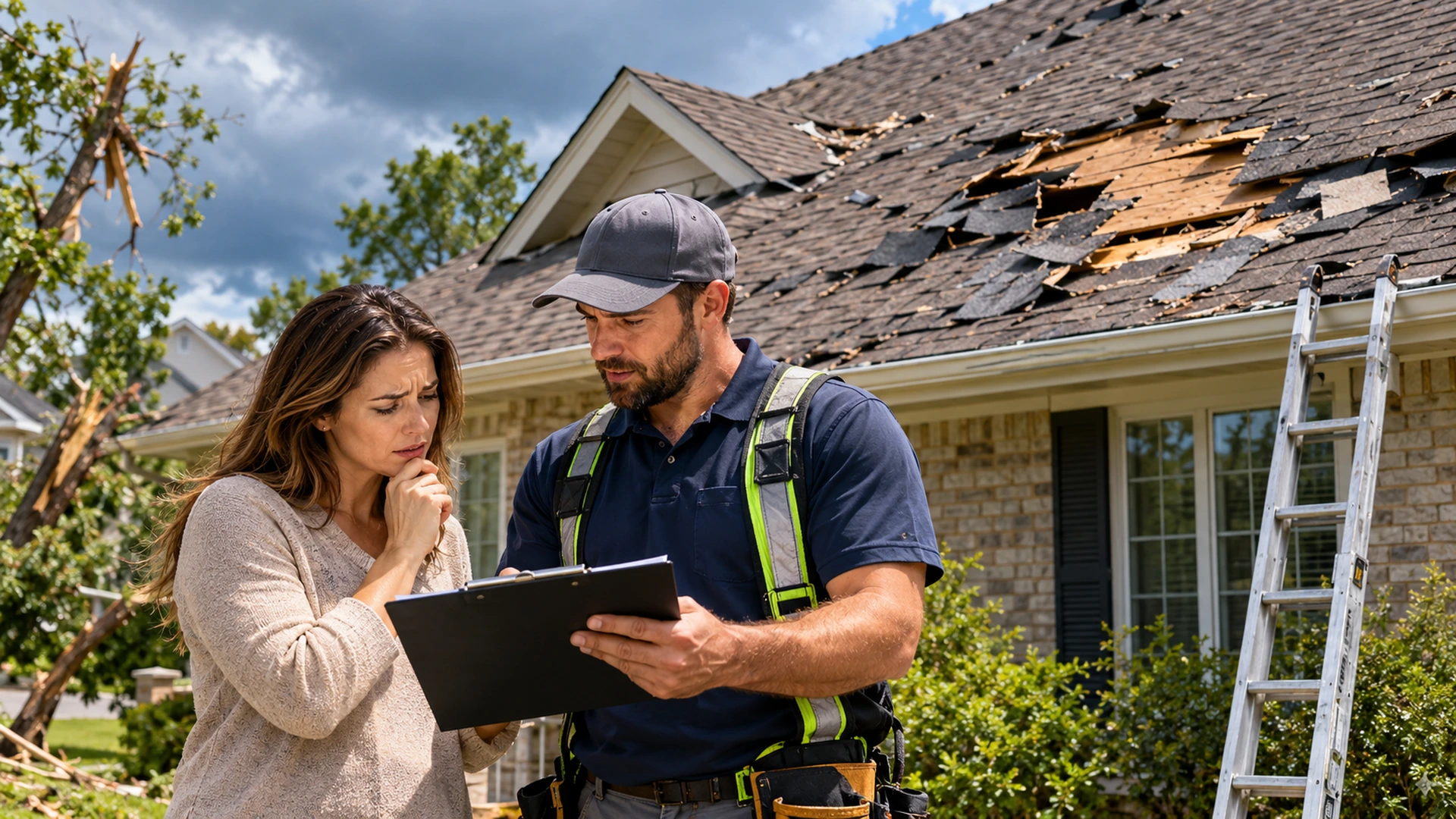
The Loss Is Reported
The homeowner contacts the insurer or insurance agent and provides basic information about what happened.
That may include:
- Approximate date of loss
- Type of storm or event
- Areas of the property affected
- Whether water entered the home
- Whether emergency repairs were required
The Roof Is Inspected
The homeowner may arrange a roofing inspection to understand the physical condition of the roof.
A contractor may identify visible problems such as damaged shingles, flashing issues, punctures, missing materials, or damage to roofing accessories.
The Insurance Company Evaluates the Claim
An insurance adjuster may inspect the property, review photographs, examine estimates, and evaluate the reported loss.
The adjuster works for the insurer or on behalf of the insurer. The insurance company then applies the policy terms to determine what is covered.
A Scope or Estimate Is Prepared
The insurer may provide an estimate outlining the work it believes is related to the covered loss.
A roofing contractor can separately prepare an estimate based on the work required to repair or replace the damaged roofing system.
Those two estimates may not always match.
Questions or Differences Are Addressed
If the estimates differ, the homeowner should ask why.
Possible differences may involve measurements, materials, quantities, repair techniques, code-related requirements, or components identified during the roofing inspection.
The goal should be clarification, not automatically assuming one side is wrong.
Lanes Contracting also provides information about storm damage roof repair for homeowners who want to better understand the roofing portion of this process.
What Can a Roofing Contractor Do During an Insurance Claim?
A roofing contractor can be an important source of information during a claim, but contractors and insurance adjusters have different responsibilities.
A roofing contractor can typically:
- Inspect accessible roof components
- Document visible damage
- Take photographs
- Identify areas requiring repair
- Explain available roofing options
- Prepare a repair or replacement estimate
- Discuss construction methods
- Answer questions about roofing materials
- Complete approved repair or replacement work
The contractor does not control the insurance policy.
An insurance company determines whether a loss is covered and what benefits are payable under that policy.
Homeowners should be cautious when anyone guarantees that insurance will pay for an entirely new roof before the carrier has evaluated the claim.
A more appropriate approach is for the roofing contractor to explain what was observed and what work appears necessary from a construction standpoint.
Lanes Contracting offers roof inspection services and assistance for homeowners dealing with storm-related roof concerns. Documentation from an inspection can provide useful information when you communicate with the insurer.
Does Roof Age Affect Insurance Coverage?
Roof age can matter, but age alone does not answer whether a claim is covered.
Insurance companies may consider roof age when evaluating:
- Property eligibility
- Renewal requirements
- Depreciation
- Loss settlement
- Roof condition
- Available coverage options
Older roofing materials may also be more susceptible to damage or deterioration.
However, homeowners should avoid assuming that an older roof automatically makes a storm claim invalid.
The important distinction is between existing deterioration and new covered damage.
For example, suppose a roof has older shingles but no known leaks or missing materials. A strong windstorm damages one section of the roof. The insurer may still need to evaluate the wind damage according to the policy.
Now consider a roof with extensive curling shingles, deteriorated flashing, recurring leaks, and previous unrepaired damage. A later storm occurs. Determining what damage is new may be more difficult.
An inspection can help document the roof’s condition after the event.
Homeowners who are already concerned about age-related roofing problems can review the signs that a North Carolina home may need roof replacement before deciding whether a repair or larger project makes sense.
Common Mistakes That Can Make a Roof Claim Harder
Many claim problems can be avoided by slowing down and documenting the situation carefully.
One mistake is signing a major roofing contract immediately after an unsolicited sales visit without first understanding the roof condition, insurance claim, or contractor terms.
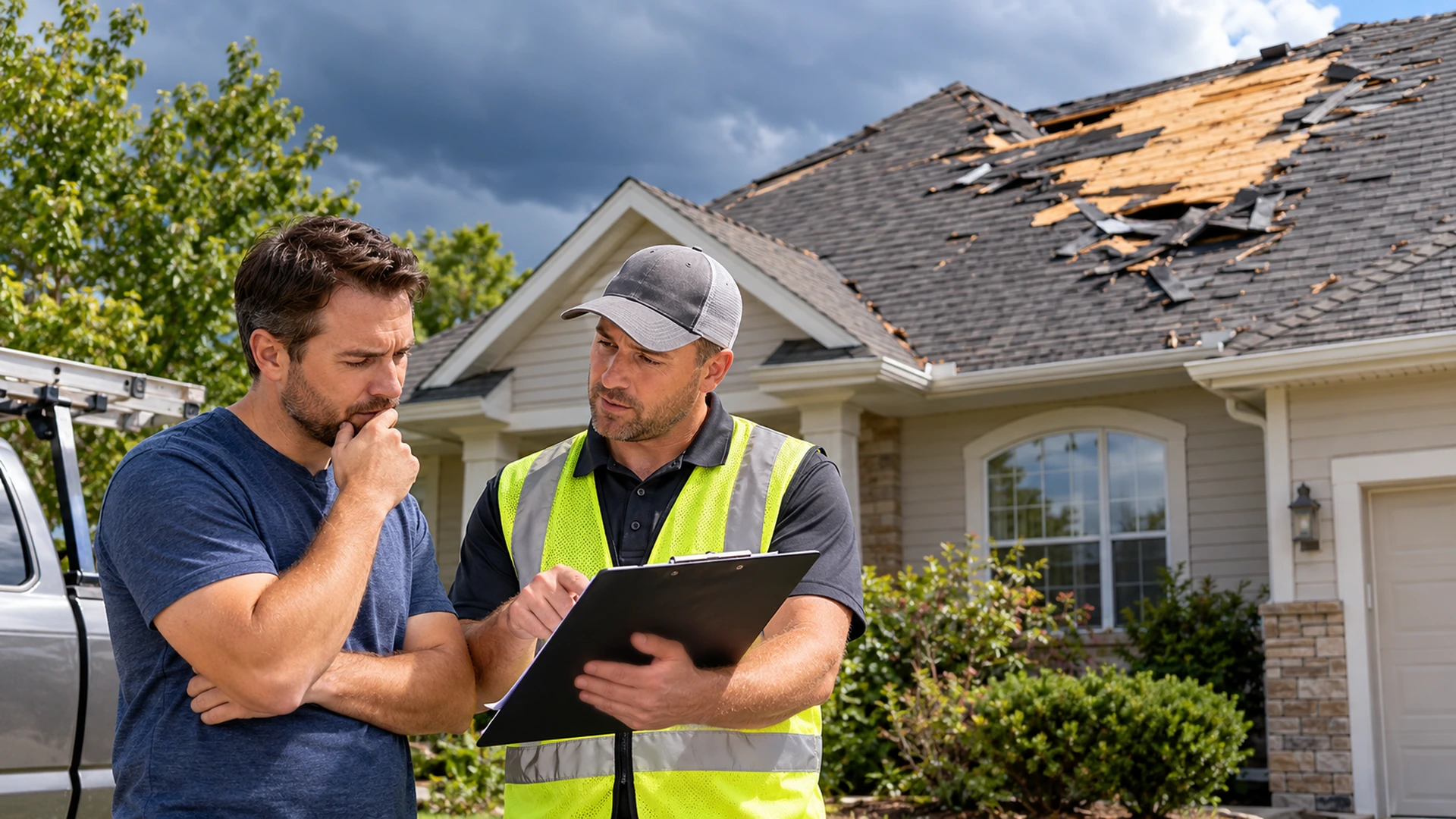
Another is allowing permanent repairs to begin before the insurer has had an opportunity to inspect the damage.
Homeowners should also avoid:
- Throwing away damaged materials before documentation
- Failing to photograph interior water damage
- Waiting unnecessarily while an active leak causes more damage
- Assuming all storm damage is automatically covered
- Assuming an older roof can never be covered
- Accepting verbal promises about insurance payment
- Signing a contract without understanding the scope of work
- Choosing a contractor solely because someone promises a “free roof”
- Ignoring the deductible
- Failing to read insurance correspondence
North Carolina insurance regulators have warned consumers to use caution when dealing with unsolicited storm-repair offers.
A legitimate roofing decision should begin with understanding the property damage and the proposed construction work.
When comparing contractors, homeowners can also review company qualifications, warranties, references, licensing requirements where applicable, and manufacturer credentials. Lanes Contracting provides information about its GAF Master Elite credentials for homeowners evaluating roofing contractors.
What Should You Ask Your Insurer and Roofing Contractor?
The insurance company and roofing contractor should answer different types of questions.
Questions for Your Insurance Company
Consider asking:
- Is the reported cause of damage covered?
- Which deductible applies?
- Is the roof settled using replacement cost or actual cash value?
- Is depreciation being withheld?
- Can depreciation be recovered after repairs?
- Are there deadlines for completing work?
- Are there special wind or hail provisions?
- What parts of the roof are included in the approved scope?
- What documentation is required if additional damage is discovered?
Questions for Your Roofing Contractor
Ask questions such as:
- What damage did the inspection find?
- Which areas require immediate attention?
- Can the damaged section reasonably be repaired?
- Would replacement be recommended based on the roof’s condition?
- What materials are included in the estimate?
- What happens if hidden damage is discovered?
- What warranties apply to the completed work?
- How will the property be protected during construction?
- How will cleanup be handled?
Clear answers from both sides make it easier to compare the insurance scope with the actual construction requirements.
If insurance covers only part of a project or the homeowner chooses additional work beyond the claim, financing options may also be worth reviewing before construction begins.
Making the Right Decision After Roof Damage
So, does home insurance cover roof damage?
It may, especially when the damage results from a sudden event covered by the policy. Wind, hail, falling debris, fire, and other covered events can lead to valid roof claims, but coverage cannot be determined from the appearance of the roof alone.
The homeowner still needs to understand:
- What caused the damage
- Whether that cause is covered
- Which deductible applies
- Whether exclusions affect the loss
- How the policy values roof damage
- Whether the roof can reasonably be repaired
- What work the insurer has approved
- What work the contractor believes is necessary
For North Carolina homeowners, checking wind and hail provisions is especially important because coverage and deductibles can vary.
The process becomes much easier when you begin with good information rather than assumptions.
If you suspect storm damage, a professional inspection can help establish the current condition of the roof and identify areas that may need repair or replacement. Lanes Contracting provides roof inspections for homeowners who want a clearer understanding of their roofing system after severe weather.
Once the damage has been documented and your insurance questions have been addressed, you can make a more informed decision about repairs.
If you are ready to discuss your roof and receive an estimate for the work, request a free estimate from Lanes Contracting.
Insurance coverage and claim payments are determined by the insurance carrier according to the individual policy. A roofing contractor can inspect, document, estimate, and repair roof damage, but cannot guarantee that an insurer will approve or pay a claim.