

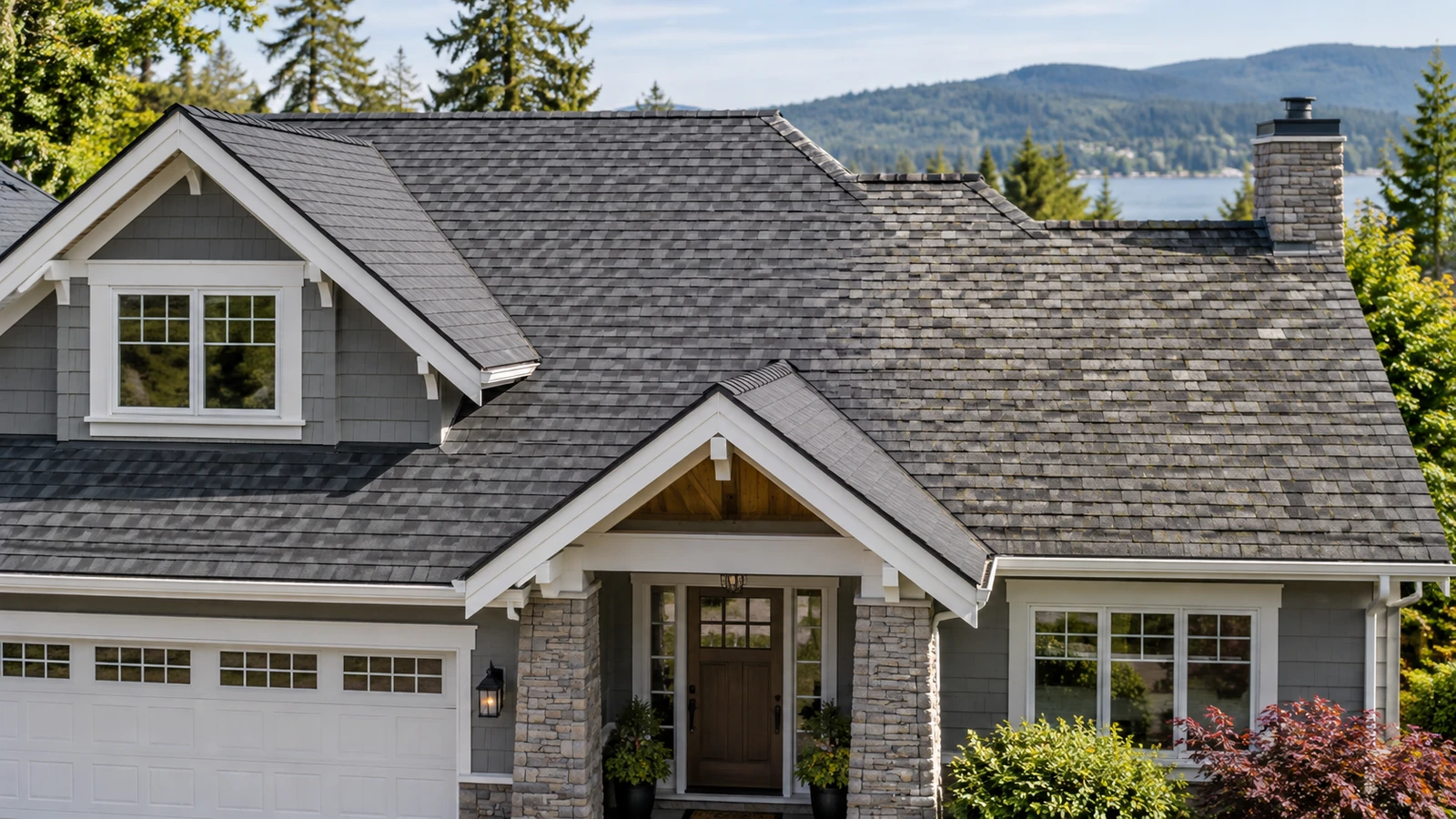
Most homeowners can expect an asphalt shingle roof to last somewhere around 20 to 30 years, but that number should be treated as a general planning range rather than a guaranteed expiration date.
The actual asphalt shingle roof lifespan depends on much more than the age printed on an installation record. The type of shingles, quality of installation, attic ventilation, local weather, sun exposure, moisture, previous storm damage, maintenance, and even the design of the roof can influence how quickly materials deteriorate.
One roof may still be performing well after decades of service, while another of similar age may already show widespread cracking, granule loss, leaks, or storm-related damage.
That is why homeowners should evaluate both roof age and roof condition when deciding whether to repair, monitor, or replace an asphalt shingle roofing system.
Understanding how shingles age also makes it easier to spot problems early, protect the structure beneath the roof, and plan for eventual roof replacement services before an aging roof turns into an unexpected emergency.
How Many Years Does an Asphalt Shingle Roof Usually Last?
For many residential properties, asphalt shingles remain functional for roughly 20 to 30 years under favorable conditions.
Some premium architectural shingles may remain serviceable longer, while basic shingles exposed to harsh environmental conditions may begin showing significant deterioration sooner.
The important distinction is that the expected lifespan represents an estimate, not a countdown timer.
A roof does not automatically become unusable the day it reaches 20, 25, or 30 years old. Likewise, a relatively young roof should not automatically be considered healthy simply because it has not reached the end of its expected age range.
Several factors can accelerate deterioration, including:
- Poor roof installation
- Severe wind or hail
- Repeated moisture exposure
- Poor attic ventilation
- Excessive heat buildup
- Damaged or missing shingles
- Problems with flashing
- Tree debris and organic buildup
- Previous leaks
- Improper repairs
- Roof design and slope
- Lack of inspections
For this reason, the condition of an aging roof is often more useful than age alone.
If you do not know when your roof was installed, a professional roof inspection can help evaluate its current condition and identify signs of deterioration.
The Type of Asphalt Shingle Can Affect Roof Lifespan
Asphalt shingles are not all manufactured the same way.
Different products use different construction methods, thicknesses, reinforcement, profiles, and protective features. Those differences can influence durability and expected service life.
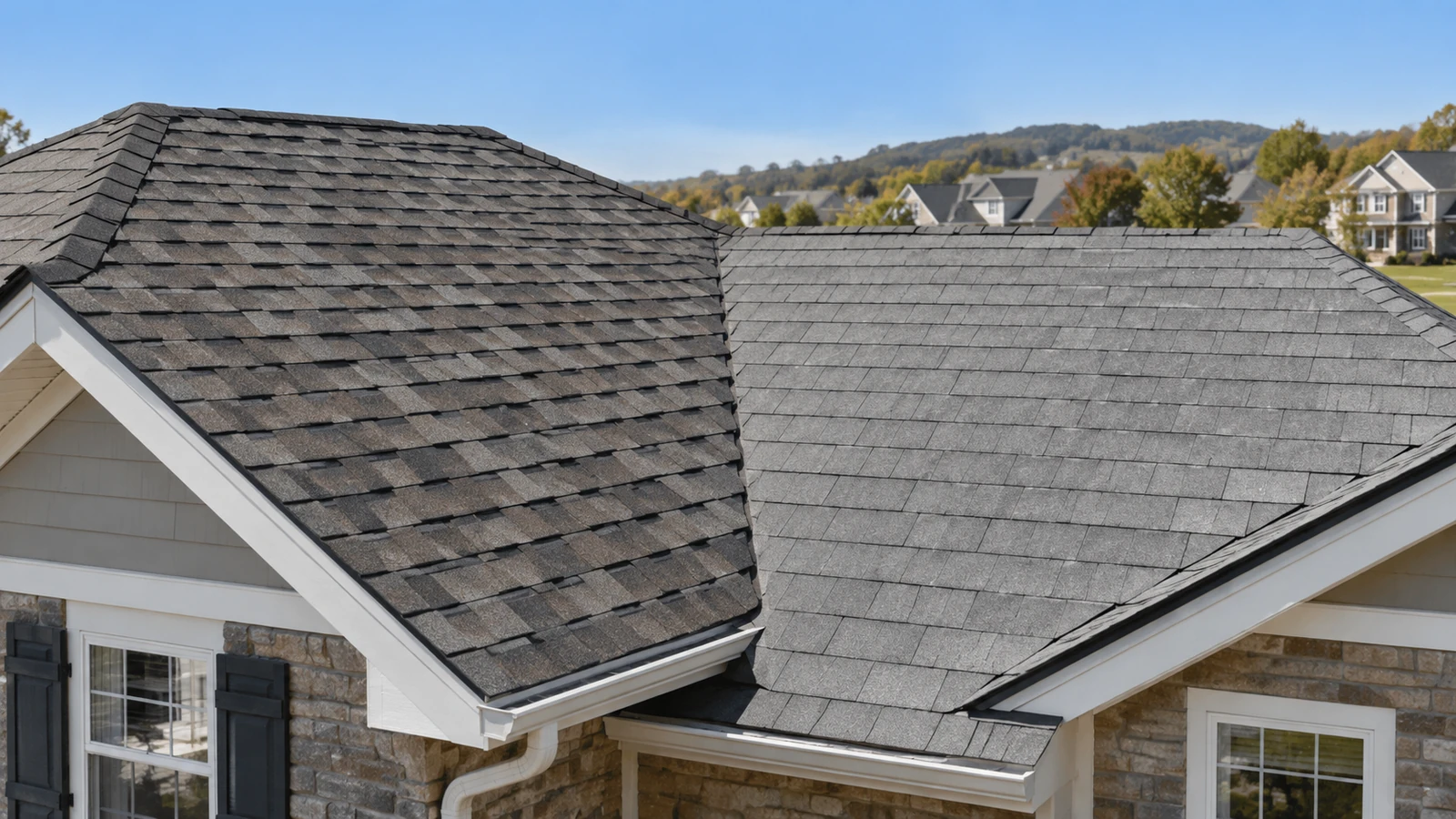
Two of the most common categories homeowners encounter are 3-tab shingles and architectural shingles.
3-Tab Asphalt Shingles
Traditional 3-tab shingles have a flatter and more uniform appearance.
They have historically been popular because they provide a straightforward asphalt roofing option at a relatively accessible price point.
Because they generally use a lighter construction than architectural shingles, their expected service life may be shorter under similar conditions.
That does not mean every 3-tab roof fails early. A properly installed roof with adequate ventilation and limited storm exposure can still provide many years of service.
However, homeowners with an older 3-tab roof should pay close attention to signs such as curling, cracking, missing shingles, and granule loss as the system ages.
Architectural Asphalt Shingles
Architectural shingles are also commonly called dimensional or laminate shingles.
Instead of the flatter appearance associated with traditional 3-tab products, architectural shingles use multiple layers or design elements to create greater visual depth.
Their heavier construction can also provide improved durability depending on the specific roofing product and installation.
Architectural shingles have become common on residential roofing projects because homeowners often prefer their combination of appearance, performance, and available styles.
Still, the roofing material itself is only one part of the system.
Even a high-quality architectural shingle can experience premature problems when installation, ventilation, flashing, or roof-deck conditions are poor.
Why Installation Quality Matters So Much
One of the biggest influences on roof durability is something homeowners rarely see after the project is complete: how the roof was installed.
An asphalt roof is not simply a layer of shingles attached to wood.
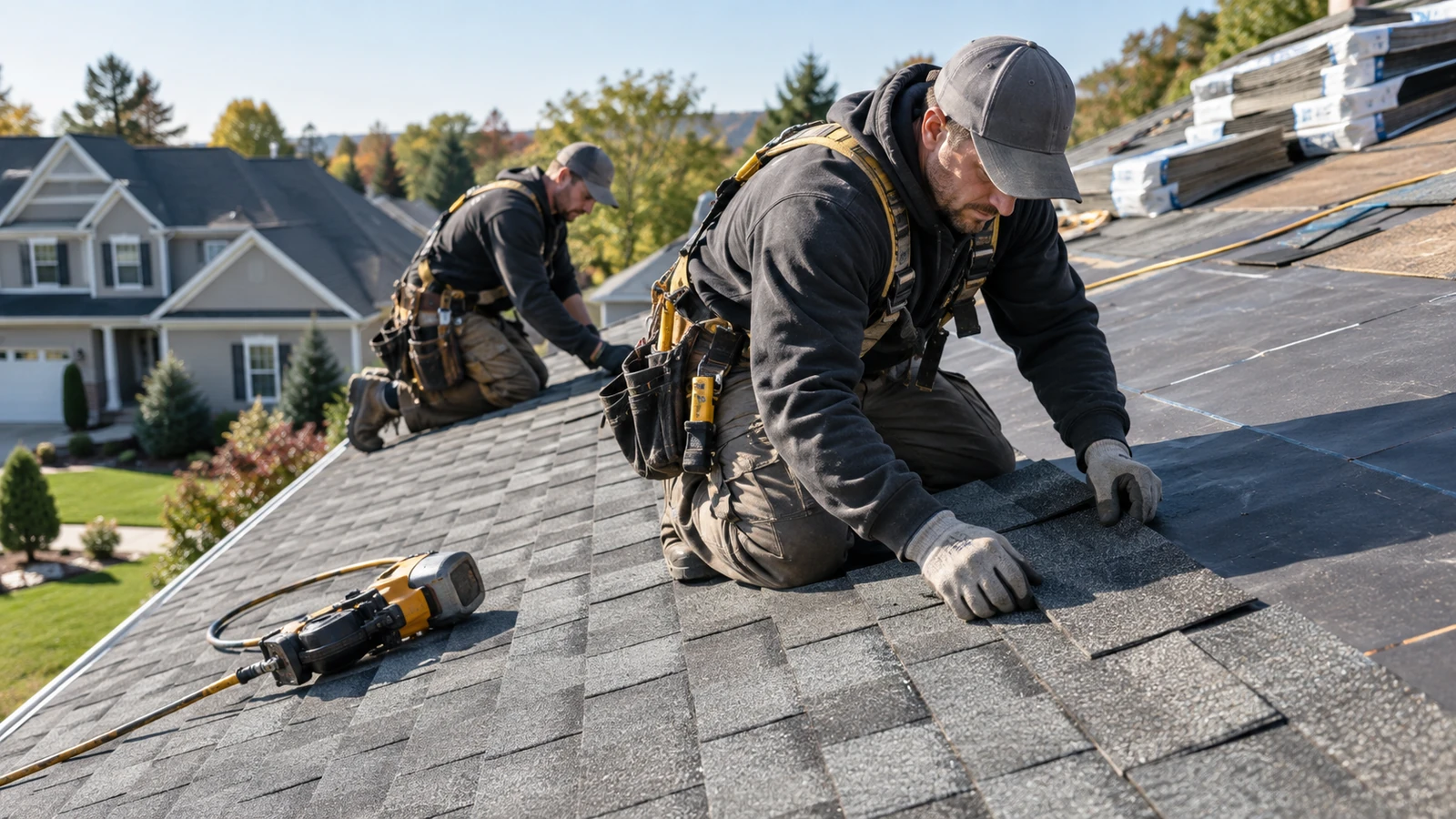
It is a complete system made from several components that must work together to keep water out and allow the structure to function properly.
Depending on the roof design, those components may include:
- Roof decking
- Underlayment
- Leak barriers
- Starter shingles
- Asphalt shingles
- Flashing
- Drip edge
- Ridge caps
- Intake ventilation
- Exhaust ventilation
- Pipe boots
- Valley protection
- Other roof penetrations
A problem with one component can affect the performance of the entire system.
For example, shingles may still look relatively normal while damaged flashing around a chimney allows water into the roof assembly.
Improper fastening can also create problems. Shingles must be secured correctly so they remain attached during normal wind exposure and perform according to the roofing manufacturer’s installation requirements.
Poor alignment, inadequate underlayment, incorrect flashing installation, or insufficient ventilation may reduce the useful life of a roof even when the shingles themselves are considered durable products.
This is why the roofing contractor matters just as much as the material.
Homeowners comparing contractors should look beyond the lowest project price and consider installation standards, manufacturer requirements, warranties, communication, inspections, and contractor credentials.
Lane’s Contracting also provides information about its GAF Master Elite credentials for homeowners researching roofing qualifications.
Weather Can Shorten the Life of Asphalt Shingles
Every roof spends its entire service life exposed to outdoor conditions.
Sunlight, heat, rain, wind, humidity, falling branches, hail, and seasonal temperature changes gradually affect the roofing system.
How quickly deterioration occurs depends partly on how intense and frequent those conditions are.
Heat and Direct Sunlight
Roof surfaces can become significantly hotter than the outdoor air around them.
Asphalt shingles are manufactured to tolerate outdoor exposure, but repeated heating and cooling still place stress on roofing materials over time.
A roof section receiving strong afternoon sunlight may age differently from a roof slope that receives more shade.
Heat can become a greater concern when the attic below the roof also lacks proper ventilation.
Instead of heat being able to move through the attic space appropriately, excessive temperatures may remain trapped beneath the roofing system.
Heavy Rain and Moisture
A roof is built to shed water away from the home.
Problems begin when water finds a path beneath the shingles or through vulnerable areas around roof penetrations.
Common trouble areas can include:
- Chimneys
- Valleys
- Skylights
- Plumbing vents
- Roof-wall intersections
- Damaged flashing
- Missing shingles
- Poorly sealed penetrations
Once moisture enters the roofing system, it can affect more than the shingles.
Water may eventually reach decking, insulation, ceilings, drywall, framing, or other interior materials.
Wind
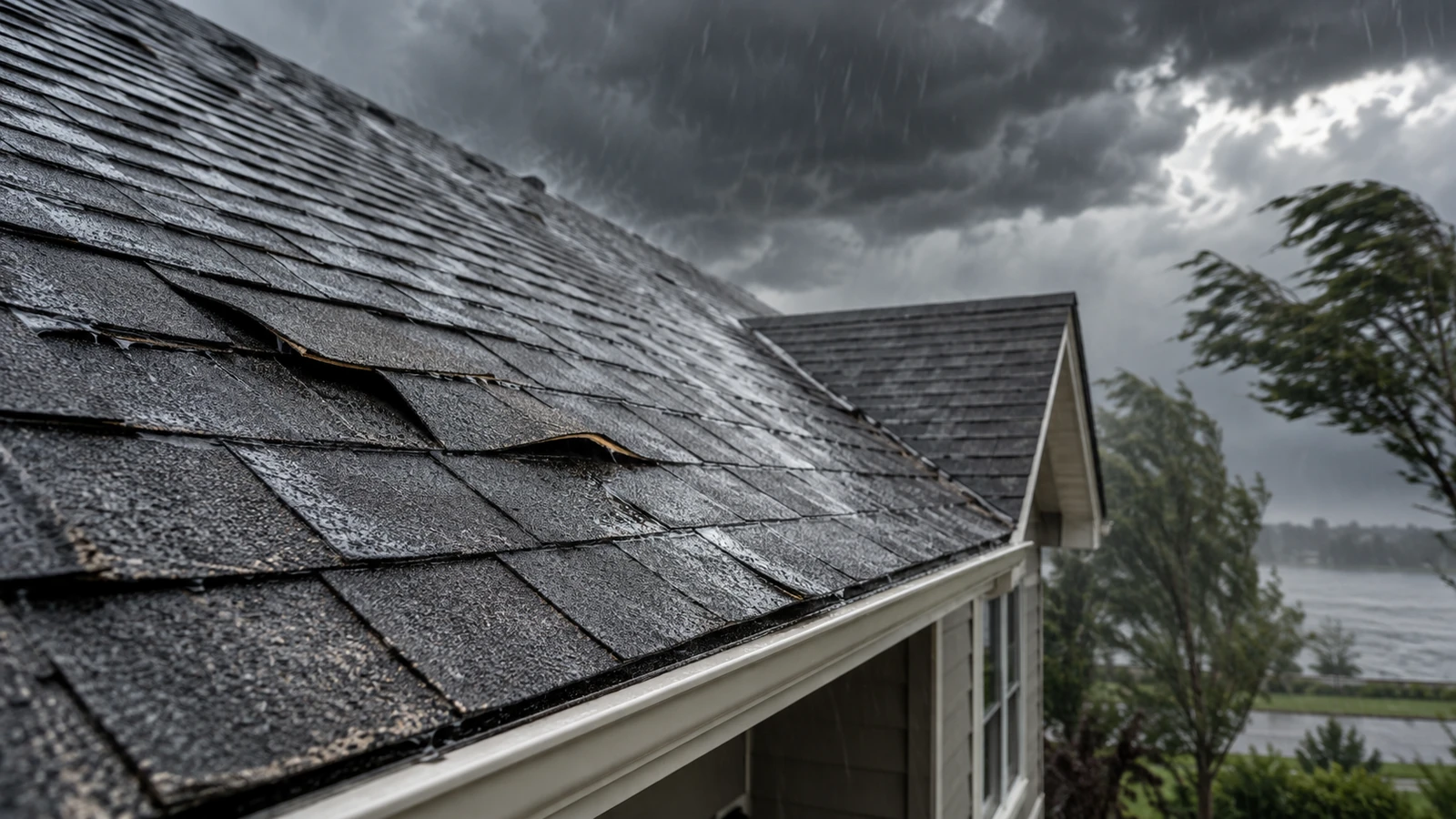
Strong winds can place significant pressure on shingles.
In some situations, wind can lift edges, loosen previously damaged shingles, break weakened seals, or remove roofing materials completely.
One missing shingle may appear minor from the ground, but the exposed area underneath can become vulnerable to rain.
After severe weather, homeowners should visually inspect the property from a safe location and consider professional storm damage roofing services when damage is suspected.
Hail and Falling Debris
Hail can damage shingles without necessarily creating a dramatic hole in the roof.
Impact may affect the shingle surface, protective granules, or underlying material.
Tree branches and other debris can also cause localized damage during severe weather.
Because storm-related problems are not always obvious, a professional evaluation may be useful after significant weather events.
Lane’s also provides storm damage roof repair services when roofing damage needs to be addressed after a storm.
Attic Ventilation Can Influence Roof Durability
Homeowners often focus on what is happening on top of the roof, but conditions underneath the roof matter too.
Attic ventilation helps manage heat and moisture within the roof system.
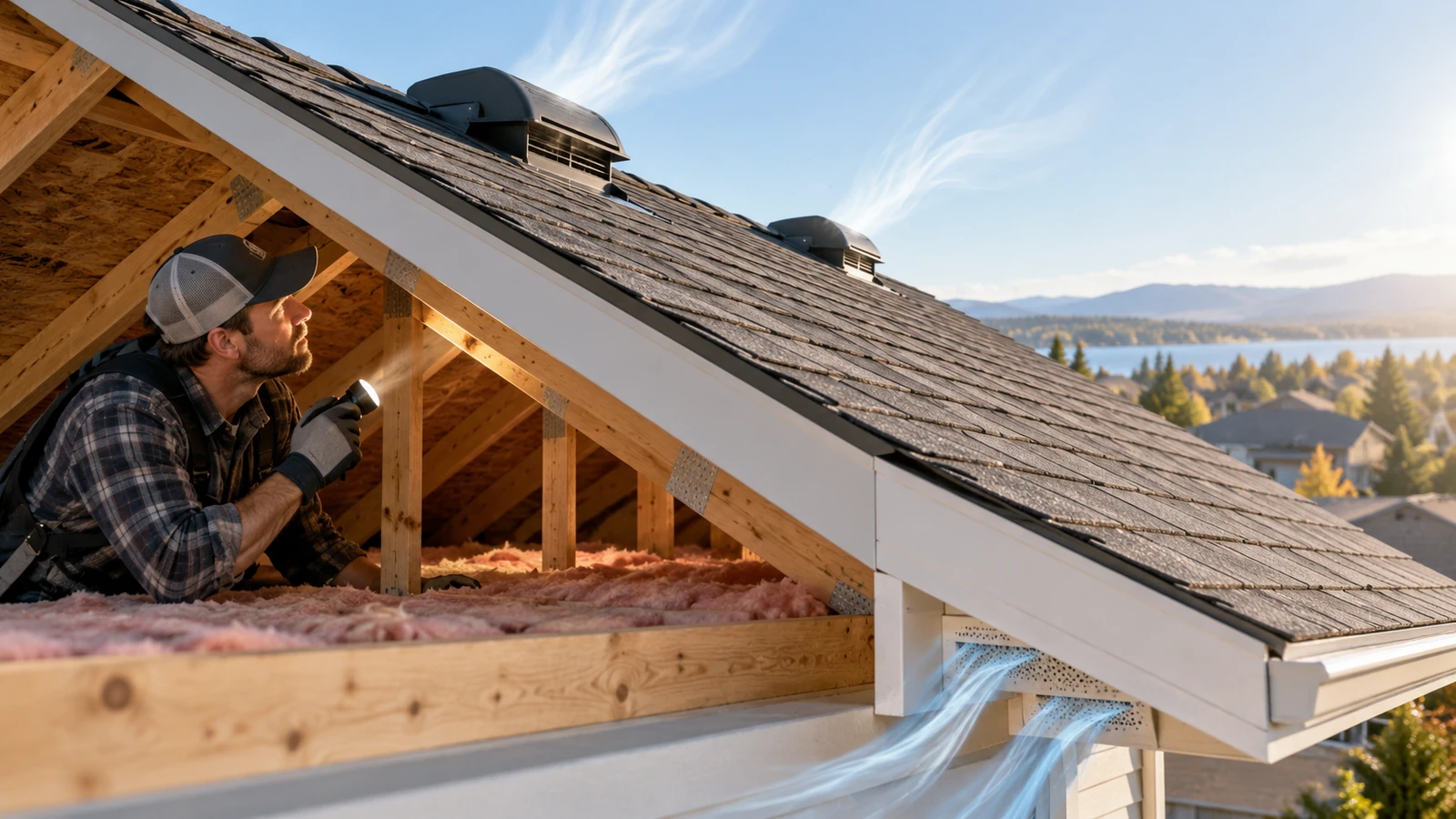
A properly designed system typically allows outside air to enter through intake vents while warmer air exits through exhaust vents.
When airflow is restricted or ventilation is poorly balanced, excessive heat and moisture may build up inside the attic.
Over time, those conditions can contribute to problems affecting:
- Roofing materials
- Roof decking
- Insulation
- Wooden structural components
- Indoor comfort
- Moisture management
Imagine a home with relatively new shingles but inadequate attic ventilation.
From the street, the roof may appear perfectly normal.
Inside the attic, however, excessive heat could be accumulating during warmer months while moisture remains trapped during other parts of the year.
If the underlying cause is never addressed, replacing the shingles alone may not fully solve the roofing problem.
That is why ventilation should be evaluated as part of the complete roofing system, especially when homeowners are dealing with premature deterioration or planning a replacement.
Roof Maintenance Helps Protect the Remaining Lifespan
Asphalt roofs do not usually require constant hands-on maintenance from homeowners, but they should not be completely ignored either.
The goal of roof maintenance is largely to identify small problems before they develop into larger ones.
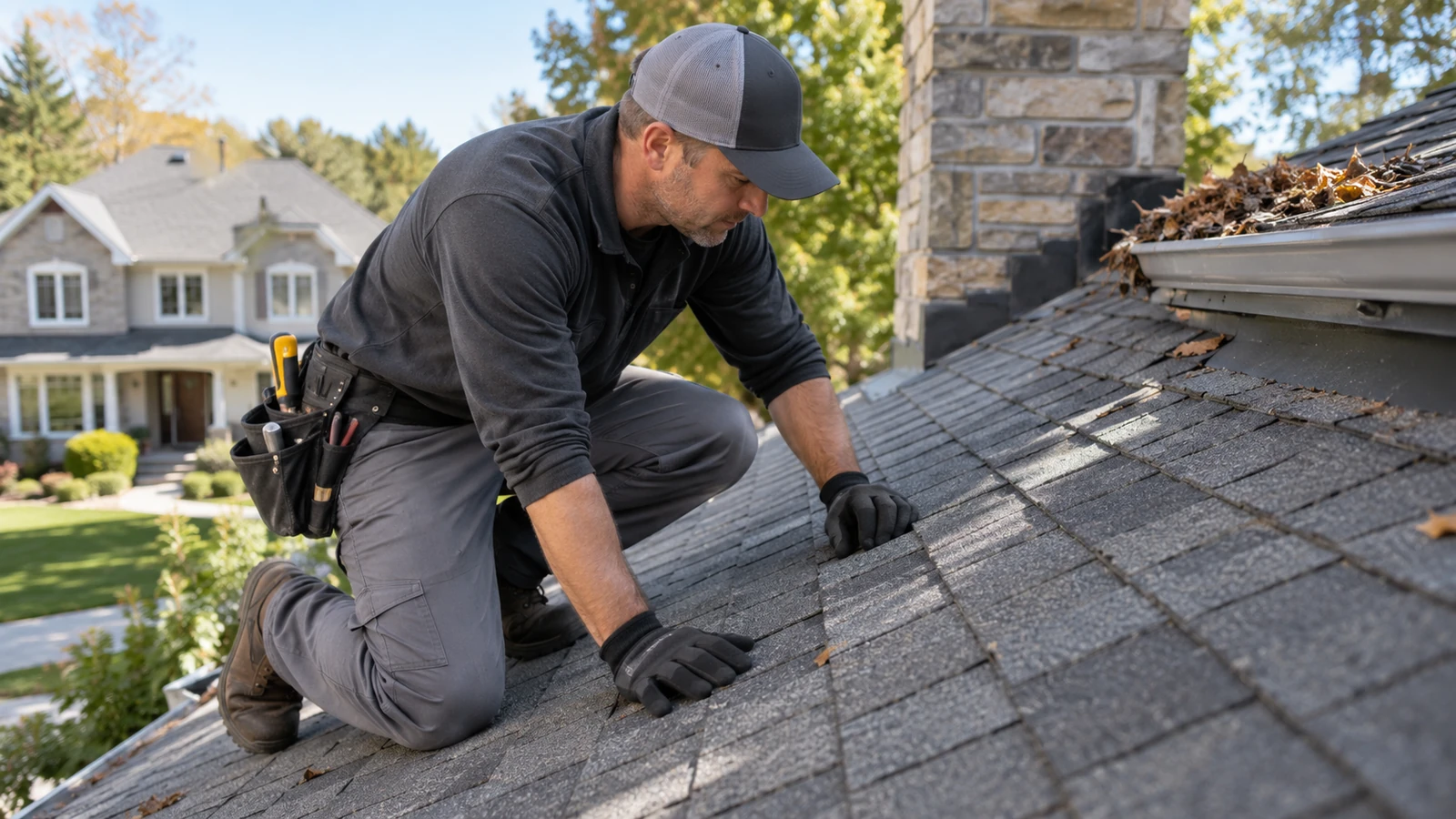
A minor issue that receives attention quickly may sometimes be addressed through a relatively localized repair.
The same issue left unnoticed for several months or years may allow water to damage surrounding materials.
Homeowners can watch for visible changes such as:
- Missing shingles
- Cracked shingles
- Curling edges
- Loose flashing
- Debris buildup
- Damaged gutters
- Unusual roof lines
- Granules collecting near downspouts
- Water stains indoors
- Damp attic areas
You do not need to climb onto the roof to perform basic observations.
In fact, walking on a roof without the proper safety equipment or experience can create unnecessary risk.
A visual check from the ground, from windows, or from another safe location can help identify obvious concerns.
When a potential issue is found, professional roof repair services can determine whether the problem is localized or part of broader roof deterioration.
Common Signs an Asphalt Shingle Roof Is Aging
Most roofs do not suddenly reach the end of their useful life overnight.
Deterioration often develops gradually.
Recognizing those changes can give homeowners time to investigate the problem before major damage occurs.
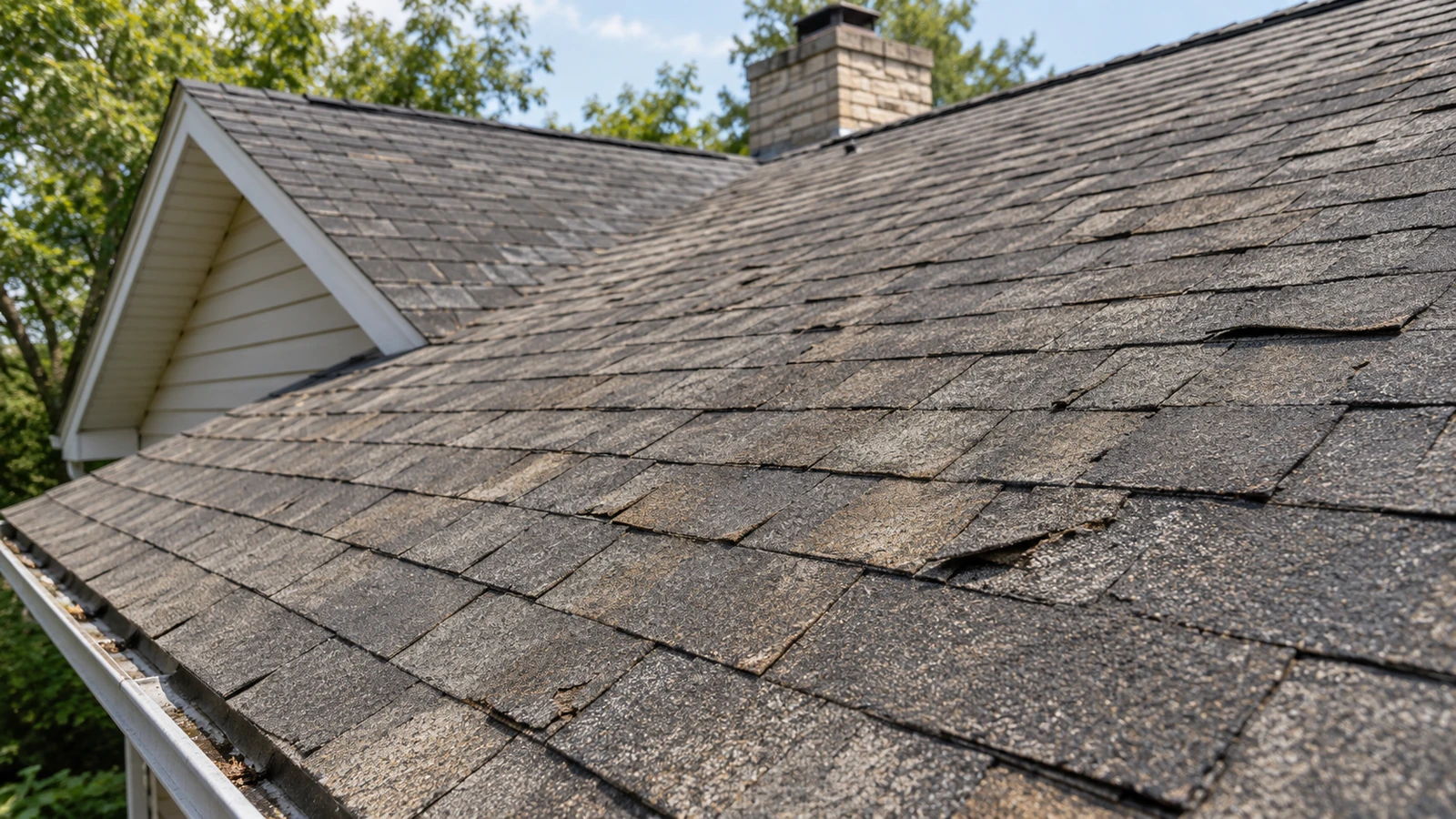
Shingles Are Beginning to Curl
Shingles are designed to lie relatively flat against the roof surface.
When edges begin curling upward or sections become visibly distorted, the roof material may be experiencing significant aging or deterioration.
A few unusual shingles do not necessarily mean the entire roof needs replacement.
Widespread curling across multiple slopes deserves closer attention.
Shingles Are Cracked
Cracking may occur as asphalt roofing materials age and experience years of environmental exposure.
Cracks can create vulnerable areas where moisture may eventually penetrate.
The seriousness depends on how widespread the damage is and whether other signs of roof deterioration are present.
Shingles Are Missing
A missing shingle creates an obvious weak point in the roofing system.
Strong wind is one potential cause, although installation problems and material deterioration may also contribute.
One isolated missing shingle may sometimes be repairable.
Repeated shingle loss across an older roofing system may indicate a larger problem.
Granules Are Accumulating in Gutters
Asphalt shingles have mineral granules across their exposed surface.
Some granule shedding can occur naturally, particularly with new roofing products.
Heavy or increasing granule loss on an older roof can be more concerning.
If areas of shingles appear bare or granules repeatedly collect in gutters and downspouts, the roof may be experiencing advanced wear.
Shingle Color Looks Uneven
Color variations are not automatically a sign of roof failure.
However, significant changes can sometimes result from aging, material loss, previous repairs, moisture, or environmental exposure.
Any unusual surface condition should be considered alongside the rest of the roof.
The Roof Has Developed Repeated Leaks
One roof leak does not always mean a complete replacement is necessary.
A small problem around flashing, a vent, or an isolated damaged area may be repairable.
Repeated leaks from different areas are more concerning.
If the roof is already approaching the later part of its expected service life, recurring leaks may justify evaluating replacement rather than continuing to make individual repairs.
Does Granule Loss Mean Your Roof Needs Replacement?
Not necessarily.
Granule loss is commonly associated with asphalt shingles, but the context matters.
New shingles may release some loose granules after installation. These are often excess granules left from the manufacturing process.
A small amount of granule movement therefore does not automatically indicate a serious problem.
The situation becomes more important when an older roof develops:
- Large bare areas
- Noticeable surface deterioration
- Significant gutter accumulation
- Cracking alongside granule loss
- Repeated leaking
- Multiple damaged shingles
Granules help protect the asphalt material below them from environmental exposure.
As more of that protective surface disappears, the underlying shingle material becomes increasingly exposed.
A roofing professional can evaluate whether the granule loss is normal for the roof’s age or part of broader deterioration.
Roof Age Should Be Considered Together With Condition
Suppose two neighboring homes both had asphalt roofs installed 20 years ago.
Home A has received regular inspections, has balanced ventilation, has experienced limited storm damage, and shows relatively little visible deterioration.
Home B has several missing shingles, repeated leaks, damaged flashing, heavy granule loss, and poor attic ventilation.
Both roofs are the same age, but the appropriate recommendation may be completely different.
That example illustrates why age should be treated as one piece of evidence rather than the only deciding factor.
Homeowners should evaluate:
- Current roof age
- Material type
- Installation quality
- Number of previous repairs
- Storm exposure
- Visible shingle condition
- Flashing condition
- Attic ventilation
- Decking condition
- Leak history
- Plans for the property
Lane’s guide on how to know when it is time to replace your roof provides additional information for homeowners evaluating an older roofing system.
When Roof Repair May Be Enough
Not every roof problem requires a full replacement.
In many situations, a professional repair may be appropriate when the problem is limited to a small area and the surrounding roofing system remains in good condition.
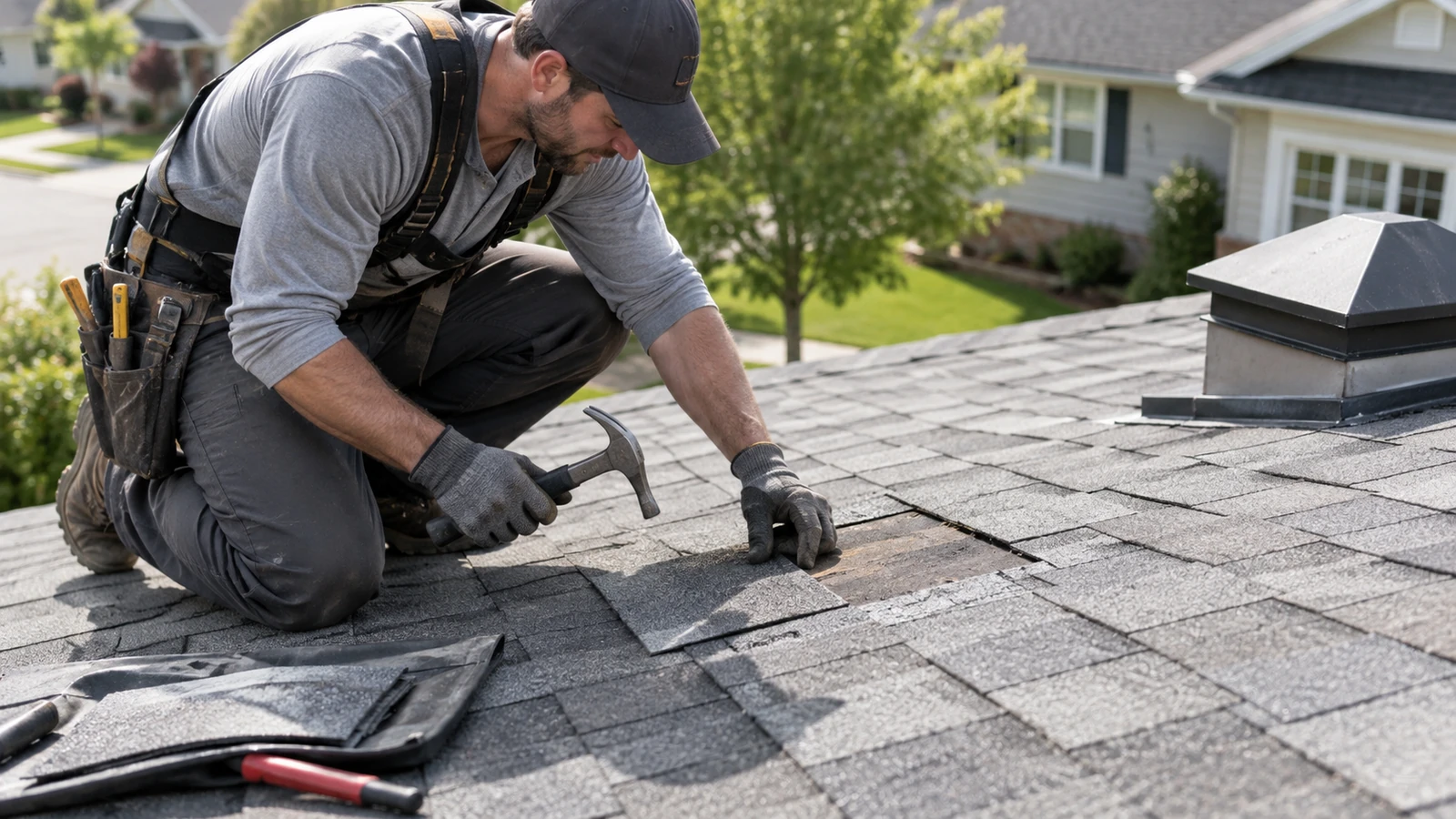
Examples may include:
- A small number of damaged shingles
- Localized flashing problems
- Minor storm damage
- Damage around one roof penetration
- A limited leak with an identifiable cause
The age of the roof still matters.
Repairing one small issue on a relatively young roof may make practical sense.
Continuing to repair multiple areas on a roof already near the end of its expected life may be less practical.
Homeowners should also consider whether replacement shingles can be matched appropriately and whether surrounding materials are still strong enough to support localized repairs.
A professional roof repair assessment can help determine whether repair is likely to provide a reasonable solution.
When Roof Replacement Becomes More Practical
Replacement becomes more worth considering when deterioration is no longer limited to one isolated section.
Several conditions together may indicate that a roof is approaching the end of its useful service life.
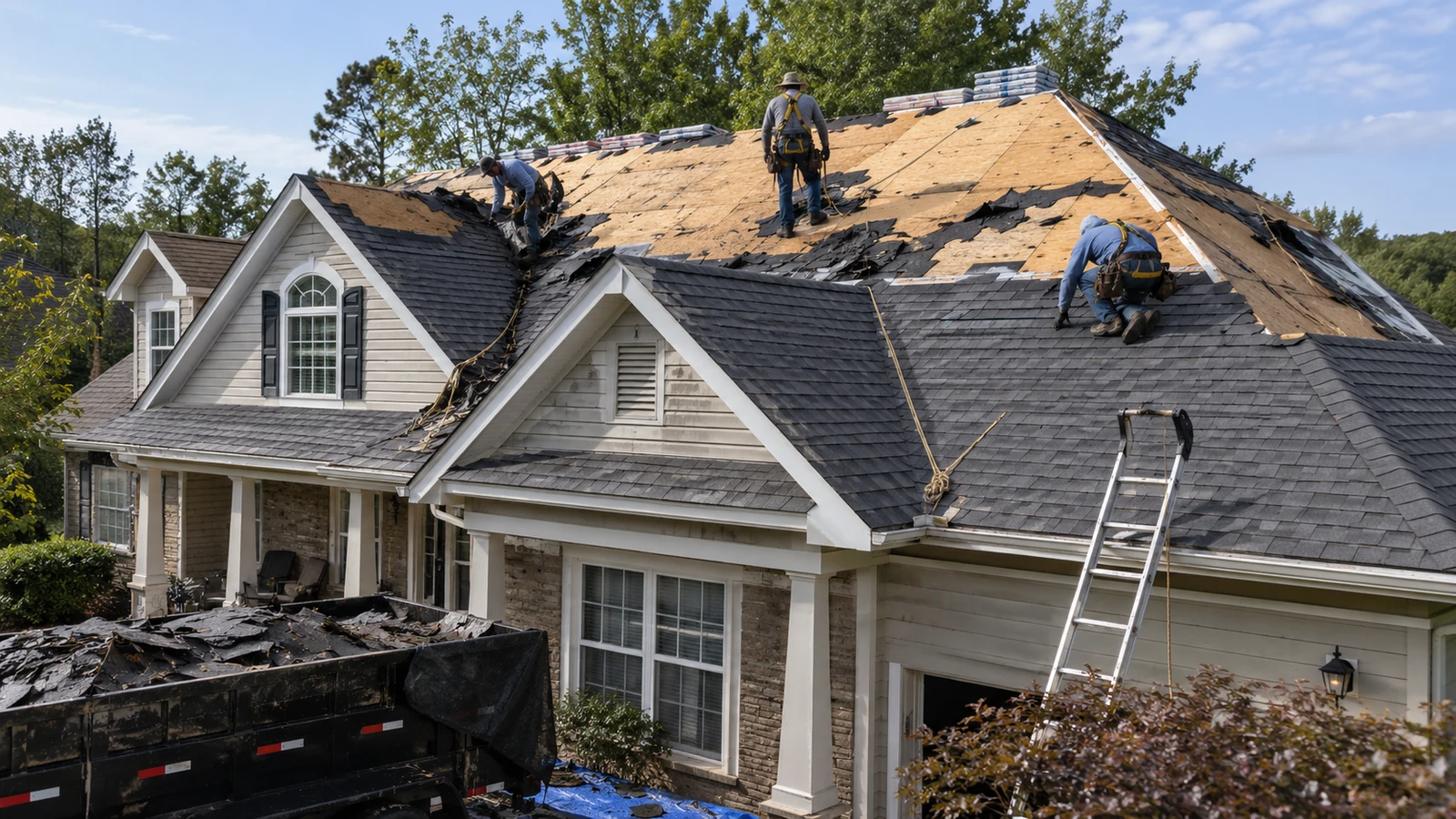
Examples include:
- Widespread curling or cracking
- Significant granule loss
- Multiple missing shingles
- Repeated roof leaks
- Numerous previous repairs
- Large areas of storm damage
- Deteriorated flashing in several locations
- Roof-deck problems
- Advanced roof age combined with visible wear
The decision should still be based on an inspection rather than assumptions.
A roof that looks old may still have usable service life.
Likewise, a roof that looks acceptable from the street can sometimes have hidden problems around flashing, decking, or penetrations.
Homeowners considering a new roofing system can review Lane’s roof replacement overview to understand more about replacement planning.
How Regular Roof Inspections Can Help Extend Useful Roof Life
Roof inspections do not magically make shingles last longer.
Their value comes from identifying problems early enough to prevent avoidable damage.
Consider a small flashing defect near a roof penetration.
If identified quickly, the problem may remain localized.
If water enters through that area repeatedly over several years, damage may eventually spread to decking, insulation, framing, or interior finishes.
The original problem was relatively small.
The consequences became larger because the issue remained unresolved.
Inspections can help identify conditions such as:
- Loose or missing shingles
- Flashing problems
- Storm damage
- Damaged penetrations
- Signs of leaking
- Ventilation concerns
- Granule loss
- Roof-deck irregularities
- General material deterioration
Inspections can be particularly useful after severe weather, before purchasing a home, when preparing to sell a property, or when a roof is approaching the later years of its expected lifespan.
Homeowners who are uncertain about their roofing system can schedule a professional roof inspection rather than waiting for water damage to appear indoors.
Can You Extend the Life of an Asphalt Shingle Roof?
Homeowners cannot stop roofing materials from aging, but they can reduce avoidable stresses on the system.
The most useful approach is not applying questionable coatings or temporary products to make an old roof appear newer.
Instead, focus on keeping the roof system functioning correctly.
That includes:
- Addressing damaged shingles promptly
- Keeping gutters and drainage areas functional
- Removing problematic debris safely
- Maintaining attic ventilation
- Repairing flashing problems
- Investigating leaks quickly
- Checking the roof after severe storms
- Keeping nearby trees properly maintained
- Scheduling inspections when concerns arise
The goal is to protect the service life already available in the roofing system.
For example, repairing a small flashing issue early may prevent water from damaging otherwise healthy decking.
Ignoring the same problem because the shingles still look acceptable can allow damage to spread.
Maintenance works best when it is preventative rather than reactive.
How Storm Damage Changes the Roof Lifespan Question
A roofing system may be functioning normally one day and experience significant damage during a severe weather event the next.
That makes storm history an important part of evaluating remaining roof life.
Wind can lift or remove shingles.
Hail may affect shingle surfaces.
Falling branches can create direct physical damage.
Heavy rain may expose weaknesses that were previously unnoticed.
After a significant storm, homeowners should not assume everything is fine simply because water is not dripping from the ceiling.
Some roofing damage develops slowly.
Water may first enter the roof assembly in small amounts before interior symptoms appear.
Signs that deserve attention after severe weather include:
- Missing shingles
- Lifted roofing material
- Shingle fragments around the property
- Damaged flashing
- Fallen branches
- Gutter damage
- New ceiling stains
- Damp attic insulation
- Water around roof penetrations
If damage is suspected, Lane’s guide on storm damage roof repair explains additional considerations following severe weather.
Urgent roofing problems may also require emergency roof repair when immediate protection is necessary.
Does a Roof Warranty Equal the Expected Roof Lifespan?
No.
A roofing warranty and the expected physical lifespan of the roof are two different things.
This distinction can be confusing because roofing products may be marketed with long warranty periods.
A warranty describes the manufacturer’s or contractor’s obligations under specific conditions.
The actual roof lifespan describes how long the roofing system may remain functional in real-world conditions.
Warranty coverage may depend on factors such as:
- Product type
- Installation requirements
- Contractor qualifications
- Ownership
- Registration
- Maintenance
- Transfer conditions
- Specific types of defects
- Exclusions
Workmanship coverage may also be separate from product coverage.
Before choosing roofing materials, homeowners should review exactly what is covered rather than focusing only on the largest number printed in warranty materials.
Ask questions such as:
- What problems are actually covered?
- Is workmanship included?
- Are labor costs covered?
- Does coverage change over time?
- Are there maintenance requirements?
- Is the warranty transferable?
- Are there exclusions for weather events?
- Who handles warranty claims?
Understanding the answers can prevent unrealistic expectations later.
What If You Do Not Know How Old Your Roof Is?
This situation is more common than many homeowners expect.
Previous owners may not have provided installation records, or the paperwork may have been lost.
There are several ways to estimate roof age.
You can start by reviewing:
- Home improvement records
- Roofing invoices
- Property disclosures
- Previous inspection reports
- Warranty documents
- Permit information where available
- Records provided by prior homeowners
If documentation is unavailable, an experienced roofing professional may be able to provide a general estimate based on material type and visible wear.
However, visual estimates are not exact.
Different roofs age at different rates, so an older-looking roof is not necessarily older than another roof in better condition.
In that situation, condition becomes even more important than trying to determine an exact installation date.
Should You Replace a 20-Year-Old Asphalt Shingle Roof?
Not automatically.
Twenty years is an important milestone for many asphalt roofing systems, but reaching that age does not mean replacement is immediately required.
A 20-year-old roof should instead receive closer attention.
Consider questions such as:
- Are the shingles still lying flat?
- Are large areas cracked or curling?
- Have leaks occurred?
- Are shingles missing?
- Has the home experienced major storms?
- Is granule loss becoming significant?
- Has the roof required repeated repairs?
- Is the attic properly ventilated?
- Is the flashing still performing properly?
If the roof is performing well, continued monitoring may be appropriate.
If several deterioration signs are developing at the same time, replacement planning may make more sense.
The goal is not to replace a functional roof unnecessarily.
It is also not wise to wait until an aging roof causes widespread water damage before considering replacement.
Is a 25-Year-Old Asphalt Roof Too Old?
A 25-year-old asphalt roof is generally old enough that its condition deserves serious attention.
That does not mean every 25-year-old roof must be replaced immediately.
However, the probability of age-related deterioration becomes more important as the roof moves further into its expected service life.
At this stage, homeowners should pay particular attention to:
- Shingle brittleness
- Granule loss
- Cracking
- Curling
- Flashing condition
- Previous repairs
- Leaks
- Roof decking
- Ventilation
- Storm history
If the roof has already required several repairs, continuing to invest in isolated fixes may provide diminishing value.
A professional evaluation can help determine whether additional repairs are reasonable or whether replacement planning has become the more practical path.
What Happens If You Wait Too Long to Replace an Aging Roof?
The most important risk is not simply that the shingles will look old.
The concern is what happens underneath the roof when the system can no longer keep moisture out consistently.
Water intrusion may eventually affect:
- Roof decking
- Insulation
- Attic materials
- Ceiling drywall
- Interior finishes
- Structural wood
- Electrical areas
- Other building components
Imagine an older roof with several deteriorated shingles around a vulnerable valley.
At first, only a small amount of moisture enters during heavy rain.
Because there is no obvious ceiling leak, the homeowner does not realize anything is wrong.
Over time, repeated moisture exposure begins affecting the roof decking.
Eventually, what might once have been a relatively straightforward roofing problem becomes a more involved repair.
This does not mean homeowners should replace roofs prematurely out of fear.
It means visible deterioration and recurring leaks should not be ignored simply because the roof is still technically covering the house.
What Homeowners Should Look for From the Ground
You do not need to climb onto your roof to notice many common warning signs.
From a safe position, look for:
- Missing shingles
- Uneven roof sections
- Lifted edges
- Discolored patches
- Damaged flashing
- Debris accumulation
- Sagging areas
- Tree branches touching the roof
- Damaged gutters
- Shingle pieces on the ground
Inside the home, pay attention to:
- New ceiling stains
- Moisture in the attic
- Damp insulation
- Musty odors
- Peeling paint near ceilings
- Water marks around vents or chimneys
None of these symptoms by themselves confirm that full replacement is required.
They simply indicate that the roof deserves further evaluation.
A Simple Way to Think About Remaining Roof Life
Instead of asking only:
“How old is my roof?”
Ask:
“How well is my roof performing for its age?”
That question leads to a more useful evaluation.
A roofing system with several years of theoretical life remaining may still need attention if it has suffered major storm damage.
An older roof may continue performing adequately when it was properly installed, well ventilated, and maintained.
Consider five factors together:
- Age – Where is the roof within its expected service life?
- Condition – What visible deterioration is present?
- Performance – Are leaks or repeated problems occurring?
- History – Has the roof experienced major storms or repairs?
- System health – Are ventilation, flashing, decking, and drainage functioning properly?
Looking at all five provides a much more complete picture than age alone.
Planning Ahead for Roof Replacement
One advantage of recognizing an aging roof early is that homeowners gain time to plan.
Waiting until water is entering the house during a storm can turn a planned home improvement project into an emergency.
Planning ahead allows time to:
- Compare roofing systems
- Review material options
- Understand warranties
- Evaluate contractors
- Ask questions
- Review financing
- Schedule the project appropriately
- Prepare the property
Homeowners who are considering replacement but are concerned about project costs can also review Lane’s financing options.
The goal is to make an informed decision before the roof dictates the timeline for you.
How Long Does an Asphalt Shingle Roof Last in Real Life?
There is no single number that applies to every home.
A useful starting point is roughly 20 to 30 years for many asphalt shingle roofs, with actual service life depending on the material, installation, ventilation, weather exposure, maintenance, and overall roofing-system condition.
Rather than treating a specific age as an automatic replacement deadline, pay attention to how the roof is actually performing.
An older roof with few problems may still have usable service life.
A younger roof with storm damage, installation defects, recurring leaks, or widespread deterioration may need attention much sooner.
The most reliable approach is to combine age with physical condition and professional evaluation.
If your roof is approaching the later part of its expected lifespan, has developed repeated problems, or you simply do not know its condition, Lane’s Contracting can inspect the system and help determine whether repair, continued monitoring, or replacement makes sense.
Request a free estimate to have your roofing needs evaluated and discuss the appropriate next step for your home.