
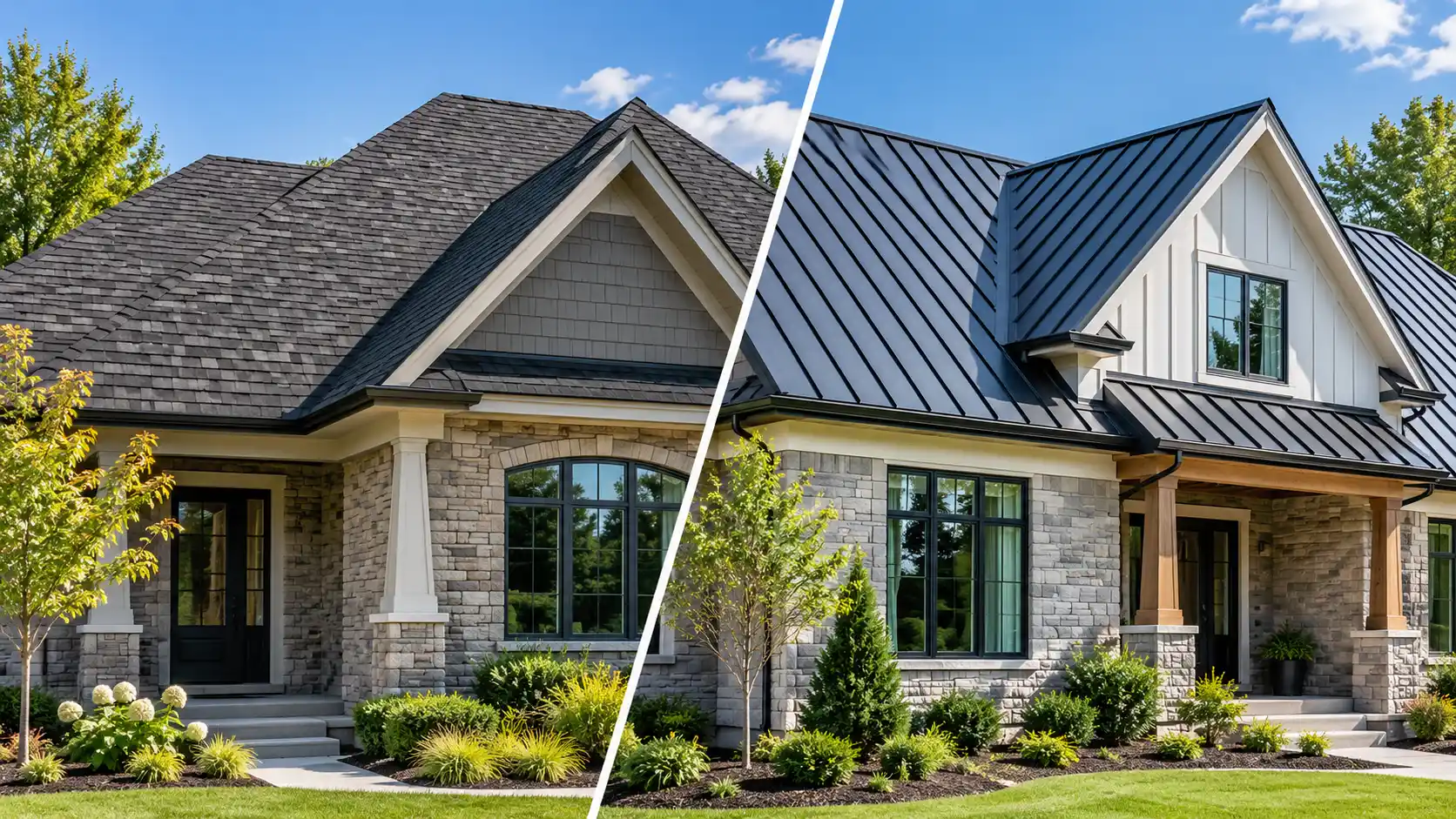
Choosing between asphalt shingles and metal roofing is one of the biggest decisions homeowners face when replacing a roof. Both materials provide reliable protection when properly installed, but they differ in price, durability, maintenance requirements, appearance, and long-term value.
In the asphalt shingles vs metal roofing comparison, asphalt shingles are generally the more affordable option upfront, while metal roofing typically offers a longer service life and greater resistance to certain types of weather-related deterioration. Neither material is automatically the better choice for every home.
Your budget, roof design, local climate, and plans for the property should all influence the decision. Understanding how the materials perform beyond their initial installation costs can help you avoid paying for features you don’t need or choosing a roof that doesn’t meet your long-term expectations.
Asphalt Shingles vs Metal Roofing at a Glance
The biggest difference between asphalt shingles and metal roofing is the balance between initial investment and expected service life. Asphalt shingles provide an economical roofing system with relatively straightforward repairs. Metal roofing generally requires a higher initial investment but may remain in service considerably longer.
| Feature | Asphalt Shingles | Metal Roofing |
|---|---|---|
| Initial cost | Generally lower | Generally higher |
| Typical lifespan | About 15 to 30 years | About 30 to 80 years, depending on the system |
| Installation | Familiar to many roofing contractors | Requires experience with specific panel and fastening systems |
| Wind resistance | Depends on shingle rating, sealing, age, and installation | Depends on panel design, fastening, and installation |
| Hail performance | Can experience granule loss, bruising, or cracking | Can dent; severe impacts may damage panels |
| Energy performance | Reflective options available | Reflective coatings and finishes available |
| Maintenance | Periodic inspections and occasional shingle repairs | Inspections of fasteners, coatings, flashing, and seams |
| Appearance | Traditional residential styles | Modern panels and traditional-looking metal shingles |
| Individual repairs | Often easier to replace damaged shingles | May require specialized repairs or replacement panels |
These are general differences rather than guarantees. An impact-resistant architectural shingle can outperform a poorly specified metal panel in certain conditions. Likewise, a carefully installed standing seam system may deliver better long-term value than a lower-cost roofing system that needs replacement sooner.
The type of product and quality of installation matter just as much as the material category.
Understanding the Roofing Materials Before Comparing Them
Asphalt shingles and metal roofing each include several product types. Comparing the cheapest asphalt shingle with a high-end metal roof can exaggerate the differences between the two.
A useful comparison starts with understanding what you’re actually buying.
Architectural Asphalt Shingles
Asphalt shingles are commonly manufactured with a fiberglass mat, asphalt coating, and protective mineral granules. The granules help protect the asphalt from sunlight while contributing to the roof’s color and texture.
Traditional three-tab shingles create a flat, uniform appearance. Architectural shingles, also called dimensional or laminated shingles, use layered construction to create a thicker appearance and may offer improved performance depending on the product.
For many homeowners replacing an existing shingle roof, architectural asphalt shingles provide a reasonable balance of cost, appearance, and durability.
They also come in a wide selection of colors, making it easier to match the roofing material with brick, siding, shutters, and other exterior features.
Standing Seam and Exposed-Fastener Metal Roofing
Metal roofing isn’t one single system.
Standing seam roofing uses long metal panels connected by raised seams. Many standing seam products use concealed fastening systems, reducing the number of exposed fasteners on the roof surface.
Exposed-fastener metal roofing uses visible screws that attach the panels to the roof structure. These systems may cost less initially, but their exposed fasteners and sealing washers require periodic attention.
Metal shingles are another option. They can resemble traditional shingles, slate, or wood shakes while using interlocking metal components.
The metal itself also varies. Steel, aluminum, copper, and zinc have different costs, corrosion characteristics, appearances, and maintenance requirements.
Before comparing estimates, confirm which specific metal roofing system each contractor is proposing.
How Much Do Asphalt Shingles and Metal Roofs Cost?
Cost is often the deciding factor for homeowners comparing roofing materials.
Asphalt shingles generally cost less because the materials are more economical and installation is familiar to many residential roofing crews. Metal roofing usually requires more expensive materials, specialized handling, and additional attention to panel connections and thermal movement.
According to published HomeGuide roofing cost comparisons, typical installed pricing includes:
- Architectural asphalt shingles: Approximately $4 to $6 per square foot.
- Standing seam metal roofing: Approximately $9 to $16 per square foot.
These are broad national planning ranges, not local estimates. Actual costs depend on roof dimensions, labor rates, material specifications, and existing roof conditions.
For example, a roof with several dormers, valleys, skylights, and steep sections may cost significantly more to cover than a simple gable roof of similar size. Cutting and fitting metal panels around multiple roof penetrations also adds labor and material waste.
The estimate should account for more than the visible roofing material. Removing the existing roof, inspecting and replacing damaged decking, installing underlayment, upgrading flashing, and meeting applicable installation requirements can affect the total.
Does Metal Roofing Save Money Over Time?
A longer-lasting roof may provide better long-term value, but the calculation depends on how long you plan to own the home.
Consider two homeowners.
The first expects to sell within several years and wants a dependable replacement without taking on unnecessary upfront costs. A well-installed architectural shingle roof may meet those needs.
The second plans to remain in the home for several decades and wants to reduce the likelihood of another complete roof replacement. A durable standing seam system may justify its higher initial cost.
Neither scenario proves that one material always costs less over its entire life.
A fair comparison should consider the initial installation cost, expected repairs, maintenance, potential replacement cycles, and the remaining service life when the homeowner eventually sells.
Homeowners concerned about project affordability can also review available roofing financing options before deciding which materials fit their budget.
Which Roof Lasts Longer?
Metal roofing generally has a longer potential lifespan than asphalt shingles, although the actual service life depends on product quality, installation, environmental exposure, and maintenance.
Asphalt shingles commonly provide approximately 15 to 30 years of service. Architectural products may perform toward the higher end of that range under favorable conditions, while severe weather, prolonged heat exposure, and installation problems can shorten their usable life.
Metal roofing systems may last approximately 30 to 80 years, with substantial differences among exposed-fastener panels, standing seam systems, protective coatings, and metal types.
These ranges describe potential service life, not guaranteed performance.
Why Asphalt Shingles Age
Asphalt shingles experience gradual changes as they remain exposed to sunlight, temperature fluctuations, wind, and moisture.
Over time, shingles may lose granules, become brittle, develop cracks, or experience weakened sealing performance.
Granule loss is particularly important because the protective surface helps shield the asphalt from ultraviolet exposure. Isolated granule loss doesn’t automatically require a complete replacement, but widespread deterioration deserves professional evaluation.
The Insurance Institute for Business & Home Safety (IBHS) has also studied how aging affects the wind resistance of asphalt shingles. Its research shows that real-world performance changes with age and varies among individual products.
Homeowners noticing curling shingles, recurring leaks, or widespread deterioration should review the signs that a roof needs replacement before assuming another repair will solve the problem.
What Determines Metal Roof Longevity?
Metal roofing avoids some of the aging characteristics associated with asphalt, but it introduces different considerations.
The protective coating must remain suitable for the surrounding environment. Fasteners and clips must accommodate the roof’s design requirements. Flashing and panel transitions must continue to prevent water intrusion.
Exposed-fastener systems can require replacement of deteriorated fasteners or sealing washers over time. Concealed-fastener systems avoid some of those exposed connection points, but proper installation remains essential.
Material selection also matters in areas with corrosive exposure.
A long expected lifespan is valuable only when the entire roofing assembly is designed and installed to support it.
Which Roofing Material Handles North Carolina Weather Better?
North Carolina roofs may experience hot summers, heavy rainfall, thunderstorms, hail, and strong winds. In some areas, tropical storm and hurricane-related conditions are additional concerns.
Both asphalt and metal roofing systems can perform well in this climate. The important distinction is how their individual products and installation methods address local weather risks.
Wind Resistance Depends on the Complete Roof System
High winds can lift asphalt shingles when their sealing strips or attachment points fail. Shingles that have become unsealed through weathering may be more vulnerable to wind damage.
Manufacturers offer asphalt shingles with different wind resistance classifications and installation requirements. Proper fastening, roof-edge detailing, and adherence to manufacturer instructions are critical.
Metal panels can provide strong wind resistance, but their performance depends on panel profiles, fastener spacing, clips, connections to the roof structure, and other system details.
A metal roof shouldn’t be assumed to be more wind-resistant simply because it is made from metal.
Ask the contractor to explain the wind-rated assembly being proposed and whether it meets the applicable requirements for your property.
Hail Can Damage Both Materials Differently
Hail impacts asphalt shingles and metal panels in different ways.
On asphalt shingles, hail can displace granules, bruise the material, or create cracks and tears. Severe damage may compromise the protective roofing surface and increase the risk of moisture intrusion.
Metal roofing is more likely to show dents after hail impact. Some dents may affect appearance without immediately compromising water resistance. More severe impacts can damage coatings, seams, or panels and require further evaluation.
The IBHS conducts laboratory research into roofing performance under hail impacts, including damage to shingles and metal roofing systems.
For homeowners in storm-prone areas, looking at the tested impact resistance of a specific roofing product is more useful than comparing materials based on broad claims.
After significant weather events, a professional storm damage roof repair assessment can help determine whether the roof needs targeted repairs or more extensive work.
Heavy Rain Exposes Installation Weaknesses
Both systems are designed to shed water, but neither can compensate for poor installation.
Roof valleys, chimneys, plumbing vents, skylights, and roof-to-wall connections are common areas where water intrusion may develop.
Asphalt roofing relies on proper shingle overlap, underlayment, flashing, and suitable roof slope.
Metal roofing requires properly detailed panel transitions, seams, penetrations, underlayment, and drainage paths.
A roof with correctly installed materials but defective flashing can still leak. For that reason, installation quality deserves as much attention as the roofing product itself.
Do Metal Roofs Keep Homes Cooler Than Asphalt Shingles?
Metal roofing is frequently promoted for energy efficiency, but the actual benefit depends on the roof’s surface characteristics and the rest of the home’s construction.
The U.S. Department of Energy explains that reflective roofing materials can reduce the amount of solar energy absorbed by a roof.
Two important characteristics are solar reflectance, which describes how much sunlight a surface reflects, and thermal emittance, which describes how effectively a surface releases absorbed heat.
A metal roof with an appropriate reflective coating may reduce solar heat gain compared with a darker, less-reflective surface.
However, asphalt shingles are also available in reflective products. Metal roofing isn’t automatically a cool roof, and a dark metal finish may absorb substantial solar energy.
Insulation, attic ventilation, roof geometry, and existing air leaks influence how much the roofing material affects indoor comfort.
Roof Ventilation and Insulation Still Matter
Replacing roofing materials creates an opportunity to examine the attic and underlying roof assembly.
Inadequate attic ventilation, missing insulation, and air leakage can contribute to uncomfortable indoor temperatures regardless of the material installed above them.
For example, replacing dark asphalt shingles with reflective metal panels may reduce the roof surface temperature, but poor attic insulation can still allow significant heat transfer into the living space.
The roofing material is one part of the building envelope, not a complete energy-efficiency solution.
Before making a decision based on projected energy savings, ask the contractor what changes are actually included in the roofing proposal and which improvements would require separate work.
Maintenance, Repairs, and Everyday Living
Every roof requires periodic observation and maintenance. A longer-lasting material does not eliminate the need to inspect the system after severe weather or address developing problems.
Asphalt roofs may need individual shingles replaced after wind damage, repairs around flashing, or attention to localized leaks.
One advantage is that damaged shingles can often be removed and replaced without disturbing large sections of the roof.
However, matching replacement shingles becomes more difficult when an older roof has faded or the original product is no longer available.
Metal roofs generally have fewer individual roofing pieces across large roof sections, particularly with standing seam panels. That doesn’t make them maintenance-free.
Contractors may need to inspect seams, sealants, fasteners, panel coatings, and flashing. Repairing a damaged panel can involve specialized materials and additional labor.
Minor leaks should be evaluated promptly rather than waiting for interior damage to become visible. When a problem is limited, professional roof repair services may help preserve the remaining life of the existing roof.
Are Metal Roofs Noisy During Rain?
The sound of rainfall is a common concern among homeowners considering metal roofing.
Rain can sound louder on an exposed metal surface, such as an uninsulated agricultural building. However, a residential metal roof installed over solid decking with appropriate underlayment, insulation, and interior construction behaves differently.
The complete roof and ceiling assembly influences how much outside noise reaches the rooms below.
If noise is a concern, ask the contractor to describe the proposed roof assembly rather than judging residential systems by the sound of exposed metal panels.
How Roofing Materials Affect Your Home’s Appearance
A new roof changes the visual balance of a home’s exterior. The material should suit the roofline, architectural style, and surrounding exterior finishes.
Architectural asphalt shingles provide a familiar appearance that complements many traditional homes. Their layered profiles can create depth, while different colors coordinate with brick, siding, trim, and other features.
Standing seam metal roofing creates a more defined pattern through its raised vertical seams. This appearance can work well on modern, farmhouse, and certain traditional home styles.
Metal shingles offer a different visual direction for homeowners who want the performance characteristics of metal without the appearance of long panels.
Color selection deserves attention because a roof covers a substantial portion of the visible exterior.
A finish that looks attractive on a small sample may appear much darker or lighter across an entire roof.
Request photographs of completed projects using the same material, panel profile, and color being considered. If available, viewing an actual installation provides a better sense of scale and appearance than relying on a product sample alone.
Why Proper Roof Installation Matters More Than Material Claims
The best roofing material for a home can still perform poorly when essential installation details are overlooked.
Roofing is a complete protective assembly rather than a layer of shingles or metal panels.
The decking supports the roofing materials. Underlayment provides secondary protection. Flashing directs water away from vulnerable transitions. Ventilation and insulation influence moisture and temperature conditions within the roof and attic.
Replacing the surface material without considering these components can leave existing problems unresolved.
A Roof Inspection Should Come Before Material Selection
Before recommending asphalt or metal, a roofing contractor should assess the existing roof’s condition and geometry.
The evaluation should identify roof slope, drainage concerns, potential decking damage, roof penetrations, flashing conditions, and installation limitations.
Roof slope is especially important. Not every asphalt shingle or metal roofing system is suitable for every pitch. Product instructions and applicable codes determine the minimum installation requirements.
Homeowners considering changing from shingles to metal should also confirm whether the existing roof structure and installation conditions are suitable for the proposed system.
A professional roof inspection helps establish those conditions before a replacement estimate is finalized.
Installing a New Roof Over Old Shingles
Some homeowners consider installing metal roofing directly over existing asphalt shingles to avoid removal costs.
Although certain roof-over installations may be permitted under specific conditions, they aren’t appropriate for every property.
Existing roofing layers can conceal deteriorated decking, moisture damage, or other problems that should be corrected before installing new materials.
Additional roofing layers may also create complications involving roof weight, edge details, flashing, manufacturer instructions, and local code requirements.
Removing the old roofing material generally provides a better opportunity to inspect the roof deck and address concealed issues.
The decision should be based on the actual roof condition and approved installation method, not simply on the potential savings from avoiding tear-off work.
Asphalt Shingles or Metal Roofing: Which Makes More Sense for Your Home?
The most practical choice depends on the homeowner’s circumstances rather than a single material ranking.
Asphalt Shingles May Be the Better Choice When:
- The project has a defined budget and lower upfront cost is important.
- The home has a complicated roof design with multiple valleys and penetrations.
- You prefer the traditional appearance of architectural shingles.
- Straightforward repair and material availability are priorities.
- You don’t expect to remain in the property long enough to benefit fully from a longer-lasting roofing system.
Architectural shingles are not simply a compromise for homeowners who cannot afford metal. A properly selected and installed shingle system can provide dependable weather protection and attractive results.
Metal Roofing May Be Worth Considering When:
- You expect to own the property for many years.
- A longer potential service life is a major priority.
- You prefer standing seam panels or another metal roofing appearance.
- You are comfortable with the higher installation cost.
- The roof design and local exposure conditions suit the selected metal system.
Metal may be particularly appealing to homeowners who want to reduce the likelihood of replacing the roof again during their ownership.
However, the value depends on the specific product and installation. An inexpensive metal system with exposed fasteners shouldn’t automatically be treated as equivalent to a premium concealed-fastener standing seam roof.
A Practical Way to Compare Both Options
Imagine receiving two roof replacement estimates.
One contractor proposes architectural asphalt shingles with complete tear-off, new underlayment, replacement flashing, and documented ventilation work.
Another offers metal roofing at a higher price but provides little information about the metal coating, fastening system, or how roof penetrations will be sealed.
The metal estimate may initially appear superior because the material has a longer expected lifespan. Yet the shingle proposal provides more information about the complete roofing system.
Before making a decision, ask the second contractor for the missing specifications.
Comparing complete systems with similar scopes of work is far more useful than comparing the names of roofing materials on the first line of an estimate.
Questions to Ask Before Signing a Roofing Contract
A professional roofing estimate should make it clear what the homeowner is purchasing.
The following questions help reveal differences that may not be obvious from the initial price:
- Which exact roofing product will be installed? Request the manufacturer, product line, and specifications rather than accepting a general description such as architectural shingles or metal panels.
- What is included in the tear-off and decking work? Confirm how the existing roofing will be removed, how damaged decking will be handled, and how additional costs will be approved.
- How will flashing and roof penetrations be addressed? Ask about chimneys, vents, skylights, valleys, and roof-to-wall transitions.
- Which wind and impact ratings apply? Review the selected product’s actual ratings and installation requirements.
- What warranties are included? Clarify the difference between manufacturer material warranties, applicable system warranties, and the contractor’s workmanship coverage.
- Does the estimate include permits and cleanup? Confirm applicable permits, debris removal, property protection, and final inspection responsibilities.
- What maintenance will the roof require? Ask what inspections, cleaning, or component replacements may be necessary as the system ages.
- Is the contractor experienced with this particular system? Installing standing seam metal roofing involves different techniques from installing architectural asphalt shingles.
Warranty terms deserve special attention. A long manufacturer warranty doesn’t necessarily guarantee that a roof will remain functional for the entire stated period.
Coverage may be limited by material defects, installation requirements, exclusions, transfer conditions, and other provisions.
Review the actual warranty documents before assuming that two products with similar warranty language provide equivalent protection.
For homeowners comparing professional roofing services, a detailed written proposal helps establish expectations and reduces misunderstandings once the project begins.
Making the Right Roofing Decision With Lanes Contracting
Asphalt shingles and metal roofing both have a place in residential roof replacement.
Asphalt shingles remain a practical choice for homeowners who want dependable protection, attractive design options, and a lower initial investment. Metal roofing can be a strong long-term choice for those who value extended service life and are prepared to pay more for an appropriately specified system.
The important question isn’t which material sounds better. It’s which roofing system makes the most sense for your property, budget, and expected years of ownership.
At Lanes Contracting, we help homeowners in Smithfield and surrounding North Carolina communities understand their roof’s condition and evaluate suitable replacement options.
Our team can inspect the existing roofing system, explain the condition of its components, and discuss materials and installation requirements before you commit to a project.
If you’re considering a new roof, request a free roofing estimate to discuss the options available for your home.
Request a Free Estimate