


Siding replacement cost often falls between $8,000 and $30,000 for a whole-home project, according to This Old House’s published national guide. Your total depends on the wall area, selected material, installation requirements, and condition beneath the existing siding. That range is a budgeting reference, not a quote for your property.
For North Carolina homeowners, the useful question is what a complete replacement will cost on their particular house. A price that covers new panels and installation may still leave out removal, damaged wall repairs, painting, or new trim.
Before choosing a material or comparing contractors, separate the visible siding from the full scope of work. That makes it easier to understand where your money goes and which estimate actually covers the project you need.
What Is a Reasonable Starting Budget for New Siding?
Published installation ranges provide a starting point, but they should always be read alongside their assumptions. HomeGuide lists vinyl siding at $4 to $12 per square foot installed. This Old House lists a broad fiber cement range of $5 to $14 per square foot, with specialty styles potentially costing more.
| Material | Published national installation range | Calculated amount for 1,500 square feet of siding area |
|---|---|---|
| Vinyl siding | $4 to $12 per square foot | $6,000 to $18,000 |
| Fiber cement siding | $5 to $14 per square foot | $7,500 to $21,000 |
The example totals are arithmetic illustrations using an assumed siding area. They are not local estimates or complete replacement budgets. Removal, repairs, finishing, and other items may be additional, depending on how the contractor prices the work. Published pricing was checked on October 6, 2026.
The overlap between these ranges also matters. A higher specification vinyl installation can cost more than a simpler fiber cement project. Comparing material names alone will not tell you which proposal offers better value.
Ask for a measured estimate that identifies the exact product, installation scope, and exclusions before treating any online figure as your final budget.
Measure the Exterior Walls, Not the Living Space
A home’s advertised square footage describes its floor area. Siding covers exterior walls. Those measurements are different, so multiplying a real estate listing’s square footage by an installation rate can produce a misleading budget.
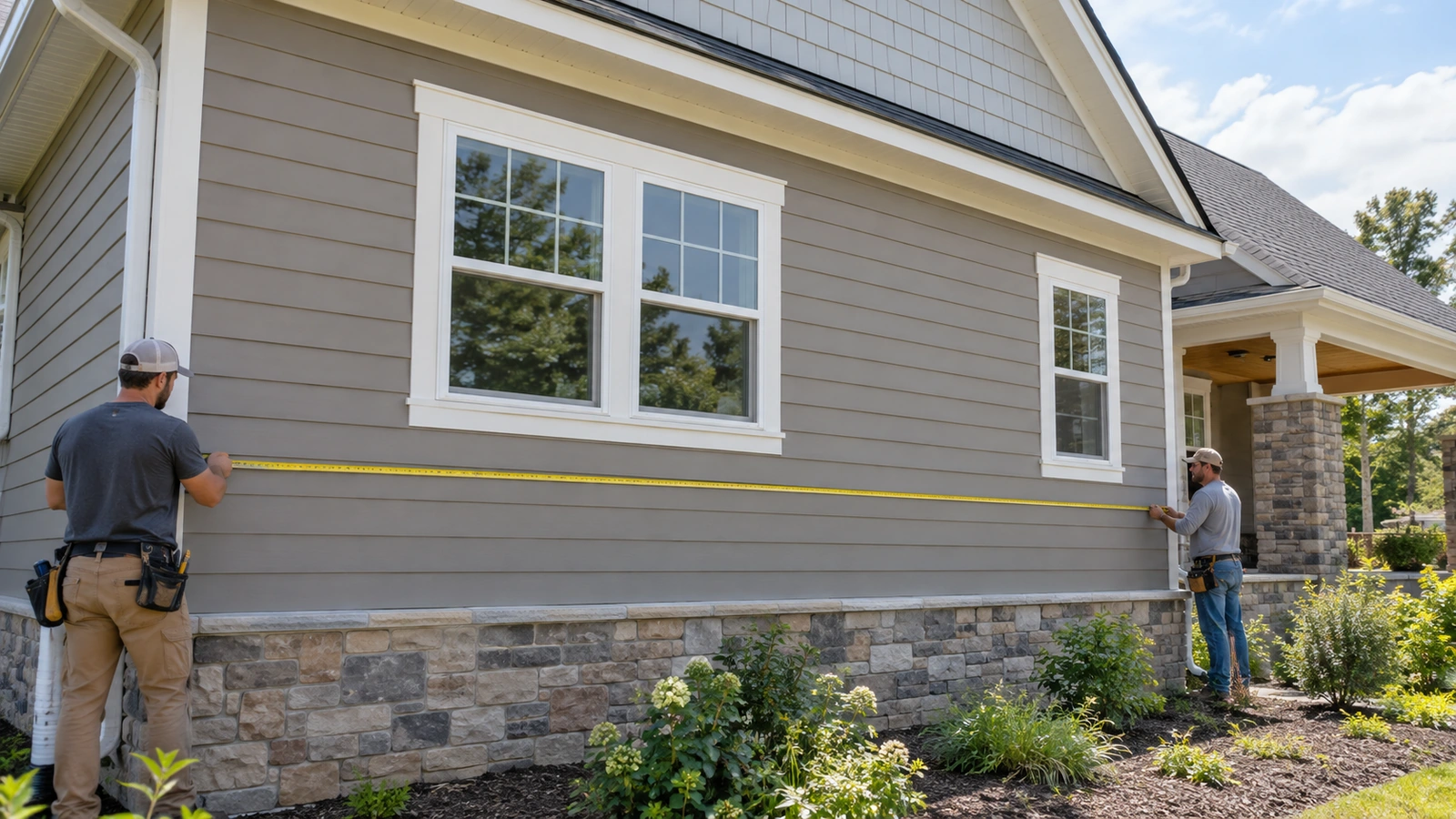
What belongs in the siding measurement?
The estimate should account for the walls receiving siding, including gables, dormers, and additions. Brick or stone sections that remain in place should be distinguished from the replacement area.
For a basic rectangular wall, surface area is width multiplied by height. Triangular gables need a separate calculation. The contractor then accounts for openings, layout, cuts, and the material needed to complete the work.
Ask how window and door openings are handled in the measurement. They reduce the siding surface but introduce trim, flashing, and fitting work, so subtracting every opening does not necessarily reduce the price by the full square-foot rate.
Why two similarly sized homes can cost different amounts
Imagine two homes with similar living space. One has straightforward exterior walls. The other has multiple additions, projecting windows, and several gables.
The second home creates more separate areas to measure and finish. Ask the estimator to explain those differences using the actual elevations of your house. A marked photograph or simple measurement summary can be more helpful than a single unexplained square-foot number.
How Material and Finish Change Siding Replacement Cost
Material choice involves more than choosing between vinyl and fiber cement. Product line, profile, finish, and trim package can change the proposal substantially. James Hardie identifies these choices, along with home design and contractor labor, as factors affecting replacement pricing.
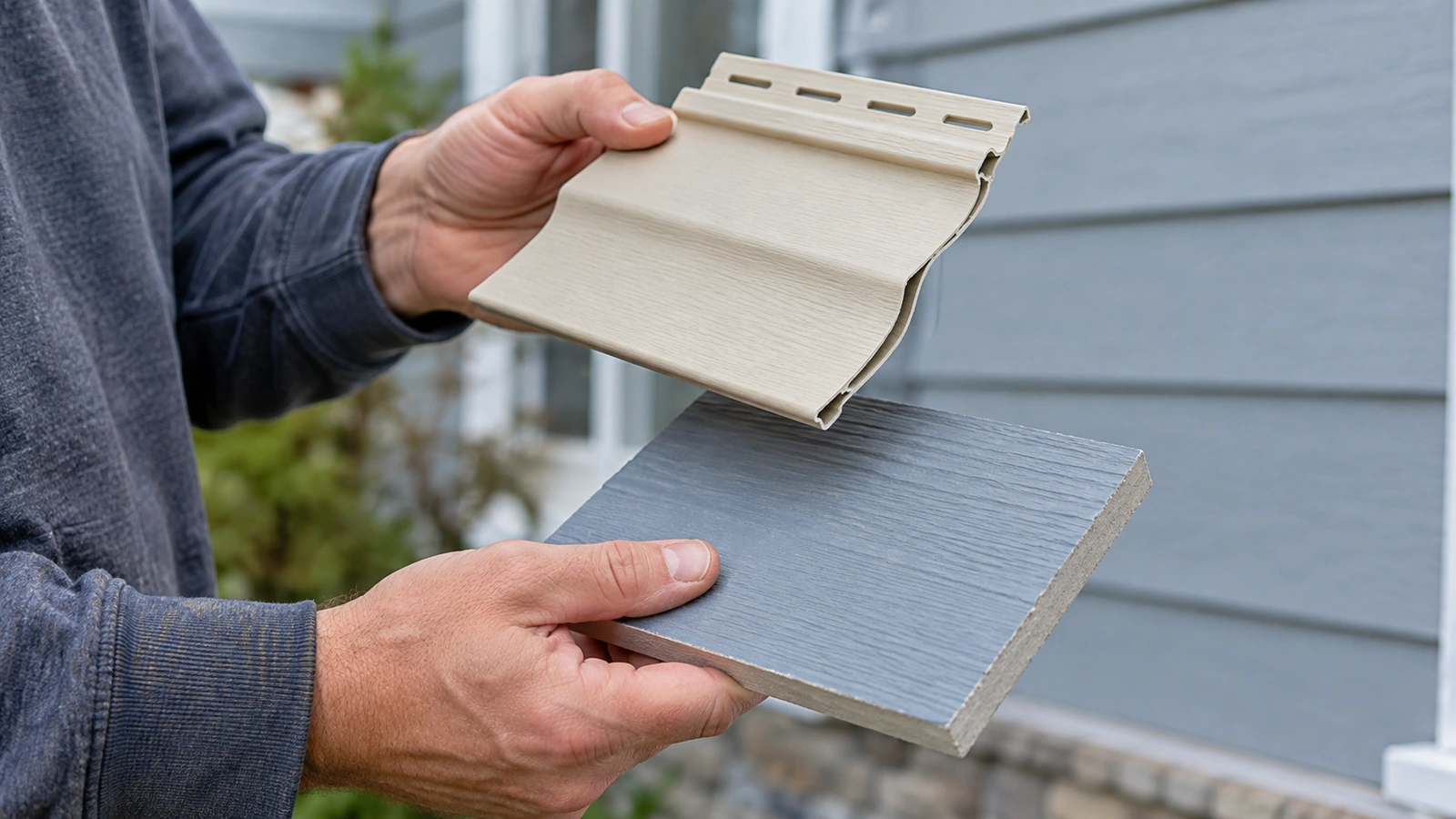
Vinyl siding: compare the actual product specifications
Ask a contractor quoting vinyl siding installation to name the manufacturer, product line, profile, and color. A proposal that says only “vinyl siding” leaves too much undecided.
Request a sample of the exact panel being priced. Check the appearance of the surface and the available corner and window accessories. If you are considering insulated vinyl, ask for that option as a separate price so its effect on the budget is visible.
Installation details matter as well. The Vinyl Siding Institute explains that vinyl cladding works with a water-resistive barrier and flashing, and installers must follow the product manufacturer’s instructions. The panels alone do not form the entire weather protection system.
Fiber cement: identify the profile and finishing work
For James Hardie siding options, request the specific product and finish being quoted. A general fiber cement price range is not a brand-specific price promise.
Confirm whether the proposal includes factory-finished material or primed siding requiring painting. If painting is needed, clarify who supplies it, what surfaces are included, and how it affects the project schedule.
If your design combines horizontal siding with decorative shingles or vertical accents, have those areas priced separately. You can then decide where the added appearance is worth the additional expense.
What Should a Complete Siding Estimate Include?
A useful estimate describes the finished result and the work needed to reach it. Homeowners should be able to understand what will be removed, what will be installed, and what happens if conditions change.
Use this checklist when discussing professional siding installation:
| Estimate item | What to clarify |
|---|---|
| Existing siding | Which walls and layers will be removed? |
| Disposal | Are hauling, containers, and cleanup included? |
| Wall preparation | What inspection and preparation are included after removal? |
| Weather protection | What barrier and flashing work is included? |
| Siding | Which manufacturer, product, profile, and finish will be installed? |
| Trim and accessories | Which corners, window surrounds, vents, and mounting blocks are included? |
| Painting | Is finishing included, excluded, or unnecessary for the selected product? |
| Site access | Does the price include equipment and protection for nearby surfaces? |
| Required approvals | Who confirms permit requirements and handles applicable fees? |
| Completion | What walkthrough, documentation, and warranty information will be provided? |
Soffit, fascia, gutters, and window replacement should be discussed explicitly. Do not assume they are included because they sit next to the siding.
An estimate does not need a separate charge for every fastener. It does need enough detail to prevent significant parts of the project from remaining undefined.
Hidden Conditions That Can Increase the Final Bill
Some replacement costs cannot be confirmed from a photograph or an exterior walkthrough. The contract should explain how the contractor will handle findings after removal.
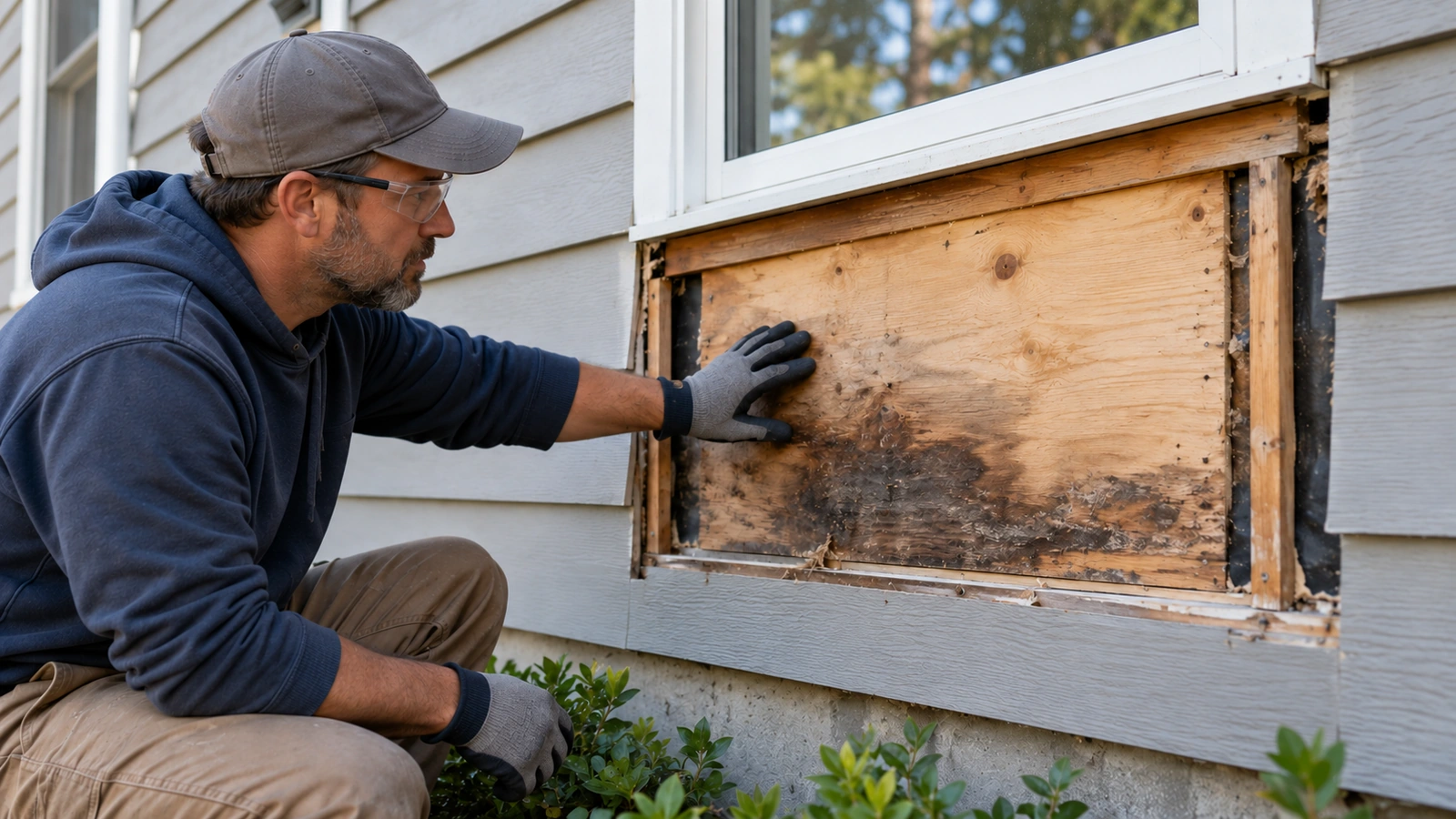
Damaged sheathing or framing
Sheathing is the panel layer behind the siding. If removal exposes damaged material, ask the contractor to photograph the affected area, explain the proposed repair, and provide its price before proceeding beyond the agreed scope.
Where practical, request unit prices for predictable repairs, such as replacing a sheet of sheathing. More extensive work may need a separate assessment. The goal is a clear approval process, not an unsupported promise that nothing unexpected will appear.
Missing or unsuitable flashing
Flashing helps direct water away from vulnerable joints and openings. James Hardie’s lap siding guidance describes joint flashing as part of protecting against water intrusion and directs installers to the applicable product instructions.
Ask whether the quoted work includes correcting visible flashing problems and how newly discovered problems will be priced. Replacing the exterior finish without defining this work can leave an important budget question unanswered.
Lead paint considerations in older homes
If your home was built before 1978, discuss possible lead-based paint before anyone disturbs painted exterior materials. EPA recommends hiring a lead-safe certified contractor for renovation work in these homes. Applicable testing, containment, and cleanup can affect the project scope.
Tell the estimator the home’s approximate age and share any existing inspection records. This lets relevant preparation be discussed before the removal crew arrives.
Why a North Carolina Quote May Differ From a National Average
A national price range cannot establish the price for an individual property in Smithfield, Clayton, Raleigh, or another North Carolina community. Use it to prepare questions, then rely on a site-specific assessment for the actual proposal.
Ask the contractor to identify which conditions on your property affect the price. These might include restricted access beside the house, siding above a porch roof, difficult material storage, or areas needing special equipment.
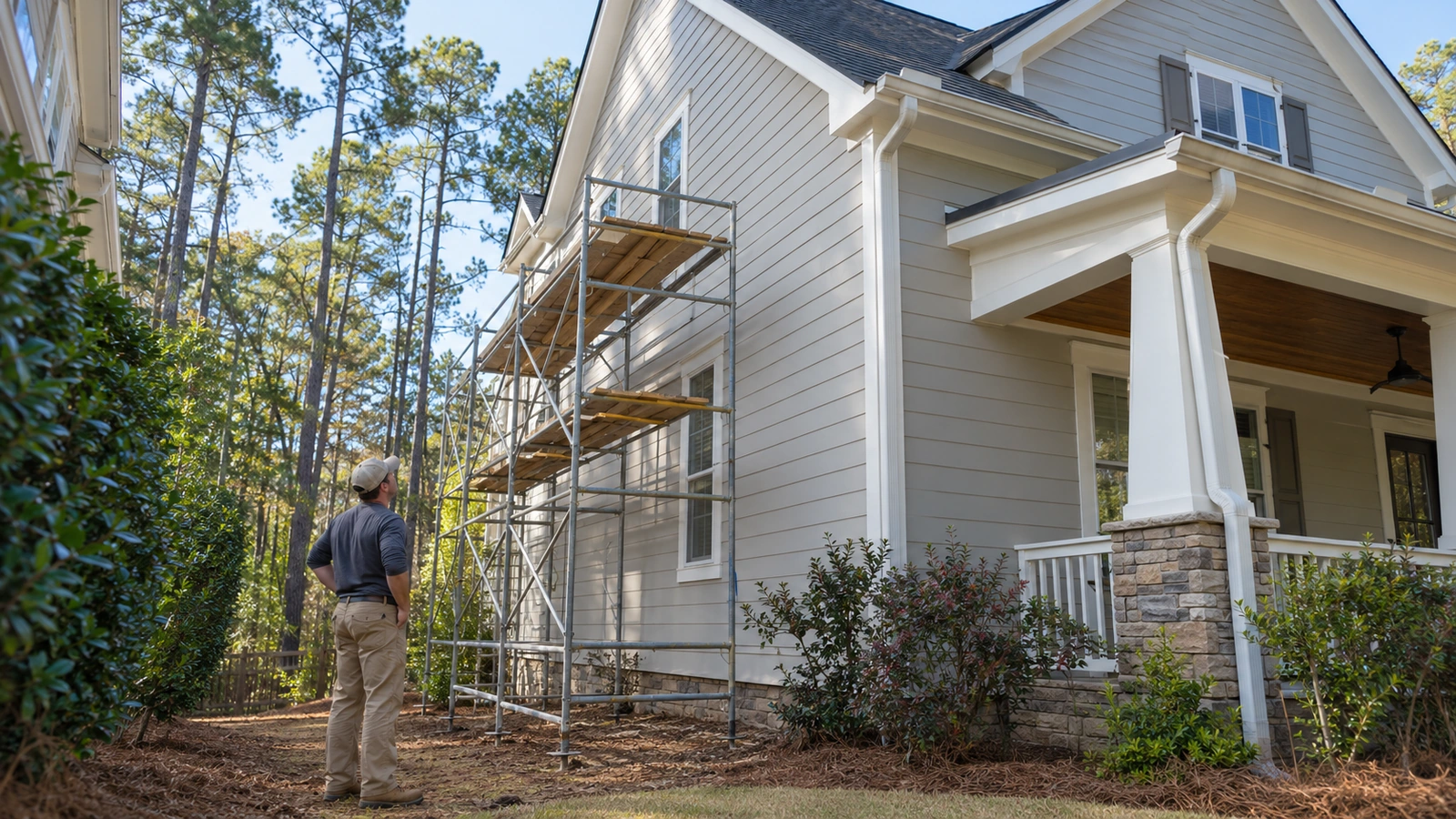
Product suitability also deserves attention. The Vinyl Siding Institute directs installers to check wind performance requirements and manufacturer instructions, including any special requirements for high-wind locations. Ask how the selected product and installation method fit your property’s exposure.
Avoid applying a universal “North Carolina discount” or surcharge to national figures. A clear local estimate should explain its own scope rather than relying on a percentage borrowed from an unrelated project.
When Repairing Siding May Be the Better Use of Your Budget
Full replacement is not automatically the right response to a damaged section. Before committing to a whole-home project, ask whether the problem is isolated and whether the remaining siding can stay in service.
An assessment for siding repair should address the condition behind the damaged area, the availability of matching material, and the finished appearance you can expect.
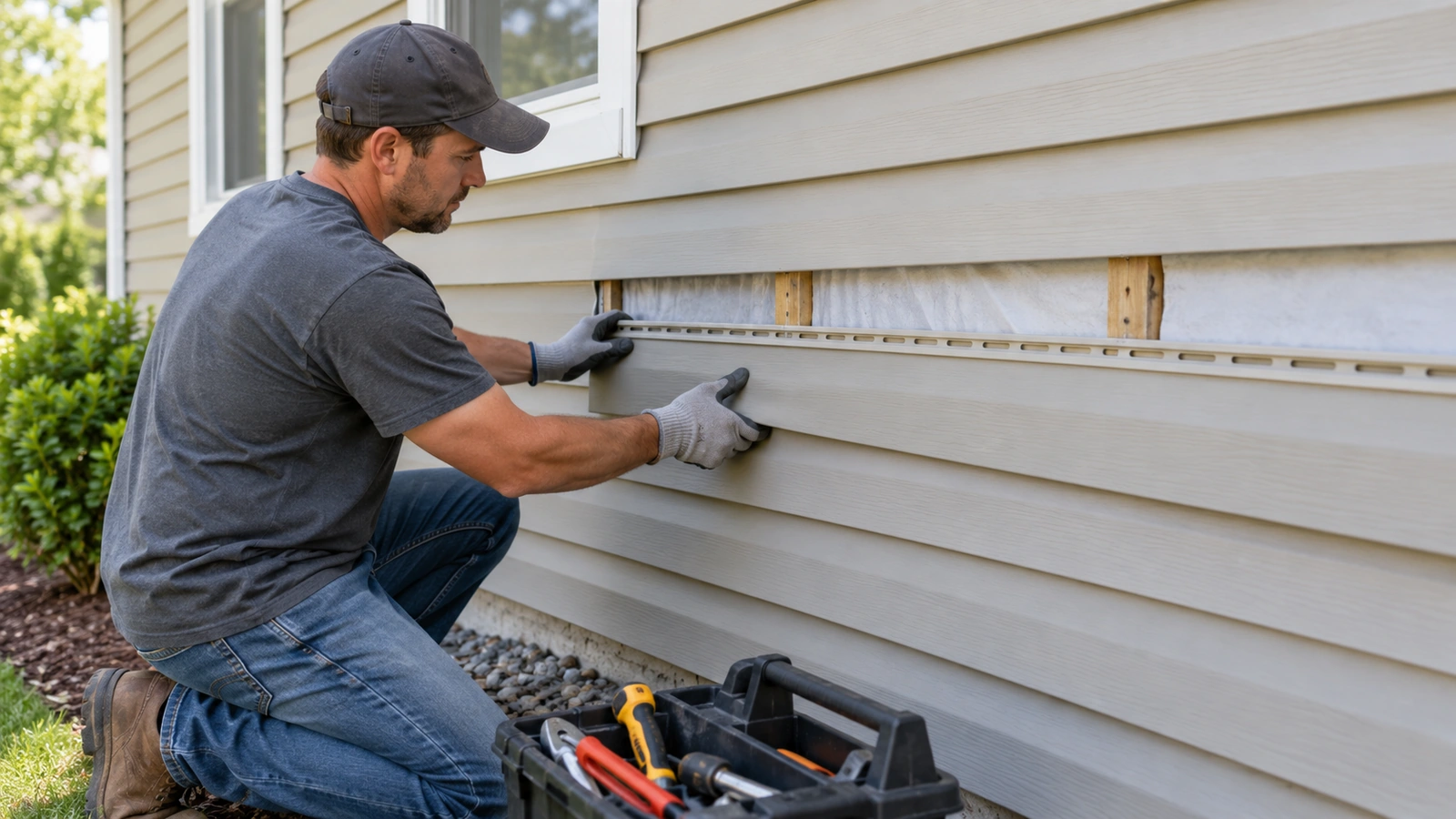
Ask for a repair option and a replacement option when both are practical. The comparison should explain what each approach resolves and what it leaves for later.
For example, replacing one visibly damaged section may meet your immediate needs, while leaving a noticeable color difference. That may be acceptable on a less visible wall. On the front of the home, appearance may influence your decision more strongly.
Lane’s guide to signs your home needs new siding can help you organize observations before an assessment. The estimate should still be based on the condition of your home rather than appearance or age alone.
Compare Estimates by Scope Before Comparing Totals
The lowest written number is useful only when you understand what it buys. Start by checking whether each contractor priced the same walls, product, finish, and preparation.

Separate fixed work from allowances
A fixed price covers an agreed scope. An allowance sets aside an amount for an item that is not fully determined. Ask which parts of the proposal remain allowances and how the final charge will be calculated.
Pay particular attention to phrases such as “repairs as needed,” “standard trim,” or “painting by others.” Request an explanation before signing so you can budget for the responsibilities those phrases leave with you.
Ask how changes will be approved
The agreement should describe who can authorize extra work and how changes will be documented. Request photographs, a written description, and pricing for work outside the original scope.
Also establish who your point of contact will be during installation. Questions about a newly exposed wall should reach someone who can explain the options and update the proposal clearly.
Check the contractor behind the estimate
Request evidence of insurance and any licensing applicable to the project. Ask for examples of similar siding work, recent references, and written workmanship warranty terms.
A roofing credential should not be treated as proof of siding-specific experience. Ask directly about the crew and products involved in your siding project.
Reduce Optional Spending Without Leaving Essential Work Undefined
The most useful budget conversation separates required work from design choices. Ask the contractor to price a complete base scope, then list optional upgrades individually.
You might compare a standard profile with decorative accents, a simpler trim design with a more elaborate one, or available finish options. Seeing the difference in writing makes it easier to spend on the features you value.
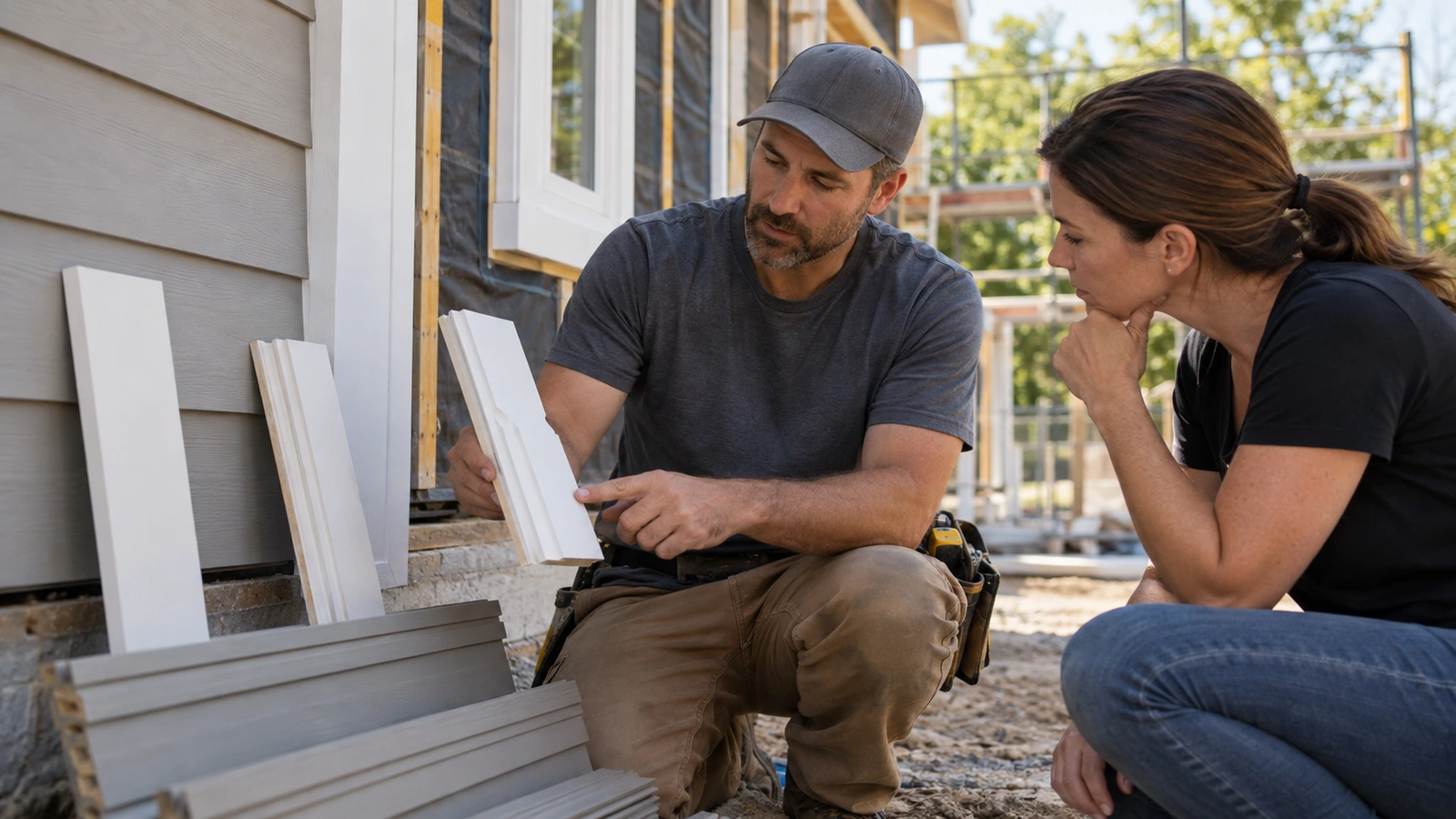
If window replacement is also being considered, discuss both projects before finalizing the siding scope. Ask whether coordinating them would avoid repeat work around the openings. Request separate and combined prices rather than assuming a bundled project will always cost less.
Discuss scheduling flexibility, but ask for any offered price adjustment in writing. A supposed seasonal saving should not distract from product choices, installation details, or exclusions.
Keep a separate reserve for conditions that remain uncertain after the initial assessment. Ask what those uncertainties are and how they will be investigated. The amount should reflect your home’s circumstances and your available budget.
Questions to Settle Before Accepting the Price
Does the warranty cover both the siding and installation?
Ask for the product warranty and the contractor’s workmanship warranty separately. Review what each covers, who handles a claim, and what maintenance documentation is required. Do not assume a material warranty pays for every future repair or installation issue.
Can I spread the cost through financing?
Review Lane’s financing information and ask whether an available program applies to your siding project. Confirm eligibility and current terms directly. Compare the total repayment amount, fees, rate, and payment schedule before evaluating affordability from the monthly payment alone.
How long will the quoted price remain valid?
Ask for the estimate’s expiration date and what secures the price. Also confirm the expected ordering and installation schedule, including how weather or additional repairs could affect it. Your contract should make these expectations clear without promising a completion date that ignores unresolved conditions.
Request a Siding Estimate Based on Your Home
A useful budget begins with measured walls, a named siding product, and a written installation scope. From there, you can compare material choices, decide which design upgrades matter, and understand how unexpected repairs will be handled.
Lane’s Contracting provides siding replacement services in Smithfield and surrounding North Carolina communities. Share your address, photos of the exterior, and any known damage when requesting an assessment. Ask for an estimate that clearly explains the proposed work, options, and exclusions.