


Siding replacement in North Carolina becomes worth considering when damaged exterior panels, recurring repairs, or moisture problems make your home’s current siding difficult to maintain. The first decision is whether the damage is isolated or part of a wider problem. A faded wall and a wall with hidden rot can look equally tired from the driveway, but they need different work.
Replacing siding also gives you a chance to examine the materials underneath, address vulnerable transitions, and choose an exterior you can maintain comfortably. That makes the inspection and written scope just as important as the color or brand.
Before committing to a project, understand what needs replacing, what can stay, and how the proposed installation will address the reason your existing siding failed.
When Should You Replace Your Siding?
Consider replacement when damage affects substantial areas, repairs keep failing, or deteriorated materials prevent reliable protection of the wall beneath. An inspection should establish whether the problem involves the siding alone, the installation details, or concealed wall damage. Age helps provide context, but it should not determine the decision by itself.
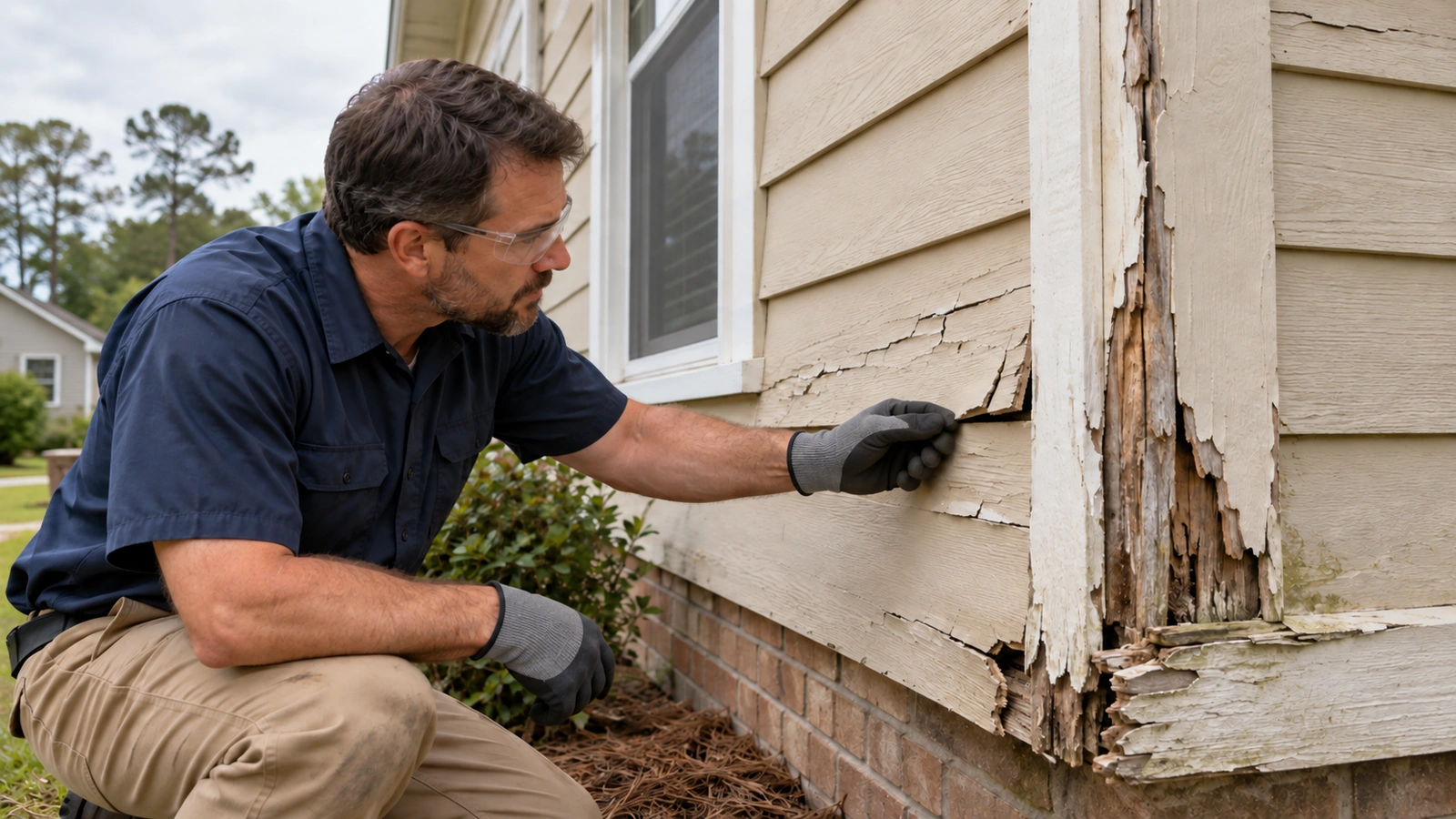
Damage that deserves closer inspection
Cracked panels, loose sections, open joints, and warped boards are reasons to investigate. Pay particular attention to damage near windows, roof edges, decks, and the bottom of exterior walls. Those locations deserve a closer look because several materials and water paths meet there.
Soft wood siding or swollen wood-based edges may indicate deterioration. Interior staining near an exterior opening also warrants investigation, although the entry point may be a window, roof connection, or another detail rather than the siding panel itself.
Photograph visible changes from ground level. Note whether staining appears after rain and whether the same area has needed previous repairs. This history helps a contractor understand the problem without treating every mark as proof that the entire exterior needs replacement.
Cosmetic wear versus functional failure
Fading alone does not establish that siding has stopped working. Surface dirt, an aging finish, and an outdated color may call for cleaning, suitable refinishing, or an elective appearance upgrade.
The distinction matters for your budget. You can plan a cosmetic project around your preferences, while active leaks and loose materials need earlier assessment. For a focused starting point, review these signs your home needs new siding.
Repair, Replace One Wall, or Reside the Whole House?
The right scope depends on how far the damage extends and whether the underlying cause can be corrected. Ask the contractor to explain why the proposed boundary of work makes sense.
| Approach | When it may fit | What to establish first |
|---|---|---|
| Localized repair | Damage is limited and surrounding materials remain serviceable | A compatible repair can be made and the cause has been identified |
| Replacement of one wall or section | Problems are concentrated in a distinct area | The transition to retained siding can be detailed properly |
| Full siding replacement | Deterioration is widespread or repeated repairs are becoming impractical | The scope includes inspection and correction of relevant concealed problems |
Imagine a single panel damaged by an impact. If the adjacent siding and backing are sound, siding repair may be reasonable. Now imagine multiple walls with recurring swelling and previous patches. That situation deserves a broader assessment before another repair is approved.
Matching also affects the decision. A discontinued profile or a weathered color may make an isolated repair conspicuous. Ask to see the proposed replacement material beside the existing siding before deciding how much appearance matters.
If a contractor recommends complete siding replacement, request photographs and a clear explanation of the observed failures. The recommendation should connect the evidence to the proposed work.
Why the Wall Behind the Siding Matters
The visible finish is one part of an exterior wall. Understanding the layers underneath helps you assess a proposal and ask useful questions during installation.
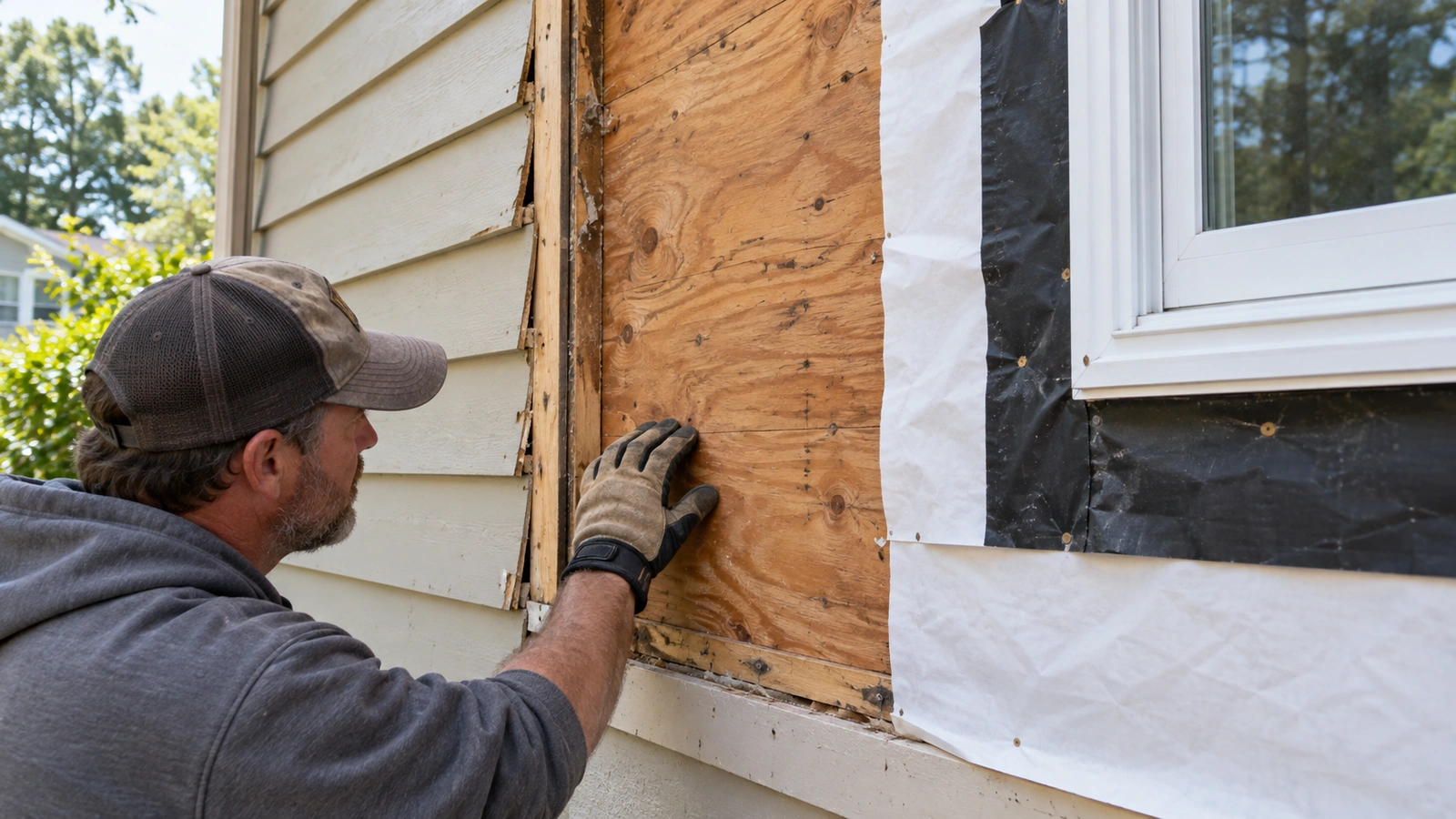
Sheathing, drainage, and flashing
Sheathing is the board or panel layer behind the exterior finish. Its condition affects what the contractor can securely attach to and whether repairs are needed before installation continues.
A water-resistive barrier, often called a WRB, helps manage water that passes behind the siding. Flashing connects vulnerable openings and transitions to that drainage system. The U.S. Department of Energy’s explanation of water-managed walls describes how these components work together to direct water outward.
Ask which existing layers will be exposed, retained, repaired, or replaced. “New siding included” does not answer those questions.
Why sealing every opening can be a mistake
Some openings serve a drainage function. Adding sealant indiscriminately can interfere with the intended water path. Building Science Corporation’s flashing guidance emphasizes directing water toward the exterior at joints, openings, and projecting elements.
Your contractor should distinguish joints that require sealant from areas designed to drain. Request an explanation of window heads, roof-to-wall connections, and the bottom termination before they are concealed.
If damage appears beneath a roof intersection, ask whether a separate roof repair is needed as part of correcting the source.
Choosing Siding for Your North Carolina Home
Start with the conditions around your house: sun exposure, nearby vegetation, splashback, and exposure to wind-driven rain. Ask how the selected product and installation details suit those conditions. Then compare the appearance, maintenance requirements, and complete installed scope.
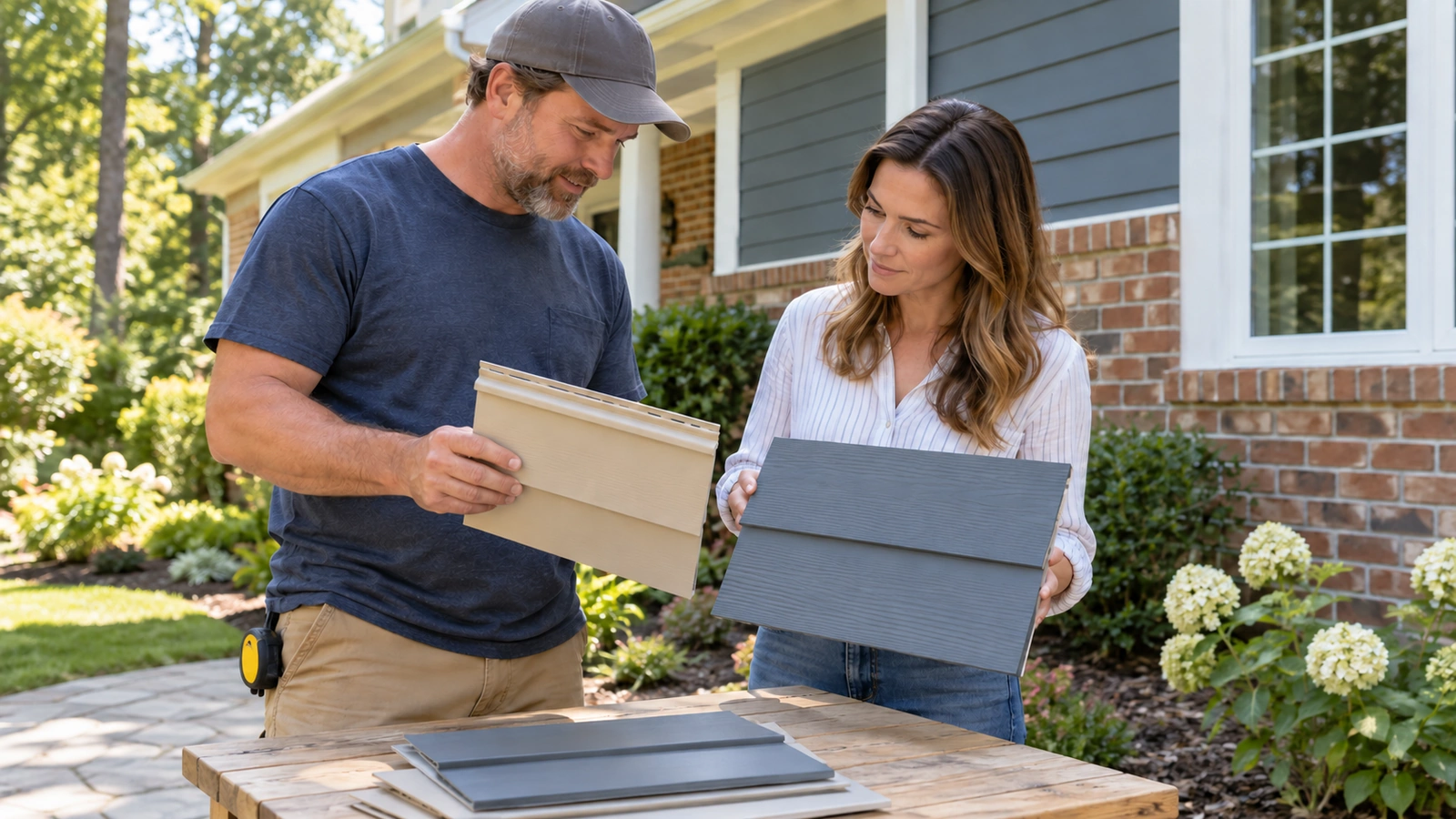
Vinyl siding
Vinyl is worth considering when you want a factory-colored exterior and prefer to avoid a regular repainting routine. Compare the exact product lines offered, including profiles, accessories, finish limitations, and installation requirements.
Movement is a key installation detail. The Polymeric Exterior Products Association’s installation manual explains that vinyl expands and contracts with temperature changes. Fastening it too tightly can cause buckling. Ask how the installer accommodates movement while meeting the product’s fastening requirements.
The details of your chosen vinyl siding installation should be reflected in the written specification, rather than described only as “standard vinyl.”
Fiber cement siding
Fiber cement is another option for homeowners considering lap siding, panel designs, or shingle-style accents. James Hardie offers different products and finishes, so the selection should identify both the siding and its finish system.
According to James Hardie’s product guidance, its fiber cement siding is water resistant, but proper installation remains necessary. A durable board does not remove the need to address the wall behind it.
Ask about fastening, clearances, cut-edge treatment, and the responsibilities associated with a factory finish versus a field-painted product. The James Hardie siding service page provides a relevant starting point for discussing these options with Lanes Contracting.
Compare complete systems
| Decision factor | Questions to ask about vinyl | Questions to ask about fiber cement |
|---|---|---|
| Appearance | Which profiles, seams, and accessories will be visible? | Which board profile, texture, and trim arrangement are specified? |
| Finish | What colors and finish limitations apply? | Is the product factory finished or painted after installation? |
| Installation | How will movement and panel attachment be handled? | What fastening, clearance, and finishing instructions apply? |
| Maintenance | What cleaning and repair methods are approved? | What cleaning, finish care, and joint inspections are needed? |
| Warranty | What does the exact product warranty cover? | Are substrate, finish, and installation covered separately? |
If you prefer wood or another material, request a separate specification covering its maintenance and installation needs. Do not assume that every contractor offers every siding type.
What Determines Siding Replacement Costs?
A useful siding estimate prices the measured exterior and the work needed to prepare it. Interior floor area is not the same as siding area. Wall height, gables, openings, corners, and access all affect the project being quoted.
Material choice matters, but comparing board prices alone leaves out much of the work. Removal, disposal, trim, preparation, finishing, and access should appear clearly in the proposal.
Read the estimate by scope
| Cost component | What the proposal should explain |
|---|---|
| Existing siding removal | Which layers will be removed and how disposal is handled |
| Wall repairs | What is included and how concealed damage will be priced |
| Water management | Which barriers, flashings, and transition details are included |
| New siding | Manufacturer, product line, profile, finish, and coverage area |
| Trim and accessories | Corners, window surrounds, mounting blocks, and other specified pieces |
| Finishing work | Painting, permitted sealants, touch-ups, and related preparation |
| Access and closeout | Equipment, property protection, cleanup, and final walkthrough |
Ask each contractor to price the same scope. A lower total may reflect fewer included items, while a higher total may include work that another bidder lists as an extra.
Plan for concealed damage before removal starts
An inspection cannot reveal every condition behind intact siding. Agree on a written change process that includes photographs, the proposed repair, its price, and your approval before additional work proceeds.
If payment timing affects your plans, review Lanes Contracting’s project financing options. Financing is subject to the provider’s approval and terms. Request the applicable rate, fees, payment schedule, and total repayment amount before deciding.
What Happens During Siding Replacement?
The exact sequence depends on the product and the condition of the house. A written plan should still explain how the crew will protect the property, uncover the wall, address findings, and complete the exterior.
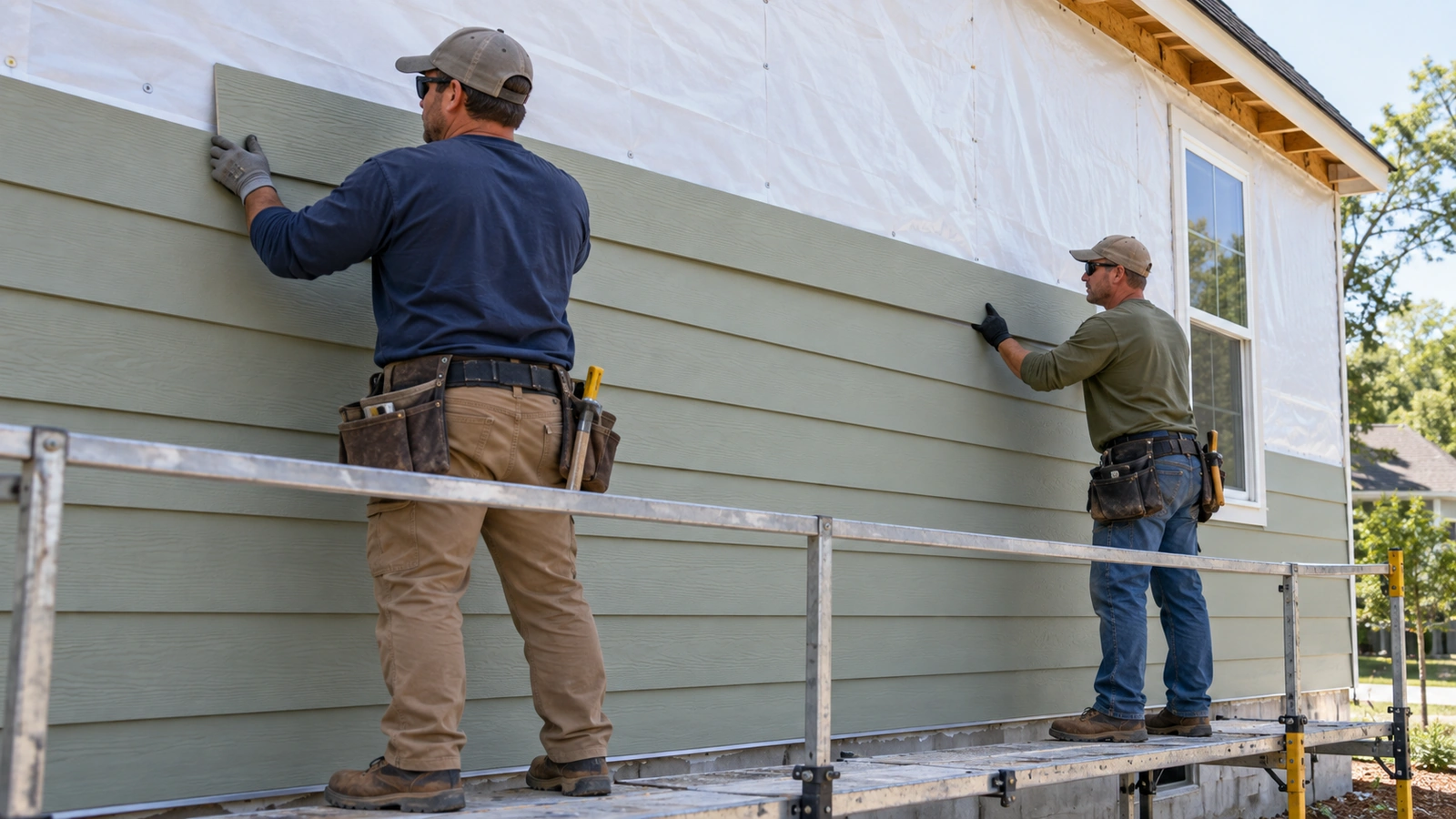
Before the crew arrives
Confirm the selected materials, delivery arrangements, disposal location, and work boundaries. Ask who will handle exterior lights, shutters, house numbers, downspouts, and other items that may interfere with the work.
Move vehicles and outdoor furniture away from the agreed work zone. Identify pet routes and entry points that need to stay usable. The contractor should explain how any utilities or attached equipment will be handled safely.
Removal and inspection
Existing siding comes off according to the agreed scope. This is the opportunity to assess exposed sheathing and compare concealed conditions with the original assumptions.
Ask for photographs of both problem areas and completed repairs. Discuss how exposed sections will be protected if rain interrupts the work. These arrangements should be settled before the house is opened up.
Installation and handover
The crew completes the necessary preparation and installs the specified siding, trim, accessories, and finish. Product instructions should govern the relevant installation details.
At the walkthrough, compare completed work with the contract and record any unfinished items. Obtain care instructions, product identification, warranty documents, and the contact for future service questions. Lanes Contracting’s siding installation services are a useful reference when discussing the project scope.
Scheduling, Permits, and Older Homes
Ask for a schedule specific to your project, including material availability, preparation, installation, finishing, and closeout. A start date alone does not explain how long your property will be affected.
Weather interruptions, concealed repairs, inspections, and coordination with other trades can change the sequence. Request a plan for updates and temporary protection if the schedule moves.
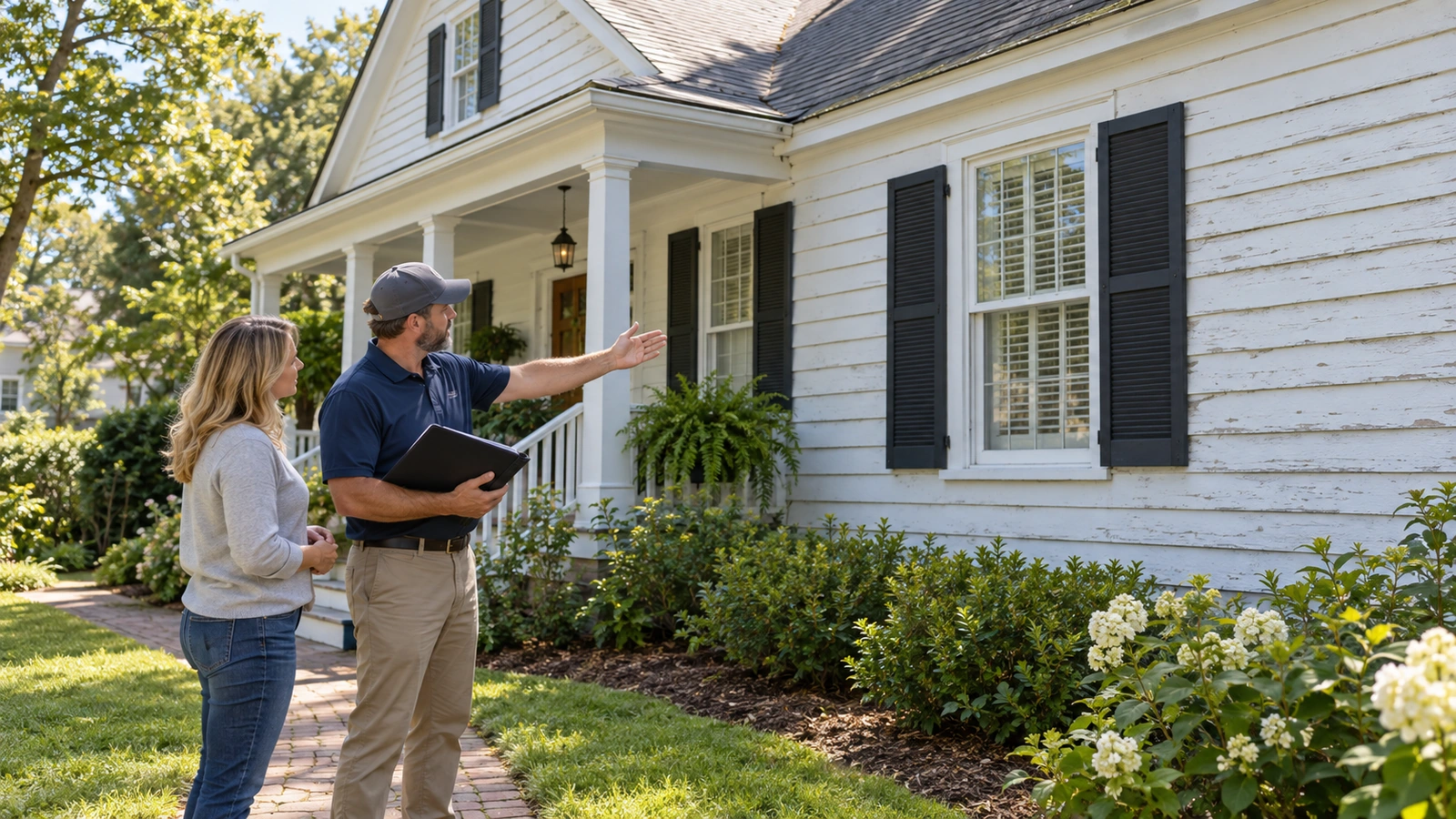
Confirm local requirements before work begins
Ask the contractor to confirm permit and inspection requirements with the local building department for your address and scope. Do not assume that replacing a finish and repairing structural wall damage follow the same process.
If your property has association or historic-district restrictions, check approvals before ordering colors or changing profiles. Keep written approvals with the contract.
Address older paint before disturbing it
For homes built before 1978, discuss lead paint precautions before removal or surface preparation. The EPA’s renovation guidance for homeowners explains why qualifying work requires attention to lead-safe practices and certified firms.
Give the contractor any previous testing records and ask how the applicable requirements will be addressed. Older materials should be evaluated before work begins if their composition or handling requirements are uncertain.
Can New Siding Improve Comfort and Energy Efficiency?
Siding replacement can create an opportunity to improve insulation and air sealing while parts of the exterior are accessible. The actual benefit depends on what work is included and the condition of the rest of the home.
Insulation and air sealing perform different jobs. Insulation slows heat transfer; air sealing addresses unwanted air movement through gaps. The Department of Energy identifies both as relevant to home energy efficiency.
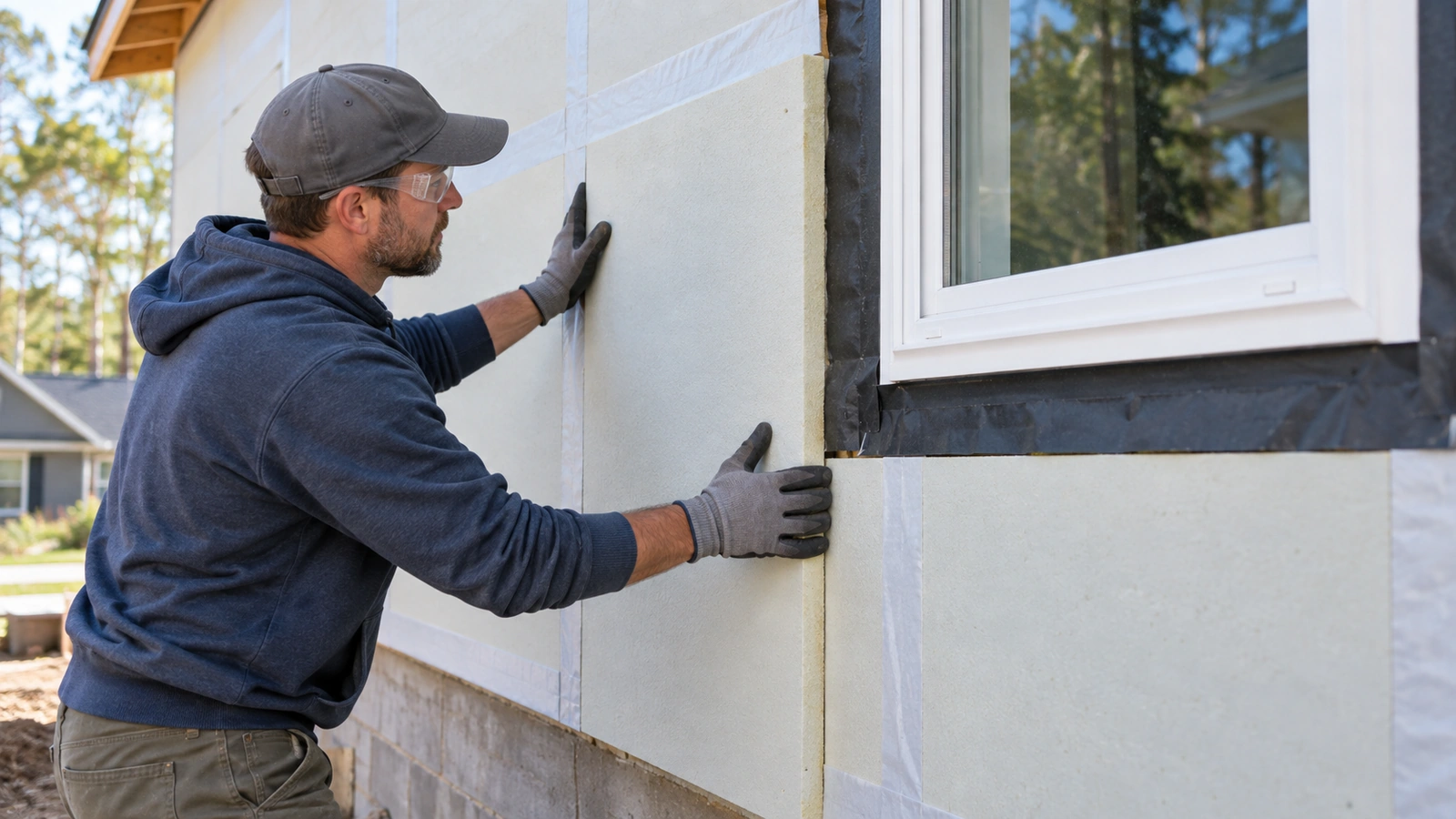
Ask the contractor to separate the siding price from any proposed energy-related upgrades. If exterior insulation is recommended, request details on how it changes trim depth, fastening, and window transitions.
A drafty room does not prove the siding is the cause. Windows, attic conditions, ducts, and other leakage paths may need assessment. If windows are also deteriorated, discuss the appropriate scope of window replacement before the siding details are finalized.
Treat promised utility savings cautiously unless they are supported by a house-specific assessment. An appearance upgrade alone is not a basis for predicting lower bills.
Coordinating Siding With Windows, Roofing, and Trim
Exterior remodeling projects often meet at the same edges and openings. If another component is already due for replacement, discussing it early helps the trades agree on the work sequence.

Decide what stays before designing the details
Tell the siding contractor which windows, gutters, lights, and other exterior features you expect to retain. Ask how each item will connect to the finished siding and who is responsible for reinstalling it.
A window planned for replacement soon deserves particular attention. Ask whether completing it now would avoid reopening newly finished work. If the existing windows are serviceable, request details that accommodate keeping them.
Choose colors alongside permanent materials
View physical samples beside roofing, brick, stone, and other finishes that will remain. Check the combination in different light before approving the order.
Confirm trim widths, corner treatments, and where accent materials begin and end. A written selection sheet gives everyone the same reference and reduces the chance of decisions being made during installation without your input.
Choosing a Contractor and Understanding the Warranties
A useful proposal explains the work well enough that you can compare it with another bid. Ask the contractor to show relevant siding projects and discuss how unexpected conditions were handled.
Read customer testimonials for details about communication, cleanup, and follow-through. Also request documentation appropriate to your project, including insurance and any required licensing.

Verify credentials independently
Use the North Carolina Licensing Board for General Contractors to check current licensing requirements, and its license search to verify a claimed license. Match the business identity to the contract.
A credential associated with one trade or manufacturer does not establish experience with every siding system. Ask specifically about the product being proposed for your house.
Separate product coverage from workmanship
A manufacturer’s warranty and a contractor’s workmanship warranty address different responsibilities. Request both in writing and ask who handles an initial service call.
Check covered defects, exclusions, maintenance duties, transfer conditions, and whether labor or removal costs are included. A long warranty term does not establish that every future repair will be covered.
Before signing, resolve vague phrases such as “repair as needed” or “all necessary trim.” The contract should identify what is included and how changes will be approved.
Caring for the Finished Exterior
Keep the care instructions for your exact siding and finish. Cleaning methods that suit one product may not suit another.
For example, James Hardie’s cleaning guidance recommends gentle tools and a low-pressure garden hose for routine cleaning. Follow the applicable manufacturer guidance before using pressure equipment or cleaners.
From ground level, look for loose pieces, damaged finishes, new staining, and changes around openings. Keep photographs if a condition changes and contact the installer before attempting a repair that could conflict with product requirements.
Keep gutters and downspouts functioning, avoid directing sprinklers at exterior walls, and maintain the specified clearances around landscaping. Ask which joints need periodic attention and which openings must remain clear for drainage.
Store the product name, profile, color, purchase information, contract, and installation photographs together. Those records make future matching, maintenance, and warranty conversations easier.
Plan Your Siding Replacement With Lanes Contracting
Start with the condition of the house and the outcome you want. Gather photographs, note recurring issues, and decide which appearance or maintenance concerns matter most to you.
Lanes Contracting provides siding services, including repairs, replacement, vinyl siding installation, and James Hardie siding. Request an assessment to discuss the appropriate scope, available materials, and work needed before installation begins.
Ask for a written estimate that identifies the chosen products, preparation, trim, cleanup, and process for concealed repairs. That gives you a practical basis for deciding how to move forward.